Transpacific the top earner as a strong Q2 boosts OOCL revenue
OOCL’s second-quarter trading update has reinforced signs of a stronger-than-expected container shipping market, the carrier ...


WMT: VERTICAL INTEGRATION IN LOGISTICSJBHT: HERE WE GOPG: STEADYEXPD: NEW RECORD BA: DELIVERIESMAERSK: BEAR CAMP MUSINGSCHRW: HIGHER HIGHS ON THE RADARWTC: 'ONE RECORD'HLAG: EARNINGS GUIDANCE UPGRADE AAPL: GLOBAL SMARTPHONE SHIPMENTS VW: THE IMPACT VW: MASSIVE JOB CUTS CONFIRMEDEXPD: BULLISH
WMT: VERTICAL INTEGRATION IN LOGISTICSJBHT: HERE WE GOPG: STEADYEXPD: NEW RECORD BA: DELIVERIESMAERSK: BEAR CAMP MUSINGSCHRW: HIGHER HIGHS ON THE RADARWTC: 'ONE RECORD'HLAG: EARNINGS GUIDANCE UPGRADE AAPL: GLOBAL SMARTPHONE SHIPMENTS VW: THE IMPACT VW: MASSIVE JOB CUTS CONFIRMEDEXPD: BULLISH
Disruption seems to have become the “new normal” for the container industry, keeping supply chains constantly volatile.
Indian shippers that had a brief respite from soaring freight rates in the aftermath of the Red Sea crisis, are now seeing a fresh wave of hefty emergency surcharges, as services through Persian Gulf ports remain hobbled.
CMA CGM has announced an “emergency conflict surcharge” of $2,000 per teu, $3,000 per 40ft, and $4,000 per reefer/special equipment from tomorrow until further notice.
The French liner said precautionary measures were necessary as “to safeguard operations in the affected areas would involve additional operational costs”.
Hapag-Lloyd said it would begin charging a war-risk surcharge of $1,500 per teu and $3,500 per reefer/special box for all cargo moving to/from/across the Gulf region.
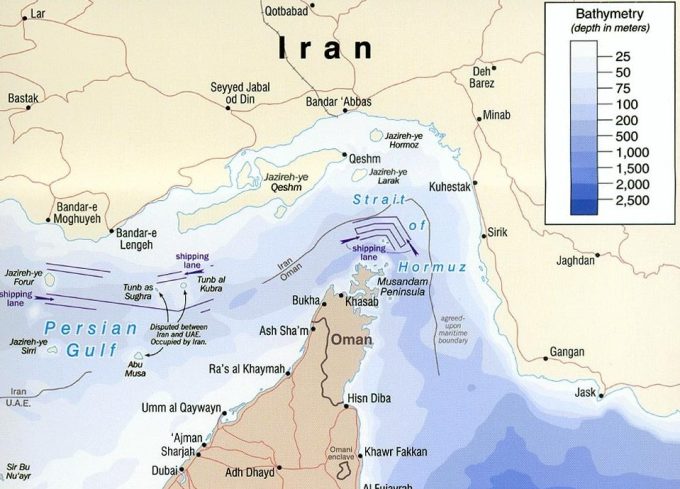
“The dynamic situation around the Strait of Hormuz and the necessary operational adjustments are causing disruptions throughout the network, which will impact schedules and equipment supply,” it told customers.
Industry sources expect other carriers to make similar announcements soon, as insurance firms are known to already have backed off from providing marine cover for ships transiting the conflict region.
Sources also expect line-haul rates to climb due to vessel delays and schedule disruptions, as the supply chain impact deepens and extends beyond the Gulf.
Major container lines have temporarily stopped or curtailed accepting cargo bookings from India to the Middle East as port access throughout the Persian Gulf becomes increasingly problematic.
Sources said all major carriers had advised customers they would not handle reefer containers, though there is still a wait-and-see approach from some regarding a suspension of dry cargo bookings.
“For reefer containers already on board or ready to load at port of loading, a further notice will follow shortly,” said CMA CGM.
MSC and ONE have suspended acceptance of all kinds of fresh worldwide bookings for the Middle East until further notice.
“In response to the evolving security situation in the Middle East, MSC confirms that the safety of its crew remains its highest priority,” said the Geneva-based container line. “Middle East bookings will resume as soon as the security situation improves”
And Singapore-based ONE said it would not accept new bookings for cargo moving to/from the Persian Gulf until further notice, adding:“For cargo currently in transit or planned shipments, we are closely assessing the situation voyage by voyage.”
Meanwhile, several Indian docks, especially Nhava Sheva (JNPA) and Mundra, are holding significant container volumes, planned for loading on Middle East services, on dock, constraining storage space and raising harbour congestion concerns.
Another trade disruption comes as Indian exports were looking to regain pace, powered by the US tariff relief and multiple free-trade agreements, including the EU deal.
“As the US continues to be India’s top export destination and Europe remains a major high-value market, these agreements are expected to provide enhanced market access, improved tariff competitiveness and greater regulatory predictability for Indian exporters,” the Federation of Indian Export Organisations said.
Catch up with last week’s news:
For uninterrupted access, sign in or sign up to The Daily News, Premium or The Loadstar Enterprise Plan.

Comment on this article