Ocean capacity is rising, demand is cooling, and 'the market is starting to turn'
Container spot freight rates on the main east-west ocean trades showed their first decline since ...

JBHT: NEW HIGHS EVERYWHEREPLD: STRONG DELIVERYJBHT: FAIR-VALUE CONSENSUS ESTIMATE AT ALL-TIME HIGH KNIN: AI TECH ADVANTAGEPLD: TRADING UPDATE ON THE WAY KNIN: UPSIDEJBHT: STRONG TRADING UPDATE DSV: EVERY LITTLE HELPSJBHT: CEO REMARKS WMT: VERTICAL INTEGRATION IN LOGISTICS
JBHT: NEW HIGHS EVERYWHEREPLD: STRONG DELIVERYJBHT: FAIR-VALUE CONSENSUS ESTIMATE AT ALL-TIME HIGH KNIN: AI TECH ADVANTAGEPLD: TRADING UPDATE ON THE WAY KNIN: UPSIDEJBHT: STRONG TRADING UPDATE DSV: EVERY LITTLE HELPSJBHT: CEO REMARKS WMT: VERTICAL INTEGRATION IN LOGISTICS
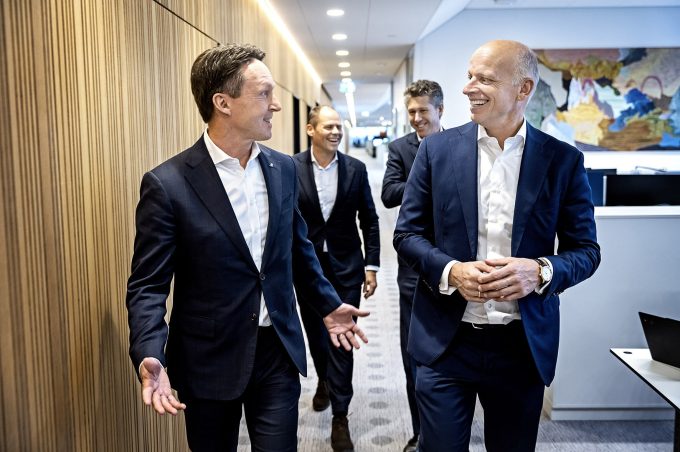
Negotiations between Atlas Air and DSV for next year’s contracts appear to be on, following the publication of a charming image of the two smiling CEOs.
Airlines and forwarders are in the midst of planning for next year’s capacity, and there is more than a healthy dose of guesswork going on.
DSV has publicly been looking to control more of its own capacity, and looks set to expand its August deal with Atlas for one exclusive 777-200F, “leveraging its buying power to come up with solutions”, according to Stefan Krikken, DSV’s global head of airfreight.
While negotiations with Atlas are no doubt intense, forwarders and airlines are attempting to negotiate without much insight into next year’s market.
“We haven’t quite mapped out exactly what we would need and how much more… we are in the process of doing that,” said one CEO of a top 20 forwarder.
The head of airfreight at another top 20 forwarder said: “The market will go down a bit, so we don’t want to sign anything yet. Chinese New Year is in mid-February and, before that, there will be some charters, but I expect we will have contracts in place in early March, some in April and some in June.”
Forwarders are still scarred by the huge impact of ecommerce growth, which saw many of them lose out on capacity. One CEO forwarder said: “When the ecommerce surge came in 2023, everybody didn’t have the BSAs, they were not protected. So suddenly they were exposed to this ecommerce demand and it was crazy. And then the next year, it was, ‘okay, we get more BSAs to protect ourselves’.”
This year, while the growth of ecommerce continues apace, the market has shifted considerably with the end of de minimis in the US, which alters the business model of the ecommerce players. Shipments are more likely to be consolidated, while the increase in costs could push ecommerce to cheaper forms of transport, such as ocean or scheduled airfreight, including bellies, and likely a greater use of warehousing in the US. The volumes will still be there, but ecommerce requirements for freighter capacity might be lower.
One senior forwarder said: “I think there may be additional demand [next year], but on the supply side there’s an expectation that capacity will actually increase.”
Of course, the likes of Atlas and other freighter operators will be keen to focus on the lack of capacity coming into the market during this negotiating period. As one head of airfreight told The Loadstar: “I believe there will be single-digit growth next year in the total amount of air freight. So you will have discussions on whether there will be enough freighters.
“If I leased-out freighters, I would say there won’t be enough. And if I built aircraft, I would say there are not enough in the near future.
“So it always depends who you talk to. You just have realise that that’s the case.”
Several sources, airlines and forwarders, agreed that single-digit growth looks likely next year. One airline CEO said 2026 could see “a tough start”.
But airlines seem to believe the advantage has moved back to those selling capacity.
“I believe that, through Covid, some of our big customers changed their behaviour and, basically, imposed probably a bit too much on shippers,” said Etihad Cargo’s chief, Stanislas Brun. “What’s happened this year [is that] the implementation of tariffs in the first quarter has allowed the shipper to take back some ownership, and put the forwarder under a bit more pressure.”
He added that some big shippers had moved to medium-sized forwarders in a bid to get better service, and “those smaller forwarders are not necessarily looking for the same margins”.
A glance at the large forwarder results this year shows a trend towards them saying they had cut out lower-yielding business, as they explained why they had underperformed the airfreight market average.
Much of the reasoning behind the airfreight ‘underperformance’, DHL Global Forwarding chief Oscar de Bok told The Loadstar, was because forwarders generally don’t get a slice of the ecommerce market. “Don’t forget ecommerce – that’s chartered directly.”
Mr de Bok also acknowledged that some of the new ‘forwarders’, such as Middle Eastern port groups, or shipping lines with forwarding arms, may be playing under different models than the large forwarders.
“Of course, they are investing. They are building up an organisation. They are not necessarily working on the same reasonings as the traditional top three, in terms of return on capital. They may be buying markets. But we’ve all seen the forwarding market over the years, and anybody that has done that has an expiry date.”
Meanwhile, the negotiations will continue, with forwarders trying to plan for demand growth in their top verticals and airlines trying to ensure a return on their assets. Perhaps one big question for forwarders to answer is whether the ecommerce players will now need them for customs compliance and capacity or will continue to go it alone, and how much capacity that will take.
For uninterrupted access, sign in or sign up to The Daily News, Premium or The Loadstar Enterprise Plan.

Comment on this article