Clear-up after toxic gas leak sees some Antwerp quays reopen
Antwerp’s Deurganckdok port area partially reopened today after an emergency services clean-up following Tuesday night’s ...


PLD: TRADING UPDATE ON THE WAY KNIN: UPSIDEJBHT: STRONG TRADING UPDATE DSV: EVERY LITTLE HELPSJBHT: CEO REMARKS WMT: VERTICAL INTEGRATION IN LOGISTICSJBHT: HERE WE GOPG: STEADYEXPD: NEW RECORD BA: DELIVERIESMAERSK: BEAR CAMP MUSINGS
PLD: TRADING UPDATE ON THE WAY KNIN: UPSIDEJBHT: STRONG TRADING UPDATE DSV: EVERY LITTLE HELPSJBHT: CEO REMARKS WMT: VERTICAL INTEGRATION IN LOGISTICSJBHT: HERE WE GOPG: STEADYEXPD: NEW RECORD BA: DELIVERIESMAERSK: BEAR CAMP MUSINGS
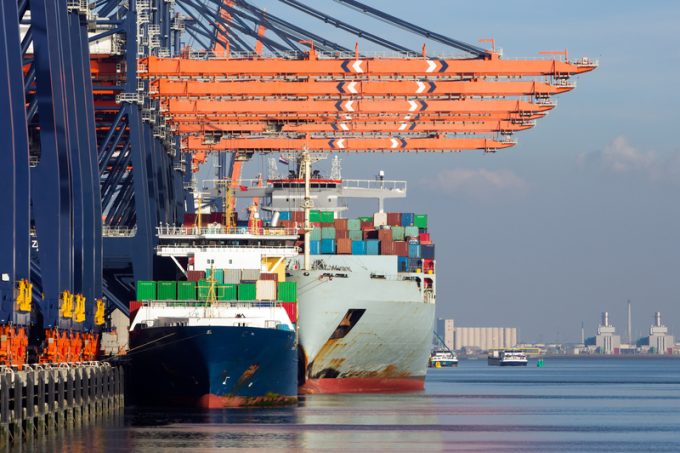
Major ports in Europe are already preparing for the “inevitable” – when vessels arriving via the Cape and via Suez coincide – which will see ripple effects across the whole supply chain.
Guillaume Caill, head of ocean EMEA at Flexport, warned that once box ships resumed regular transits of the Suez Canal, to “expect more volatility” before a return to normality.
He explained: “For anyone that has imported cargo for the last few months, I think we can all see that congestion has beaten European ports pretty badly… a critical situation in the summer.
“If the Red Sea opens, we should expect more congestion to build, because the vessel schedules will be screwed. More cargo will arrive for importers to pick up, which means fuller warehouses, and that’s where the vicious cycle starts.
“If you have a full warehouse, you start picking up less cargo at port. So, you have more boxes piling up at ports.”
Mr Caill added that as quay density increased, crane productivity decreased, which createed “massive operational issues” and longer berthing windows.
“Another potential ripple effect, if the cranes struggle, is that carriers will start prioritising full-load containers and deprioritising the empty containers to be sent back to Asia. Potentially, in the long run, that can bring a deficit of empty equipment in Asia,” he warned.
“That’s exactly what happened with the Evergiven [blocking the canal], where we saw that it was difficult to find empty containers in Asia and in Europe, and difficult for vessels to find a berth slot.”
However, while the Evergiven event was unexpected, a return to mass transits of the Suez Canal is expected in the near future, meaning stakeholders have time to prepare.
A spokesperson for the port of Antwerp-Bruges told The Loadstar both carriers and terminals shared an interest in ensuring that this transition happened “as smoothly as possible”.
“Shipping lines currently manage to maintain relatively reliable schedules via the Cape of Good Hope, and have no incentive to jeopardise that stability. It is likely that each carrier or alliance will switch back to their Suez routings service by service, once a full rotation has been completed.”
However, the spokesperson highlighted that during this transition period, there would “inevitably” be moments when vessels arriving via the Cape and via Suez coincided, which “may temporarily increase pressure on terminal capacity and on hinterland logistics”.
Indeed, Port of Hamburg told The Loadstar that if the Suez Canal was suddenly used again, it would “severely disrupt” shipping companies’ schedules and arrivals at “all ports on the Europe-Asia route”.
“There will certainly be peak and congestion situations in Hamburg, as in other ports in the North Range,” it added.
And while the spokesperson said it was “impossible” to predict how long such a situation could last, they said the port would work with “maximum efficiency” and “as quickly as possible”.
“The Hamburg Vessel Coordination Centre (HVCC) provides 24/7 operational coordination services for vessel arrivals at and departures from the port of Hamburg. This ensures such situations are managed as effectively as possible. However, depending on how many carriers choose to use the Suez Canal route at the same time, waiting times are likely to be unavoidable.
“Stay calm and trust Hamburg, your port,” the spokesperson added.
Port of Antwerp-Bruges also assured it had continued to “strengthen and digitalise the entire logistics chain”.
“We are investing in improvements such as CPU [container pick-up], terminal ETA tools, and the implementation of the IRP customs system. We also actively promote night logistics at terminals and empty container depots to alleviate peak pressure.”
Port of Rotterdam told The Loadstar that over the past few weeks, the port authority had been working on an impact analysis of the possible return of containerships to the Suez route, and the consequences for Rotterdam.
“Our approach is to work with the market to do everything we can to keep the impact on the port and chain manageable. The port authority provides support by coordinating and facilitating,” the spokesperson explained.
“A great deal of information is already available, that can be used by parties to support their logistics processes, such as Portbase’s Cargo Controller (ETD container). It is important that the market is familiar with this data and knows where to find it. This is already a major benefit in the preparations for Suez,” they urged.
For uninterrupted access, sign in or sign up to The Daily News, Premium or The Loadstar Enterprise Plan.
Comment on this article