Europe’s auto sector faces ‘perfect storm’ as exports slump and imports surge
European automakers and their logistics services providers are navigating a period of upheaval and structural ...


WTC: 'ONE RECORD'HLAG: EARNINGS GUIDANCE UPGRADE AAPL: GLOBAL SMARTPHONE SHIPMENTS VW: THE IMPACT VW: MASSIVE JOB CUTS CONFIRMEDEXPD: BULLISHCHRW: POSITIONING AHEAD OF EARNINGSAMZN: IN THE NUMBERSAMZN: PEOPLE MATTER UNTILVW: THE LAST CUT IS THE DEEPESTJBHT: GEARING UP VW: BUYING TIMER: BIG VOTE OF CONFIDENCEAAPL: BEARISH HEDGEYE
WTC: 'ONE RECORD'HLAG: EARNINGS GUIDANCE UPGRADE AAPL: GLOBAL SMARTPHONE SHIPMENTS VW: THE IMPACT VW: MASSIVE JOB CUTS CONFIRMEDEXPD: BULLISHCHRW: POSITIONING AHEAD OF EARNINGSAMZN: IN THE NUMBERSAMZN: PEOPLE MATTER UNTILVW: THE LAST CUT IS THE DEEPESTJBHT: GEARING UP VW: BUYING TIMER: BIG VOTE OF CONFIDENCEAAPL: BEARISH HEDGEYE
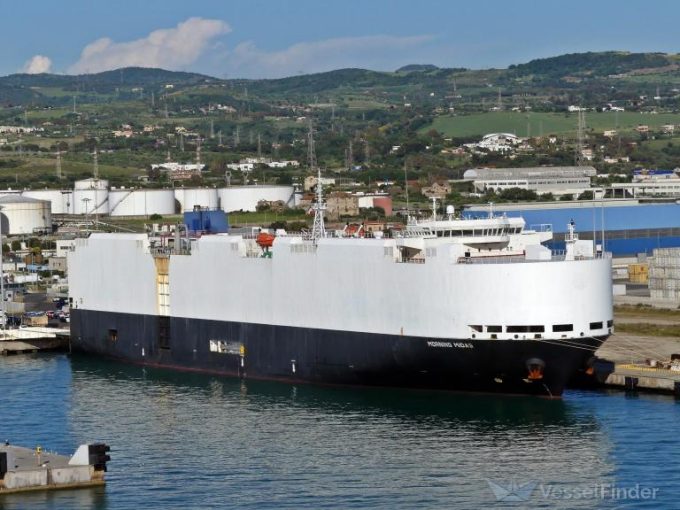
The danger associated with carrying electric vehicles was thrust back into the spotlight today, when 22 crew were forced to abandon ship in the early hours after fire broke out on their car-carrier off the Alaskan coast.
Some 3,000 vehicles, including 751 EV variants – 70 full EVs and 681 hybrids, according to the US Coast Guard – were en route from China to Mexico when fire broke out aboard the Zodiac Maritime-operated vessel Morning Midas.
A US Coast Guard statement reported Zodiac claiming “smoke was initially seen rising from the deck loaded with EVs” – smoke still emanating from the ship as this story went to press.
Zodiac told media that, discovering the fire, “the crew immediately initiated emergency firefighting procedures using the vessel’s onboard fire suppression systems”.
IT added: “However, despite their efforts, the situation could not be brought under control. In consultation with the US Coast Guard, all 22 crew were safely evacuated via lifeboat, and have been transferred to a nearby merchant vessel.”
Despite EVs moving on thousands of voyages every year, growing demand for them has coincided with an increase in fires aboard car-carriers, resulting in the death of eight sailors and firefighters – this incident the 10th such in the past 10 years.
Grimaldi has been particularly hard hit, with fires on four of its vessels since 2019: Grande Europa and Grande America (both 2019); Hoegh Xiamen (2020); and the Grande Costa d’Avorio (2023).
One source familiar with the dangers of shipping EVs told The Loadstar although it was “far too early to discuss cause, there is also no solution known currently that would make EVs entirely safe”.
Insurance giant Allianz noted in a recent report that demand, not only for EVs, but for lithium-ion batteries generally, was bringing “new and increased risks” for those operating cargo vessels, having previously noted that these ships were not designed to carry these batteries.
They to be carried with a just small amount of charge, to prevent the battery degrading, but the way vessels are laid out and the way EVs are loaded aggravates both the risk of, and the ability to fight, a fire.
An engineering officer said: “It is difficult to contain a fire from one EV spreading to another ,because [EVs] are stowed with no more than 30cm between them, and they most definitely couldn’t be moved.”
Compounding this, the International Association of Fire Chiefs added, due to a lithium-ion battery’s chemical make-up, it takes between 3,000 and 8,000 gallons of water to quell any fires they cause, such blazes getting hotter and moving faster the longer they are left to burn.
Thus, any delay in extinguishing the blaze increases the chance of vessels not only being severely damaged, but being lost, as Grimaldi’s Höegh Xiamen and the Grande America which sank in the Bay of Biscay.
For uninterrupted access, sign in or sign up to The Daily News, Premium or The Loadstar Enterprise Plan.

Comment on this article