Box ship attacked, Hormuz shut again, Middle East rates sail past pandemic peak
Gulf importers and their forwarders are once more turning to Middle East landbridge routes after ...


VW: THE IMPACT VW: MASSIVE JOB CUTS CONFIRMEDEXPD: BULLISHCHRW: POSITIONING AHEAD OF EARNINGSAMZN: IN THE NUMBERSAMZN: PEOPLE MATTER UNTILVW: THE LAST CUT IS THE DEEPESTJBHT: GEARING UP VW: BUYING TIMER: BIG VOTE OF CONFIDENCEAAPL: BEARISH HEDGEYE AAPL: THE BEAR CASEFDX: LIFE SCIENCES ORG UNVEILEDWTC: UPS AND DOWNSWTC: ASX ANNOUNCEMENT REGARDING DSV PARTNERSHIP VW: D-DAY
VW: THE IMPACT VW: MASSIVE JOB CUTS CONFIRMEDEXPD: BULLISHCHRW: POSITIONING AHEAD OF EARNINGSAMZN: IN THE NUMBERSAMZN: PEOPLE MATTER UNTILVW: THE LAST CUT IS THE DEEPESTJBHT: GEARING UP VW: BUYING TIMER: BIG VOTE OF CONFIDENCEAAPL: BEARISH HEDGEYE AAPL: THE BEAR CASEFDX: LIFE SCIENCES ORG UNVEILEDWTC: UPS AND DOWNSWTC: ASX ANNOUNCEMENT REGARDING DSV PARTNERSHIP VW: D-DAY
With vessel security around the Strait of Hormuz continuing to fluctuate, Gulf container import supply chains routed through bypass ports and connected by landbridges look set to be the norm for at least another month.
It could be longer, given that carriers are now introducing reconfigured networks that will take time to unwind.
Yesterday, the Gemini Cooperation partners Maersk and Hapag-Lloyd announced the forthcoming closure of two feeder services connecting their hubs at Damietta and Port Said with Jeddah to coincide with the arrival of the new deepsea Asia-Mediterranean Med Loop 4 service, which ends its rotation at Jeddah after a southbound Suez Canal transit.
The switch will mean Gemini increasing the amount of weekly capacity it offers into Jeddah by around 50%, with the current JD2 and JD3 feeder services deploying a 5,300 teu and 4,200 teu respectively, compared to the weekly arrival of a 14,500 teu vessel on the Med Loop 4.
Meanwhile, as container networks serving the Gulf markets trapped by the Hormuz closure have begun to stabilise, freight rates into the Red Sea appear to be easing from the heights in the immediate aftermath of the conflict’s outbreak.
According to Xeneta, while average container freight spot rates from China to Jeddah are up 63% since 28 February, they have fallen 11% during April to currently stand at $4,969 per 40ft.
The Freightos Terminal tells a similar story – the Ningbo-Jeddah spot rate stood at $2,848 per 40ft just prior to the war; it then peaked at $8,698 at the end of March before slowly beginning to decline to $7,108 per 40ft this week.
However, Xeneta chief analyst Peter Sand also said the rush of cargo into Jeddah had caused “inevitable port congestion caused by the land bridge bottleneck, but we also see that rates have spiked and are starting to ease”.
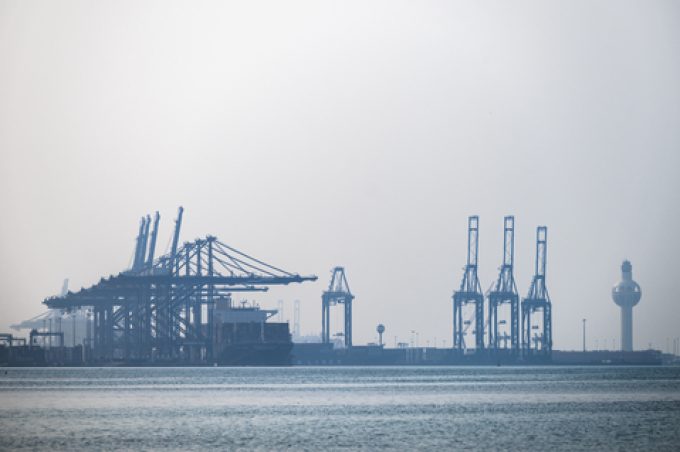
According to Xeneta’s eeSea liner database, there are currently five ships in Jeddah and 11 awaiting a berth, while a further 29 container ships are currently enroute for it – with a current wait percentage of 60%, Jeddah is at its most congested this year.
However, Mr Sand added: “This shows the workarounds are functioning for food and essential cargo into Middle East, but land bridges are constrained in terms of what kind and volume of goods they can handle, so shippers are still managing severe supply chain disruption,” he added.
Inside the industry’s AI shift
Complete The Loadstar’s ‘State of AI in the Supply Chain’ survey — and receive the full report and data before release.
For uninterrupted access, sign in or sign up to The Daily News, Premium or The Loadstar Enterprise Plan.

Comment on this article