Lufthansa Cargo, WiseTech & IBS Software 'shape the future of air cargo'
PRESS RELEASE Lufthansa Cargo, WiseTech Global, and IBS Software shape the future of air cargo with ...

WTC: NO LUCKCHRW: 'NUCLEAR VERDICT'DSV: DEEP CUTKNIN: UPGRADEDKNIN: AI BENEFITSKNIN: NOT WORTH ITPLD: DEAL TIMEKNIN: CONF CALL CLOSING KNIN: PRICING POWER KNIN: MARKET SHARE GAINS IN ROAD KNIN: AI-RELATED COST INFLATION OUTLOOKKNIN: APEX LOGISTICS IPO UPDATEKNIN: QUESTION TIMEKNIN: 'COST REDUCTION PROGRAMME IS ON TRACK'KNIN: CFO REMARKSKNIN: MONETARY IMPACT FROM AI KNIN: AI UPSIDEKNIN: STRONG ROAD UNIT DELIVERY KNIN: AIR LOGISTICS SHINES
WTC: NO LUCKCHRW: 'NUCLEAR VERDICT'DSV: DEEP CUTKNIN: UPGRADEDKNIN: AI BENEFITSKNIN: NOT WORTH ITPLD: DEAL TIMEKNIN: CONF CALL CLOSING KNIN: PRICING POWER KNIN: MARKET SHARE GAINS IN ROAD KNIN: AI-RELATED COST INFLATION OUTLOOKKNIN: APEX LOGISTICS IPO UPDATEKNIN: QUESTION TIMEKNIN: 'COST REDUCTION PROGRAMME IS ON TRACK'KNIN: CFO REMARKSKNIN: MONETARY IMPACT FROM AI KNIN: AI UPSIDEKNIN: STRONG ROAD UNIT DELIVERY KNIN: AIR LOGISTICS SHINES
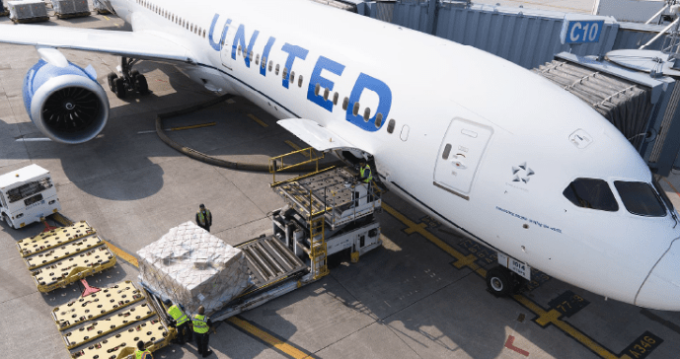
Near the end of July, United Airlines’ (UA) cargo network expanded without a single aircraft taking off to a new destination – the growth came courtesy of SwissWorldCargo joining the transatlantic cargo partnership of UA and Lufthansa.
“By coordinating schedules, aligning handling processes, and streamlining booking and tracking systems, we’re creating a more seamless experience for our customers, offering greater capacity, more consistent service, and improved access across key US and European markets,” commented United Cargo president Jan Krems.
Collaboration with other airlines is a major plank in the strategy of the top cargo carrier on the US passenger airline scene. The inability to traverse Russian airspace has severely constricted United’s ability to serve the India market, but the cargo division has supplemented its limited capacity with an interline partnership with Emirates, which is working well, says Mr Krems.
He is also facing challenges in the transpacific arena, which has long been a core market for the airline. The migration of manufacturing to South-east Asia, which has accelerated sharply in the wake of Washington’s tariff war on China, is shifting fast-growing markets to the far reaches of the airline’s network.
United can leverage its traffic rights out of Japan, which translates into more than 12 daily flights to the Asia Pacific region, but this is not enough to meet demand.
On the route from Singapore, United’s capacity is sometimes short of demand, and Mr Krems said customers were asking for increased lift to and from South-east Asia.
The JV with All Nippon Airways has not advanced since ANA moved to take over Nippon Cargo Airlines, recently obtaining final regulatory approvals, but United and ANA continue to interline cargo traffic. The Japanese carrier also operates a fleet of B767 and B777 freighters serving Asia Pacific.
Still, there is need for more capacity, which has spawned plans to establish a freighter operation to serve points in South-east Asia. At this point there are no details available, but Mr Krems is optimistic.
“We work with customers, with partners short-term with freighters. We will not go into freighters ourselves, but we will make sure we can rent short-term contracts, like we do with an APA freighter for mail to Micronesia,” he said, adding that United had run freighters for customers to Tel Aviv and Bogota.
Earlier this year it teamed up with a small cargo carrier to move pharmaceutical traffic from Puerto Rico to Chicago to feed international departures as well as clients in the US Midwest.
Pharmaceuticals are one of several sectors requiring special service offerings that are key to the airline’s cargo strategy.
“We want at least 70% of our business on specialty products,” Mr Krems said.
One implication of this strategy is a need to offer service that extends beyond the confines of digital offerings. Digital solutions are useful for shipments under 100kg and allocations, which make up 50% and 25% of the airline’s volume respectively, but the remaining 25% call for a personal touch, he added.
United’s cargo revenue reached $859m, an increase of 6.7% year on year. Despite the uncertainty in the market, Mr Krems is upbeat, pointing to recovery in the transatlantic and Latin America markets.
A diversified portfolio also helped, he added. The slump in China-US e-commerce traffic had relatively little impact on the airline, as it was never a big focus, more a matter of filling spare capacity, he said.
Moreover, United runs more than 20 flights a week to China, a far cry from about 100 before the Covid restrictions and subsequent inability to fly through Russian airspace. And these flights are easy to fill, said Mr Krems.
Get up to speed on all things supply chain!
For uninterrupted access, sign in or sign up to The Daily News, Premium or The Loadstar Enterprise Plan.
Comment on this article