Maersk returns West Africa service to the Red Sea as Suez comeback gathers pace
Maersk has announced that it is returning a third service to the Red Sea routing, ...


PLD: TRADING UPDATE ON THE WAY KNIN: UPSIDEJBHT: STRONG TRADING UPDATE DSV: EVERY LITTLE HELPSJBHT: CEO REMARKS WMT: VERTICAL INTEGRATION IN LOGISTICSJBHT: HERE WE GOPG: STEADYEXPD: NEW RECORD BA: DELIVERIESMAERSK: BEAR CAMP MUSINGS
PLD: TRADING UPDATE ON THE WAY KNIN: UPSIDEJBHT: STRONG TRADING UPDATE DSV: EVERY LITTLE HELPSJBHT: CEO REMARKS WMT: VERTICAL INTEGRATION IN LOGISTICSJBHT: HERE WE GOPG: STEADYEXPD: NEW RECORD BA: DELIVERIESMAERSK: BEAR CAMP MUSINGS
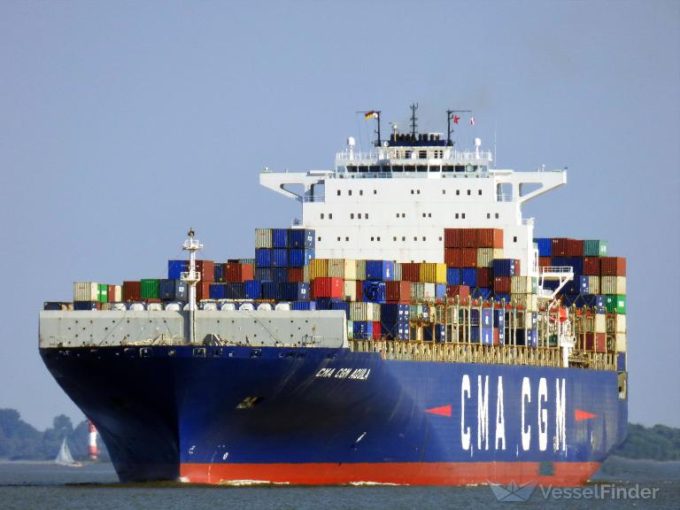
CMA CGM is again “testing the water” in the Suez Canal, which could prompt other carriers to “contemplate similar moves”.
The French ocean carrier has updated its Europe Pakistan India Consortium (EPIC) service for one of the ten vessels on the rotation to transit the Suez Canal next week.
CMA CGM Aquila will go through the canal on 16 June, make an inducement call at Jeddah two days later, and continue its rotation on 28 June.
According to tracking data from maritime intelligence platform eeSea, the vessel’s trajectory and next port of call are consistent with a Suez Canal routing.
Simon Sundboell, CEO of eeSea, told The Loadstar: “This is clearly a case of testing the waters.
“Suez Canal Authority is offering rebates to ‘come back’, and there will always be carriers willing to take the risk… CMA has throughout been the most risk-willing”.
According to Mr Sundboell, there are three steps carriers will take to resume regular Suez Canal transits. Step one would include trials using “unannounced, ad-hoc, smaller, one-by-one vessels”.
If successful, carriers are likely to “shift a service or two”, either as a standalone or part of their alliance, and revise rotations and berthing windows.
The final stage is “pulling the whole Suez network from the draw and dusting it off”, which eeSea warned would be “very complex and would require high confidence in safety and stability”.
Mr Sundboell said: “CMA’s BEX2/Phoenician Express is the only main line operator’s service that has continued using the canal – since April 2024 as far as I can see. CMA CGM Aquila will now be the next vessel testing the waters (step 1), and the carrier has already announced that the MEDEX service is also returning (step 2).
“This is truly interesting. If it works, you’ll see more steps 1 and 2 from CMA – and the network departments of the other carriers are most certainly taking note and contemplating similar moves, depending on their risk willingness.”
Rolf Habben Jensen, CEO of Hapag-Lloyd, told The Loadstar on the sidelines of Transport Logistic in Munich: “Before we decide to go back through the Red Sea, we need to be reasonably sure it is also going to remain peaceful.
“I wouldn’t say [it won’t happen] until the conflict has ended completely, but until there is a reasonable assurance that it’s going to remain stable for a longer period of time. There were some signals earlier in the year that there might be a ceasefire, that was then broken again after six weeks or so.
“What we want to avoid is that we go through too quickly and then have to go around [the Cape] again, because that would destabilise a lot of supply chains, and that is in nobody’s interest,” he added.
Mr Habben Jensen did not specify the criteria for “reasonable assurance”, however.
“As far as CMA CGM is concerned, to the best of my knowledge, they have a few ships that go through and are escorted by the French navy. And then they have many other services that also go around the Cape, as we do,” he added.
Would other carriers us ing the Suez Canal sooner than Hapag-Lloyd raise competition issues, due to the shorter transit time? Mr Habben Jensen said: “I think everybody will, hopefully, gradually go back around the same.”
Agradual phase-in of Suez transits would be paramount to avoiding supply chain issues, he added.
“As soon as we all go back to Suez, you will see massive congestion, especially in the northern European ports and the Med, because you have ships overtaking each other. That is something you want to avoid, so you would like to go back gradually.”
According to eeSea data, after the alliance re-shuffle this year, there are now 76 services sailing around the Cape of Good Hope that would otherwise be using the Suez Canal.
Listen to The Loadstar News in Brief Podcast to get a round-up of last week’s supply chain news!
For uninterrupted access, sign in or sign up to The Daily News, Premium or The Loadstar Enterprise Plan.

Comment on this article