AI cargo props up air cargo market amid warnings of an early peak
Booming AI-related shipments are offsetting weaker ecommerce demand in air cargo, with analysts warning geopolitical ...

TFII: EARNINGS BEATCHRW: PUMMELED DSV: LACK OF TRUST WEIGHSDHL: NEW HIGH DHL: E-COMM DEAL SIGNEDF: NEW PROFIT STREAMCHRW: HEALTHY CORRECTIONDSV: TIME TO BUY INWTC: NO LUCKCHRW: 'NUCLEAR VERDICT'DSV: DEEP CUTKNIN: UPGRADEDKNIN: AI BENEFITSKNIN: NOT WORTH IT
TFII: EARNINGS BEATCHRW: PUMMELED DSV: LACK OF TRUST WEIGHSDHL: NEW HIGH DHL: E-COMM DEAL SIGNEDF: NEW PROFIT STREAMCHRW: HEALTHY CORRECTIONDSV: TIME TO BUY INWTC: NO LUCKCHRW: 'NUCLEAR VERDICT'DSV: DEEP CUTKNIN: UPGRADEDKNIN: AI BENEFITSKNIN: NOT WORTH IT
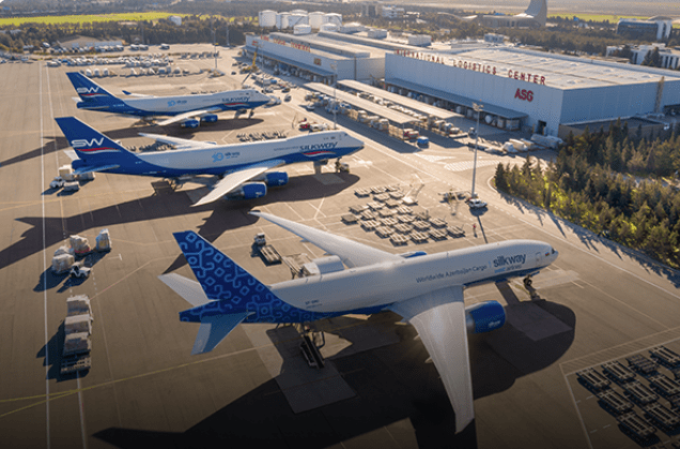
Silk Way West Airlines is eyeing the same “conservative growth strategy” as Cargolux, delegates at the Caspian Air Cargo Summit in Baku heard today.
The Loadstar recently reported that Silk Way had taken delivery of the third 777F of ten due to be delivered by 2030.
CEO Wolfgang Meier rold delegates this would make Silk Way’s the youngest air cargo fleet in the world – and while noting the growth strategy was “very ambitious”, he added: “We are applying a very conservative growth strategy.”
Mr Meier explained that the aircraft deliveries were “very well sourced” and “stretched [out]”.
“We’re going to have one aircraft a year, which is conservative growth, and it is a growth we looked at with Cargolux… They’ve done it and proved in the same manner.”
Cargolux had finalised an order of ten Boeing 777-8Fs in 2022, to replace its 747-400 freighter fleet, to be delivered incrementally.
Mr Meier said Silk Way had applied “the kind of same strategy, by not growing too fast, in order to secure the profitability of our operation”.
Cargolux took on options for a further six aircraft at the time, but had told The Loadstar it was fearful of overcapacity, CEO Richard Forson explaining: “It’s easy to grow when there is a lack of capacity. But when the decline comes, for economic or other reasons, there will be a huge amount of surplus capacity, and that will have a significant impact on the business environment.”
But he added: “I don’t believe there will be a lack of capacity in the medium or long term.”
Indeed, Damien Mazaudier, CEO of CMA CGM Air Cargo, noted that the current supply:demand ratio was in balance to maintain stable freighter profitability across tradelanes.
However, there are concerns that this won’t last and that the growth of global freighter capacity will not be enough to keep up with projected demand. Martin Drew, chief strategy and transformation officer at Atlas Air, said: “Aircraft deliveries are still lagging.
“The back catalogue now for aircraft is at an all-time record, 17,000 in June, that really underscores also the strength of the long-term demand. Freighter capacity remains tight, and the timing of deliveries is now critical.” he added.
And he noted another factor that would exacerbate the capacity shortage: aircraft retirements.
“We now start to see a steadier flow of retirements. And of course, what that does is just compound an already tight supply environment.
“With limited newbuild and conversion slots strained, every retirement continues to widen the gap between supply and demand,” he warned.
Currently, various market scenarios suggest global demand growth projections ranging between 1% and 7% up to 2030.
“This is where the challenge is,” said Mr Drew. “Fleet capacity is just not keeping up with that pace.
“Widebody capacity growth is barely 1% a year, and there’s talk of retirements while new deliveries and conversions remain delayed. That mismatch between demand and constrained supply is going to create, and will continue to create, real tension in the market.”
“This is a fascinating moment in our industry. There’s no doubt about that. Demand is resilient, supply is constrained, and what that means is the role of dedicated freighters is now more critical than ever.”

For uninterrupted access, sign in or sign up to The Daily News, Premium or The Loadstar Enterprise Plan.
Comment on this article