Women set to fly as air cargo mentorship scheme takes off
Women in Aviation and Logistics (WAL) has launched its mentorship scheme, matching 27 industry leaders, ...

PLD: PROPOSAL DETAILSPLD: FINAL OFFERDSV: ROAD CEO MATTERSDSV: VOLUME PROGRESSION IN SEA FREIGHT DSV: TIME TO INCREASE THE VOLUMES IN SEA FREIGHTDSV: HEADCOUNT DISCREPANCIESDSV: TRASHEDDSV: IT IS A MATTER OF TRUSTDSV: FREE CASH FLOW QUESTIONEDDSV: QUESTION TIMEDSV: CEO ON SCHENKER INTEGRATIONDSV: CFO PREPARED REMARKSDSV: CEO PREPARED REMARKSDSV: CONF CALL FWRD: SHOOTING UPKNX: TRADING UPDATE ON THE WAY GM: TRADING UPDATE OUTUPS: REMEMBER THE TAILWINDS
PLD: PROPOSAL DETAILSPLD: FINAL OFFERDSV: ROAD CEO MATTERSDSV: VOLUME PROGRESSION IN SEA FREIGHT DSV: TIME TO INCREASE THE VOLUMES IN SEA FREIGHTDSV: HEADCOUNT DISCREPANCIESDSV: TRASHEDDSV: IT IS A MATTER OF TRUSTDSV: FREE CASH FLOW QUESTIONEDDSV: QUESTION TIMEDSV: CEO ON SCHENKER INTEGRATIONDSV: CFO PREPARED REMARKSDSV: CEO PREPARED REMARKSDSV: CONF CALL FWRD: SHOOTING UPKNX: TRADING UPDATE ON THE WAY GM: TRADING UPDATE OUTUPS: REMEMBER THE TAILWINDS
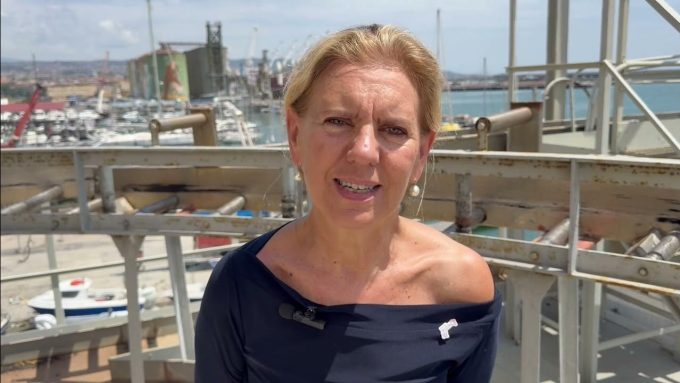
The recent round of nominations for the presidency of 14 of Italy’s 16 port authorities includes no women candidates, despite numerous qualified females.
This is nothing new in the shipping sector, which has a meagre 6% female presence but finds excellent results in port authorities, where the female presence accounts for 46%, equal to approximately 700 employees, with 47% of women in executive positions and 31% in more senior management.
But in governance, in 30 years, we’ve had only two women presidents and six secretaries, out of approximately 300 appointments overall.
More can be done, and we passionately called for it when, in March, we went to Montecitorio, hosted by Salvatore Deidda, president of the Transport Commission, to present the book celebrating Wista Italy’s 30th anniversary, Women on the Bridge of Command.
The appointments to port authority leadership also have symbolic value. Excluding women from port authority leadership reinforces stereotypes and cultural barriers that Wista Italy, the association of women in shipping, which I now chair, has been fighting for decades.
Because the skills are there – as the data demonstrate – and there’s also the desire to do our part and get involved to contribute to the growth of the port sector, even with a complementary approach to the male one.
We hope to be proved wrong with the latest appointments to the top positions of port authorities expected in the coming days, because the complete absence of women at the helm of port authorities is not just a gender equality issue, it’s a problem for the growth and development of the sector. Skills today are gender-neutral and excluding half the population from decision-making bodies has a negative impact on the very quality of institutions and deprives the country of crucial resources for growth.
In recent years, progress has been made to promote inclusion and equality between men and women in the port sector. Authorities’ data demonstrate this. Many companies and institutions are adopting policies to encourage female participation, such as dedicated training programmes, mentoring initiatives, and measures to ensure equal career opportunities. Protocols are being introduced to provide workers with an environment where everyone’s dignity is respected and interpersonal relationships based on equality and mutual fairness are fostered, including through collaborative efforts to overcome any individual or collective gender discrimination.
But this is not enough. Clearly, the glass ceiling that prevents women from accessing leadership roles remains. Promoting gender equality in Italian ports means working together to create a more equitable, inclusive, and representative environment for all those who contribute to the sector. The goal is to avoid compromising anyone’s resumé and instead focus on role efficiency.
Otherwise, if the sector cannot independently achieve parity, as demonstrated by the fact that over the past 30 years there have been a total of six female general secretaries and two female presidents, then the rules must be changed to accelerate this change.
Therefore, we are calling for gender quotas, including in Italian ports – measures aimed at ensuring a minimum representation of women through percentage requirements or reserved positions – in order to establish a new cultural paradigm.
We don’t like gender quotas, but they are undeniably an important accelerant. Just consider that in large companies, where they have been adopted as a legal requirement, they have increased the female share of boards of directors from 7% to 44% in 10 years, resulting in tangible improvements in corporate performance.
This is an appeal we make to prime minister Giorgia Meloni, transport minister Matteo Salvini, the government, the relevant commissions, and the competent regions: we must change course.
For uninterrupted access, sign in or sign up to The Daily News, Premium or The Loadstar Enterprise Plan.
Comment on this article
Arthur Brown
August 06, 2025 at 1:58 pmThe Answer is: No.
Quotas based on sex are anti-human and wrong.