Rising freight costs reflect impact of Gulf crisis and early peak
While freight forwarders and shippers on the transpacific and Asia-Europe trades struggle with soaring spot ...


GXO: NEW WINAMZN: LTL SERVICE UPDATEGM: ENERGY PROVIDER MODELEXPD: LAYOFFS CONFIRMED DHL: DOWNSIDE RISKDHL: OVERVIEWDHL: DATE CENTRE PUSH IN APACMAERSK: HAVE A LOOKTSLA: TAILWINDS FDX: PAYOUT ADJUSTMENT UPDATEKNIN: AIR FREIGHT NETWORK EXPANSION
GXO: NEW WINAMZN: LTL SERVICE UPDATEGM: ENERGY PROVIDER MODELEXPD: LAYOFFS CONFIRMED DHL: DOWNSIDE RISKDHL: OVERVIEWDHL: DATE CENTRE PUSH IN APACMAERSK: HAVE A LOOKTSLA: TAILWINDS FDX: PAYOUT ADJUSTMENT UPDATEKNIN: AIR FREIGHT NETWORK EXPANSION
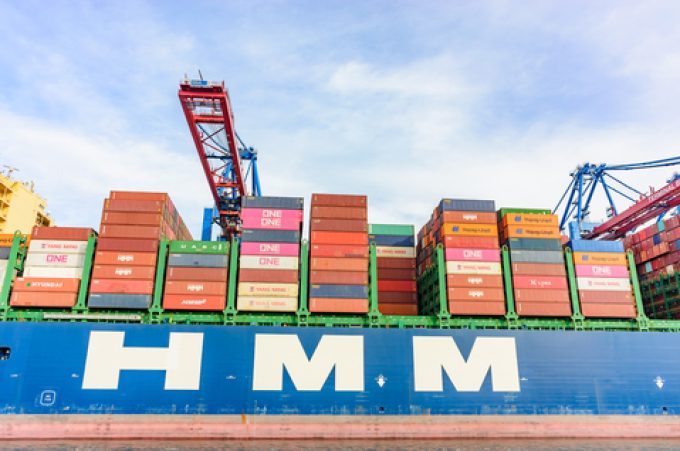
South Korean flagship carrier HMM wants to rebuild its intra-Asia shipping business, and is expanding its feeder fleet to pursue volumes.
When long-haul container freight rates peaked during Covid, HMM shifted a large portion of its shipping capacity from the China-South-east Asia trades to the transpacific and Europe routes, to provide extra slots for South Korean exporters facing logistical difficulties.
This saw HMM’s market share in intra-Asia shipping shrink to 0.5%, compared with 5% on the transpacific and Asia-Europe lanes.
HMM now has 22 feeder ships on order, comprising 10 at 2,800 teu commissioned at HD Hyundai Heavy Industries in March; as well as seven 3,000 teu ships and five at 1,800 teu under construction at Huanghai Shipbuilding in China.
Deliveries of these 22 ships are due to be completed by 2029, allowing HMM to re-establish its intra-Asia presence.
In the meantime, this month HMM purchased two 1,956 teu newbuild resales from Fontek Manufactory, for $33.5m each. The vessels, to be delivered this year and next, are being built at Zhejiang Tenglong Shipbuilding.
In January, HMM appointed Choi Young-soon as its head of South-east Asia, managing around 500 employees across 10 countries, based in Singapore.
The Trump administration’s trade tensions with China have resulted in global tariffs, causing manufacturers to diversify from China and to other emerging regions, especially in South-east Asia, where the region’s share of HMM’s container volume has grown to 17%, from 11% in 2020.
An HMM spokesperson told The Loadstar broadening its intra-Asia network was part of the company’s mid-to-long term growth strategy.
“We’re implementing a “hub-and-spoke” model to launch new routes to regions such as Africa, and we are focusing on securing stable new demand within the South-east Asian market,” she said.
According to Container Trades Statistics (CTS), intra-Asia volumes for the first four months of the year stood at 16.6m teu, a 10% increase on the first four months of 2025.

Source: Container Trades Statistics
Meanwhile, intra-Asia spot freight rates have soared since the onset of the Iran conflict, as The Loadstar previously reported, with Drewry’s Intra-Asia Container Index on 29 May showing average intra-Asia rates up 7% above the previous fortnight, at $1,008 per 40ft, a year-on-year increase of 54%.
For uninterrupted access, sign in or sign up to The Daily News, Premium or The Loadstar Enterprise Plan.

Comment on this article