Maersk and MSC's new plan to qualify to bid for Santos Tecon 10
APM Terminals and MSC-owned terminal operator TiL have reportedly submitted a proposal to Brazil’s competition ...

PLD: PROPOSAL DETAILSPLD: FINAL OFFERDSV: ROAD CEO MATTERSDSV: VOLUME PROGRESSION IN SEA FREIGHT DSV: TIME TO INCREASE THE VOLUMES IN SEA FREIGHTDSV: HEADCOUNT DISCREPANCIESDSV: TRASHEDDSV: IT IS A MATTER OF TRUSTDSV: FREE CASH FLOW QUESTIONEDDSV: QUESTION TIMEDSV: CEO ON SCHENKER INTEGRATIONDSV: CFO PREPARED REMARKSDSV: CEO PREPARED REMARKSDSV: CONF CALL FWRD: SHOOTING UPKNX: TRADING UPDATE ON THE WAY GM: TRADING UPDATE OUTUPS: REMEMBER THE TAILWINDS
PLD: PROPOSAL DETAILSPLD: FINAL OFFERDSV: ROAD CEO MATTERSDSV: VOLUME PROGRESSION IN SEA FREIGHT DSV: TIME TO INCREASE THE VOLUMES IN SEA FREIGHTDSV: HEADCOUNT DISCREPANCIESDSV: TRASHEDDSV: IT IS A MATTER OF TRUSTDSV: FREE CASH FLOW QUESTIONEDDSV: QUESTION TIMEDSV: CEO ON SCHENKER INTEGRATIONDSV: CFO PREPARED REMARKSDSV: CEO PREPARED REMARKSDSV: CONF CALL FWRD: SHOOTING UPKNX: TRADING UPDATE ON THE WAY GM: TRADING UPDATE OUTUPS: REMEMBER THE TAILWINDS
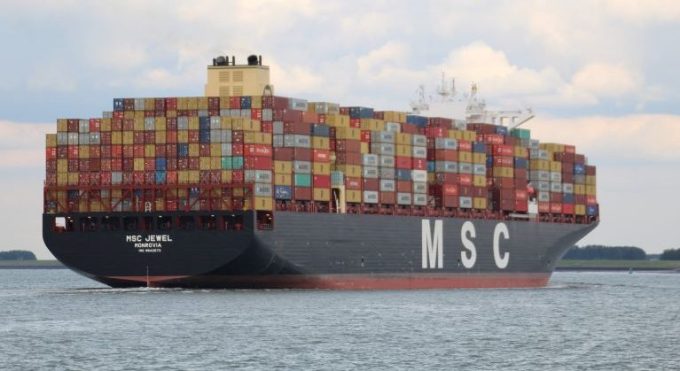
As China’s supply chains become increasingly diverse, and its ports busier, MSC has announced a new intra-Asia service to help businesses “thrive” in this “dynamic market”.
Analysis today from Braemar suggests China’s export engine remains remarkably resilient despite years of “decoupling” rhetoric. “Stop ignoring the numbers,” wrote analyst Jonathan Roach.
“Global container throughput in early 2026 is growing at roughly 1%. China is at 3.5%. The rest of Asia is managing around 2.5%. Europe is barely moving at 0.5%. The US is down nearly 5%,” he said.
Mr Roach highlighted strong growth at major Chinese ports, particularly Ningbo-Zhoushan, which handled 11.55m teu in the first quarter, up nearly 15% year on year.
“While US volumes are contracting and European ports drift along at near-zero growth, Ningbo is putting up numbers that most emerging market economies would envy as a GDP print,” he said.
Shanghai handled 4.7m teu in March alone, beating last year’s record level, while Qingdao processed close to 9m teu in the first quarter and Tianjin continued operating “at full throttle”, according to Mr Roach.
Even the southern Chinese ports, while softer, remained resilient. He noted: “Shenzhen, around 2.8m teu a month, Guangzhou picking up ASEAN trade and vehicle exports. Not spectacular. Not collapsing either.”
Mr Roach argued that Chinese exporters had already adapted to geopolitical tensions by building new trade corridors into South-east Asia, Africa, Latin America, and the Gulf.
And reflecting the growing demand for intra-Asia routes, MSC announced yesterday it would launch a standalone service offering “direct and fast connections” between “vital ports” in China and Vietnam.
The Ochna service will rotate Dalian-Tianjin Xingang-Qingdao-Haiphong-Ho Chi Minh-Dalian, with the first sailing, by the MSC Hailey Ann II, scheduled for 19 June.
“The pivot toward developing economy markets… has been under way for years and is now accelerating,” reported Mr Roach.
“China’s manufacturers have spent the past three years systematically building new trade corridors because they read the western political environment clearly and early. Chinese exporters have more options than their critics assume, and a well-documented habit of using them.”
The head of procurement, pricing, and commercial relations of ocean product at Noatum Logistics, Stephanie Loomis, told The Loadstar that, although the push to reduce reliance on China had been building since the pandemic, and intensified sharply following the US “Liberation Day” tariffs, moving production was far from straightforward.
“Anybody that understands a supply chain knows this is never easy to change; it’s difficult to find new suppliers, so there was a very, very fast acceleration to expand,” she said.
According to Ms Loomis, South-east Asia has absorbed “the vast majority of the declines out of China”, while interest is also growing in India, the Middle East, and Turkey, depending on commodity.
For uninterrupted access, sign in or sign up to The Daily News, Premium or The Loadstar Enterprise Plan.
Comment on this article