Sea Legend Shipping returns to Arctic route with China-Europe NSR sailings
Chinese operator Sea Legend Shipping is to repeat its opportunistic Ningbo-Felixstowe service through the Northern ...

TSLA: JUST AS VW STRUGGLESBA: NEW BIG ORDERBA: THE ORDERBOOK GROWSPLD: PUSHING FOR A DEAL PLD: TIME TO DEALEXPD: ANOTHER ALL-TIME HIGH CHRW: NEW RECORD DSV: AHEAD OF EARNINGS RELEASE JBHT: NEW HIGHS EVERYWHEREPLD: STRONG DELIVERYJBHT: FAIR-VALUE CONSENSUS ESTIMATE AT ALL-TIME HIGH KNIN: AI TECH ADVANTAGEPLD: TRADING UPDATE ON THE WAY KNIN: UPSIDE
TSLA: JUST AS VW STRUGGLESBA: NEW BIG ORDERBA: THE ORDERBOOK GROWSPLD: PUSHING FOR A DEAL PLD: TIME TO DEALEXPD: ANOTHER ALL-TIME HIGH CHRW: NEW RECORD DSV: AHEAD OF EARNINGS RELEASE JBHT: NEW HIGHS EVERYWHEREPLD: STRONG DELIVERYJBHT: FAIR-VALUE CONSENSUS ESTIMATE AT ALL-TIME HIGH KNIN: AI TECH ADVANTAGEPLD: TRADING UPDATE ON THE WAY KNIN: UPSIDE
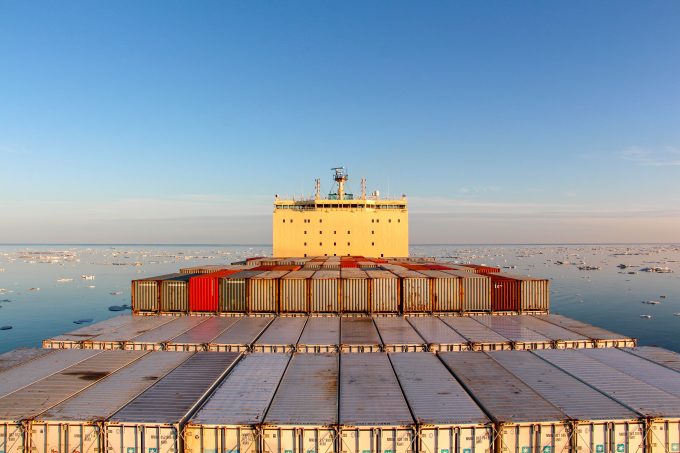
Container shipping through the Northern Sea Route may only show profits after 2040 – due to draught limits that prevent large vessels being deployed.
This is the assessment of a Korea Maritime Institute (KMI) feasibility study, commissioned by the Ministry of Oceans and Fisheries, which on Monday approved local ro-pax ferry operator Panstar Line to pilot a container shipping voyage through the NSR in September.
Panstar owns no containerships, so government agencies are expected to help it charter a 3,000 teu box ship for the Busan-Rotterdam service.
Response to operating the pilot scheme was dismal, with Panstar the sole applicant. South Korea’s flagship carrier, HMM, showed indifference, as it had arrived at the same conclusion as the KMI.
Institute academics assessed that, while the economic viability of commercial operations on the Arctic route would be lower than that of conventional routes, passing through the Suez Canal, it would gradually increase in the long term.
This is because global warming is expected to intensify by 2040, melting more Arctic ice and making the area more accessible to larger ships that offer more economy of scale.
It has been more than a decade since a South Korean company last attempted a voyage through the NSR. In October 2013, Hyundai Motor’s shipping unit, Hyundai Glovis, used chartered icebreaking tanker Stena Polaris to transport naphtha from Russia’s Ust-Luga port to South Korea’s Gwangyang port.
China already had a head start to container shipping via the Arctic – Yangpu Newnew Shipping and Safetrans being the most frequent NSR users.
South Korean president Lee Jae-myung has pledged to strengthen the country’s maritime capabilities and he sees Arctic shipping as an avenue to more business for domestic shipping companies and shipbuilders.
The Ministry of Oceans and Fisheries plans to develop business models to revitalise commercial operations by accumulating data through pilot operations on the Arctic route to dispel industry concerns.
The ministry said: “The economic feasibility, compared to the actual costs incurred by shipping companies, will be revealed during the trial operation this September.
“We plan to continue the trial operation regularly every year and investigate how the overall cost and profit structure changes by diversifying conditions such as vessels, cargo, and operating periods.”
Listen now for a data-rich deep dive into the volatility redefining global shipping in 2026
For uninterrupted access, sign in or sign up to The Daily News, Premium or The Loadstar Enterprise Plan.
Comment on this article