A wave of container spot rate rises amid peak season and tight capacity
Peak season is now fully under way, after a week in which spot rates on ...


FDX: TRADING UPDATE ON THE WAY TSLA: ON THE MENDGM: TECH STARTUP LISTINGCHRW: BOLT-ON DEAL TIMEDHL: GO GREENDSV: BULLISH DSV: NOTE TO INVESTORSKO: TAX FIGHTDSV: STILL 'OVERWEIGHT'WTC: HAMMEREDWTC: MOUNTING TROUBLEWTC: ANOTHER DIFFICULT WEEK CHRW: NEW PRODUCT LAUNCH
FDX: TRADING UPDATE ON THE WAY TSLA: ON THE MENDGM: TECH STARTUP LISTINGCHRW: BOLT-ON DEAL TIMEDHL: GO GREENDSV: BULLISH DSV: NOTE TO INVESTORSKO: TAX FIGHTDSV: STILL 'OVERWEIGHT'WTC: HAMMEREDWTC: MOUNTING TROUBLEWTC: ANOTHER DIFFICULT WEEK CHRW: NEW PRODUCT LAUNCH
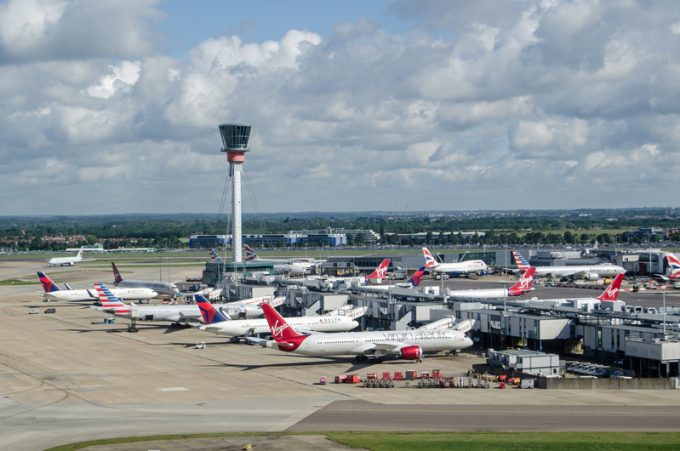
In this new world of uncertainty, it will be agility that wins in air – and some old-fashioned good luck, especially on the over-served transatlantic.
Passenger carriers, with exposure to the US in particular, are likely to face some stress. Delta Airlines said yesterday its planned 3% to 4% growth will no longer happen this year, and it has cut its first quarter earnings outlook.
It’s a quick turnaround from earlier predictions that 2025 would “be the best financial year in [Delta’s] history”.
Much of the woe is based on lacklustre passenger bookings, with US consumer confidence in decline, along with fewer business trips.
“With broad economic uncertainty around global trade, growth has largely stalled,” said CEO Ed Bastian. “In this slower-growth environment, we are protecting margins and cash flow by focusing on what we can control.”
His words echoed those of Virgin Atlantic Cargo boss Nick Diesel, who in an interview with The Loadstar yesterday, said: “Our mantra is that we really need to focus on what is within our control, and how we can make the most of the things that are in our control.”
Roughly 70% of Virgin’s capacity is transatlantic. “When we think about the exposure that we hold in this market, it’s pretty significant.”
Much will depend on what other carriers do. American Airlines Cargo said yesterday it had opened new transatlantic routes for the summer season, including five daily flights between Heathrow and Dallas, with 4,000 monthly widebody flights between the US and Europe in June, July, and August. It’s a hefty amount of capacity.
According to Rotate’s capacity database, belly capacity from Europe to the US rose 27% in the past month, compared with a month earlier, as summer schedules were introduced – but freighter capacity also went up 8%, as shippers rushed to get goods to the US before tariffs set in.
According to Swiss media, for example, three freighters fully laden with pharmaceutical products were booked by Novartis and other shippers. Novartis reportedly booked flights with Cargolux and SilkWay West to Huntsville, Alabama. SilkWay’s aircraft was delayed due to a hydraulic problem, reportedly, and despite a ban on night flights, took off anyway, prepared to pay a fine so the goods could arrive in the US before tariffs.
Euro-Airport confirmed to BlueWin a significant increase in pharmaceutical exports to the US, explaining: “Since the beginning of the year, we have seen a strong increase in export volumes to the US – especially in the months before the official announcement of the tariffs.”
But despite the recent uptick in transatlantic freighter capacity, outside of rushed charters, freighter operators are unlikely to view the trade route as profitable – leaving it to the belly operators.
Freighter operators’ ability to adapt in this environment was cited by Robert van de Weg, CEO of Mexican cargo airline mas air.
“If you have a fixed network and you are a belly operator, you have no ability to adapt. Of course you are vulnerable. But … all full-freighter airlines have the kind of DNA of flexibility; there’s always going to be opportunity. And people still have to live and buy and enjoy.
“I think in the end we can repair that damage quite quickly because of our flexibility and opportunities that the situation will generate.”
Finding opportunities could be tougher for passenger airlines already seeing bookings decline. According to OAG Aviation, Canada-US routes have plummeted by over 70% year on year – although this figure has been widely contested by Canadian airlines, with Air Canada saying the number is closer to 10%.
Virgin, 49% owned by Delta, said this week that demand for travel from the US to the UK had slowed, but there was still normal demand from the UK to the US. But it added that it had seen a “very strong” start to the year.
Mr Diesel explained: “I think what will be interesting to see is how carriers react, and what happens with regards to capacity changes if others start pulling capacity out of a market which has already got significant overcapacity [the transatlantic].
“We’ll look to find the opportunities – what products we should be targeting that are potentially exempt [from tariffs]. We’ve been looking at pharmaceutical movements.”
Passengers might book 18 months in advance, he said, but “cargo is a much, much shorter booking curve, which I think gives us a really interesting and unique opportunity, where we can tap into markets outside of the traditional key tradelanes where there’s maybe not enough demand to be able to deploy freighters”.
He added that cargo bookings had done well so far this year.
“I think that uncertainty in the short term is a pretty positive market, with quite a significant surge in demand in air cargo. In the short term, we’ve seen really high demand into the US, but more recently also out of the US, with some customers concerned about the reciprocal tariffs that other countries might impose.”
Keep watching theloadstar.com for the full interview with Virgin Atlantic Cargo

For uninterrupted access, sign in or sign up to The Daily News, Premium or The Loadstar Enterprise Plan.

Comment on this article