World Cup dream ruled offside for Mexicana, amid US aviation dispute
Mexicana de Aviación has had to drop its plans to run charters to US cities ...

PLD: TRADING UPDATE ON THE WAY KNIN: UPSIDEJBHT: STRONG TRADING UPDATE DSV: EVERY LITTLE HELPSJBHT: CEO REMARKS WMT: VERTICAL INTEGRATION IN LOGISTICSJBHT: HERE WE GOPG: STEADYEXPD: NEW RECORD BA: DELIVERIESMAERSK: BEAR CAMP MUSINGSCHRW: HIGHER HIGHS ON THE RADAR
PLD: TRADING UPDATE ON THE WAY KNIN: UPSIDEJBHT: STRONG TRADING UPDATE DSV: EVERY LITTLE HELPSJBHT: CEO REMARKS WMT: VERTICAL INTEGRATION IN LOGISTICSJBHT: HERE WE GOPG: STEADYEXPD: NEW RECORD BA: DELIVERIESMAERSK: BEAR CAMP MUSINGSCHRW: HIGHER HIGHS ON THE RADAR
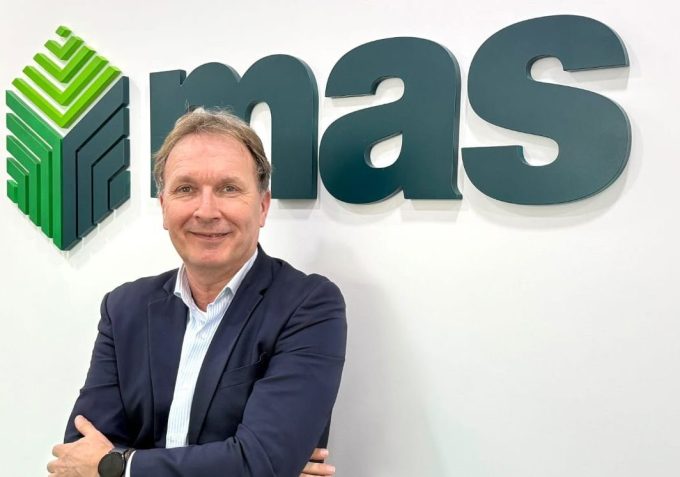
¨De soep wordt nooit zo heet gegeten als ze wordt opgediend¨
So notes a Dutch phrase, meaning: “The soup is never eaten as hot as it is served” – or that things are often not as bad as they initially appear.
It is an optimistic view of what is going on in the US from a man who is now in close proximity to that, both geographically and trade-wise.
Robert van de Weg, ex-KLM Cargo, Atlas Air, Cargolux and AirBridgeCargo, and more recently chief commercial officer for ECS Group, has returned to the freighter business, having taken on the role of CEO of Mexican freighter operator mas a couple of months ago.
Hubbed out of Mexico’s new Felipe Ángeles International Airport, it operates three A330P2Fs, with another arriving in April. It also has use, via its strategic partnership with, and 49% ownership of, Maltese charter carrier Galistair Trading, of one more A330P2F.
“We will have five airplanes in total as of April, and having a commercial partnership with a European AOC and of course, our Mexican AOC, it’s very helpful for traffic rights and all kinds of commercial options.
“Of course, the plan is to grow the airline.”
Mr Van de Weg has grown up with scaling a single-type fleet (Cargolux is a particularly strong proponent of one aircraft type) and plans to keep it that way for now.
“It’s the efficiencies that it brings. If you start to mess around, especially in a smaller airline, with various types, it will get very complicated and very costly.”
The A330 freighter, with a 60-ton capacity, is known to be better on shorter routes, but brings higher unit costs than a larger freighter on longer-haul missions.
“It’s the suitable aircraft for us right now. It works very well for routes of between three and seven hours, so North and South America. The A330 has also been able to allow mas to expand to longer routes without too much risk in term of load-factor.”
But in the mid to longer-term, he explains, the carrier probably could consider a bigger plane, such as an A350F or B777F, with lower unit costs.
The problem, of course, is availability.
“Widebody freighters in general are still in short supply. The idea is that we keep growing at a moderate pace, like one aircraft a year. But it’s very much subject to getting access to planes which are of a good vintage, and at a reasonable lease rate.”
Currently, mas operates a five-times-a-week ecommerce flight from China, via LAX, for one of the Chinese ecommerce logistics companies, the ecommerce staying in Mexico or heading south. It also operates in South America, with services out of Brazil, Colombia, Panama, and Ecuador, often with perishables going north and general cargo going south.
“Ours is essentially a north-south operation; we have connectivity in the Americas and we combine these markets, and obviously we do a lot of interline business through LA, connecting to mostly Asian carriers in both directions.
“Perishables is a big part of our northbound business; flowers from Bogota and Quito to mostly the US, but also connecting to Asian partner airlines. And I would say 60% to 70% overall is perishable.
“The other big chunk is automotive, because Brazil, where we are active, and Mexico both have a significant automotive industry. And we connect some semiconductor traffic from Asia back to Mexico, driven by the big semiconductor industry in the Guadalajara area, in both directions.”
But the network, especially with a new aircraft arriving soon, is very much under review. And this is where the ‘soup’ comes into it.
The new US administration has declared the start of a trade war with its neighbours – and the rest of the world – with the threat of tariffs (as we go to press) hanging like a sword of Damocles over Mexico and Canada.
As a result – if full tariffs are, as promised, implemented on 2 April – according to the OECD, Mexico is now forecast to contract by 1.3% this year, and shrink a further 0.6% next year, instead of growing by 1.2% and 1.6%, as previously expected.
But, as Mr Van de Weg notes, the soup may not be as hot as it currently looks – not least because freighter operators are one of the most adaptable parts of the cargo sector.
“If you have a fixed network and you are a belly operator, you have less ability to adapt. Of course you are more vulnerable. But in our case, and that applies, I think, to all full freighter airlines that have this kind of DNA of flexibility, there’s always going to be opportunity. And people still have to live, buy goods, and enjoy their lives. We are really combining the US to both Mexico and South America, and these combined markets are not just going to dry up.
“So, for these two reasons, I’m not concerned. I’m not saying there will be no damage at all, clearly there will be some damage. But I think in the end we can repair that damage quite quickly, because of our flexibility and opportunities that the situation will generate.
“So I’m not overly worried for our company, more as an individual about general world trade”.
He does concede that trade flows could change significantly, but will more likely cause trouble for airfreight in the mid- to longer-term, “when trade lessens and there is inflation”.
“Then everybody suffers.”
He adds that the 2% of world trade carried by air comprises a “big chunk of airfreight by accident, things that weren’t planned”.
And mas also has the advantage of smaller aircraft, he adds. “We can be quite flexible without 100 tons of capacity.”
mas , he says, has ‘proper cargo DNA’ – strong maintenance and flight operations and a switched-on commercial team with a flexible mindset. And mas operates from a great hub.
“Felipe Ángeles (NLU) is a great place. It has a lot of capacity, it’s not restricted. The handling facilities are excellent.
“And customers are used to that, so it’s a great place to do business, and a great hub for North-South America, which is really our key market for our scheduled business.”
Nevertheless, apart from the deep partnership with Galistair, he sees the possibility of adding commercial partnerships in Asia and Europe.
“I think what we should be looking at is at least one long-haul partner from Europe, with large planes – 747Fs or 777Fs – and at least one or two large carriers from Asia.
“I think that is the goal, which should be mutually beneficial in terms of those airlines getting access to Latin American markets with our system, and vice versa. And of course, mas would also get access this way to more reliable capacity from those markets.”
Mr Van de Weg already knows which airline he favours, but declines to reveal it. Among the many European airlines he has a connection with, CMA CGM Air Cargo could be one possibility. It worked closely with ECS Group when he was CCO; it has three 777Fs with two more on order; and has just made a takeover bid for Air Belgium. It could also use a bigger network itself, and has US ambitions, following its decision to invest in Chicago O’Hare. But no doubt all will be revealed soon.
Meanwhile, ecommerce accounts for at least one of mas’s freighter activities. Is he concerned over the fortunes of the ecommerce sector, with many countries eyeing changes to their de minimis rules?
“I think the bigger underlying issue is local retail; societies are afraid of empty shopping malls. But I think both should be able to co-exist. Ecommerce is unstoppable – the consumers are so used to it.
“We may not see the same very strong growth rates we saw in the past two to three years, but it will still be a very big part of the pie.”
He adds that while the US and Europe are also mature ecommerce markets, there remain a lot of growth markets, especially in South America.
“The world is not yet fully conquered by ecommerce. I’m optimistic, but it’s probably not going to be as bullish as it was in the past two years.”
He also acknowledges that the backhaul to China is something of a challenge.
“That applies to all the main ecommerce markets that connected with China over the past two to three years. We saw a tremendous drop in both load factors and yields. It’s simply a matter of supply and demand. So, obviously, the economics of an ecommerce flight must work on a one-way basis.”
Meanwhile, Mr Van de Weg has a ‘to do’ list at the carrier – but he’s grateful it’s not full of emergencies.
“mas is a very professional airline, it’s very well run. The founder, Luis Sierra, and my predecessor, Andres Fabre, did a great job in developing it.
“The main issue is that we need to grow, we need to scale up. Airline economics are all about scale, you need to drive down the unit cost and, at the same time, become more relevant for customers. So, I think this is priority number one.
“The second priority is more strategic partnerships with airlines. I think we are well-positioned as a reliable partner, with an interesting network and a very good operation.”
The third priority is more of an ongoing issue: to improve efficiency through more digitalisation (it currently uses Smart Kargo’s platform), and to further develop the ESG and sustainability initiatives.
The year started “awkwardly”, he says, but the market is feeling more bullish now.
“Overall, in 2025, I think the market will still be healthy, and I believe this year also will be a good year in the end – because life goes on.”
And personally, despite having had a good five-year stint at ECS Group, Mr Van de Weg is delighted to be back at the helm of an airline – with all the built-in challenges.
“It’s quite a change, but it’s great, positively challenging. It’s all the aspects of an airline – operations, commercial, finance … I really wanted that. It’s challenging me and I love it. Great company, great colleagues – and Mexico’s a great place, it’s really enjoyable.”
It sounds like a great start. Let’s just hope that American soup doesn’t get too hot…
For uninterrupted access, sign in or sign up to The Daily News, Premium or The Loadstar Enterprise Plan.

Comment on this article