Canada looks on as Mexico and US formally talk USMCA renewal
Canada was looking in from the outside as formal negotiations on the future of the ...

WMT: VERTICAL INTEGRATION IN LOGISTICSJBHT: HERE WE GOPG: STEADYEXPD: NEW RECORD BA: DELIVERIESMAERSK: BEAR CAMP MUSINGSCHRW: HIGHER HIGHS ON THE RADARWTC: 'ONE RECORD'HLAG: EARNINGS GUIDANCE UPGRADE AAPL: GLOBAL SMARTPHONE SHIPMENTS VW: THE IMPACT VW: MASSIVE JOB CUTS CONFIRMEDEXPD: BULLISH
WMT: VERTICAL INTEGRATION IN LOGISTICSJBHT: HERE WE GOPG: STEADYEXPD: NEW RECORD BA: DELIVERIESMAERSK: BEAR CAMP MUSINGSCHRW: HIGHER HIGHS ON THE RADARWTC: 'ONE RECORD'HLAG: EARNINGS GUIDANCE UPGRADE AAPL: GLOBAL SMARTPHONE SHIPMENTS VW: THE IMPACT VW: MASSIVE JOB CUTS CONFIRMEDEXPD: BULLISH
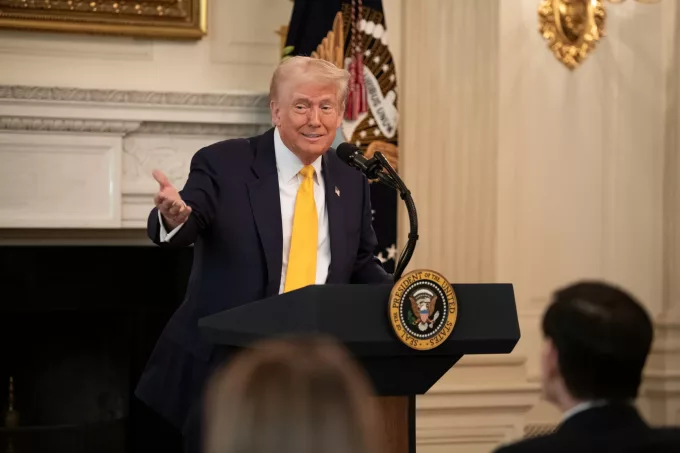
“America First” sentiment rang-in the new year as the US trade representative warned that the US-Mexico-Canada Agreement (USMCA) would not simply be “rubber-stamped”, and that disagreements between the parties would need to be resolved before renewal.
Together with this latest bout of uncertainty between the bloc, the Trump administration also announced some tariff developments, with pasta lovers saved the prospect of a 100% duty and a delay to tariff increases on imported furniture.
USTR Jamieson Greer told the House Ways and Means and Senate Finance Committee: “The USMCA has been successful to a certain degree and has provided some certainty for North American trade.
“However, it is clear that we have not achieved all of our goals with respect to strengthening US manufacturing capacity and creating good jobs,” he added, citing continuing high US trade deficits and what he called “harmful changes” in Mexico’s business environment.
Mr Greer listed a plethora of changes that would need to be agreed if the US was to renew the agreement, which President Trump had negotiated during his first term in office, with penalties for offshoring US production to both countries among them.
And Mr Greer is also seeking bans on Mexican custom brokers that raise their costs for US exports and a simplification of the customs registration for Canadian recipients of US exports, while he also cited unfair protection of EU cheese and meat terms.
Replacing the North American Free Trade Agreement, USMCA – signed into law by President Trump in 2020 – includes a renewal phase six years in, set to fall on 1 July, after which the deal would remain in place for a further 16 years.
Uncertainty has provoked manufacturers into delaying supply chain changes, amid claims that the US lacks the necessary manufacturing capacity, and now investing in Canada and Mexico to become USMCA-compliant may be pointless.
But there was some good news to welcome the new year, with the White House confirming it would delay its increase in the tariff, from 25% to 30%, on upholstered wood products, and a doubling, to 50%, on kitchen cabinets and vanities.
President Trump said: “The trade representative has informed me that the US continues to engage in productive negotiations of agreements with multiple countries to address the threatened impairment of the national security with respect to imports of wood products.
“After considering the information… I determine it is necessary and appropriate to continue these negotiations and to delay for an additional year the increase in the duty rates. In my judgment, the action in this proclamation will result in more productive negotiations.”
Among those to welcome the news was the National Association of Home Builders, which warned that the country was struggling with a housing affordability crisis and would benefit from a tariff exemption on building materials that were raising construction costs.
Similarly, Canadian cabinet makers were pleased, but Canadian Kitchen Cabinet Association VP Luke Elias said more was needed, with the tariffs having disrupted longstanding trade flows between the two countries.
Mr Elias added: “Our industry continues to call for the complete removal of the 25% tariff, which is still highly punitive and continues to distort trade and pricing for businesses and consumers on both sides of the border.”
On a lighter note, Pete Mento, director of global trade advisory services at Baker Tilly, noted that the White House had backpedalled in deciding not to move ahead with plans for a 107% tariff on Italian pasta.
Writing on LinkedIn, Mr Mento said this “would have instantly transformed spaghetti into a luxury good and forced Americans to start explaining to their kids why dinner costs more than college tuition”.
He added: “Predictably, pasta lovers, Italian exporters, and anyone with a pulse lost their minds. Then – plot twist – cooler heads prevailed. Commerce took a second look, sharpened its pencil, and decided maybe detonating the global pasta supply chain was… a bit much.”
This does not mean Italian pasta is tariff-free, the rate has been “slashed down to something that still hurts, but won’t cause nationwide rioting in the pasta aisle”, duties ranging from low single digits to mid-teens, depending on the producer.
“Translation: your rigatoni survives. Olive Garden breathes easy. Little Italy does not revolt. It’s also a perfect microcosm of modern trade policy – start with a flamethrower, end with a butter knife, and tell everyone it was intentional the whole time,” added Mr Mento.
For uninterrupted access, sign in or sign up to The Daily News, Premium or The Loadstar Enterprise Plan.
Comment on this article