Canada looks on as Mexico and US formally talk USMCA renewal
Canada was looking in from the outside as formal negotiations on the future of the ...

VW: THE IMPACT VW: MASSIVE JOB CUTS CONFIRMEDEXPD: BULLISHCHRW: POSITIONING AHEAD OF EARNINGSAMZN: IN THE NUMBERSAMZN: PEOPLE MATTER UNTILVW: THE LAST CUT IS THE DEEPESTJBHT: GEARING UP VW: BUYING TIMER: BIG VOTE OF CONFIDENCEAAPL: BEARISH HEDGEYE AAPL: THE BEAR CASEFDX: LIFE SCIENCES ORG UNVEILEDWTC: UPS AND DOWNSWTC: ASX ANNOUNCEMENT REGARDING DSV PARTNERSHIP VW: D-DAY
VW: THE IMPACT VW: MASSIVE JOB CUTS CONFIRMEDEXPD: BULLISHCHRW: POSITIONING AHEAD OF EARNINGSAMZN: IN THE NUMBERSAMZN: PEOPLE MATTER UNTILVW: THE LAST CUT IS THE DEEPESTJBHT: GEARING UP VW: BUYING TIMER: BIG VOTE OF CONFIDENCEAAPL: BEARISH HEDGEYE AAPL: THE BEAR CASEFDX: LIFE SCIENCES ORG UNVEILEDWTC: UPS AND DOWNSWTC: ASX ANNOUNCEMENT REGARDING DSV PARTNERSHIP VW: D-DAY
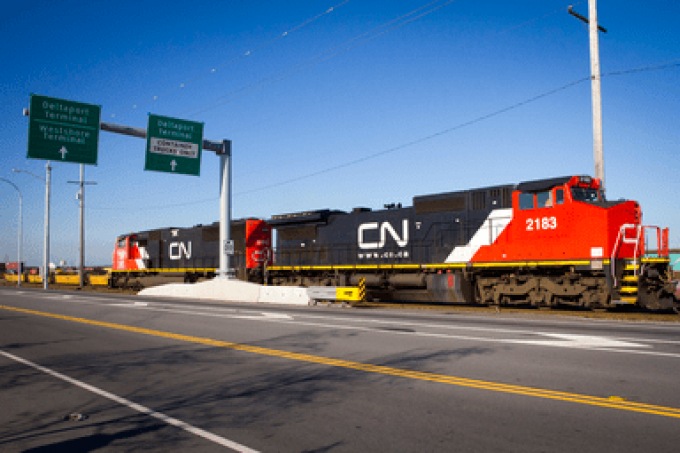
Management of Canadian National (CN) and financial markets are at odds over the outlook for the Canadian Class 1 railroad after a 6% share price drop, the carrier’s steepest in five years, and concerns over USMCA negotiations.
Overall revenues declined 1% year on year during the first three months of 2026, albeit with intermodal proving something of a bright spot, recording 4% year-on-year revenue growth, despite volumes dropping 1%.
Against this backdrop, CN’s management told investors it was prioritising “improving network execution and reliability” as well as its “ability to capture demand in markets that remain resilient amid an uncertain macro-economic environment”.
Analysts and Wall Street, however, have experienced a shifting perception of the carrier, a slew of underperformances since the start of the decade, leaving it lagging its Class 1 peers and forcing a rethink on its status as a steady investment bet for the long term.
National Bank of Canada analyst Cameron Doerksen noted “muted volume and earnings growth this year and uncertainty around USMCA negotiations that could impact investor sentiment in the coming quarters inform our neutral view on the stock.”
The formal review of the US-Mexico-Canada free-trade agreement (frequently referred to as USMCA or CUSMA) is scheduled for 1 July, but preliminary comments from Washington have suggested that the US administration is taking a dim view of an agreement that the US president celebrated as a huge success in his first tenure in the White House, and is looking to major concessions from Canada.
One target area there is the automotive industry, where Washington wants to see more production shift to the US – to the alarm of US auto makers and their peers. In a letter to the US trade representative last week, seven groups of auto manufacturers, parts makers and car dealerships urged the US government to extend the USMCA agreement, arguing that this was crucial for American vehicle production to remain globally competitive “at a time of rapid technological change and intensifying international competition.”
After more than three decades of tariff-free movement of cars and auto parts between the US, Mexico, and Canada, the administration introduced a 25% duty on global automotive imports ‘on national security grounds’, followed by deals for 15% tariffs on automotive imports from Japan, the European Union, and South Korea and 10% tariffs from the UK.
In the earnings call following the Q1 results presentation, Ms Robinson acknowledged that a large question mark was looming over a substantial part of CN’s business.
“It’s impossible to predict where the whole discussions on the CUSMA or the trade flows — even on the broader tariffs outlook — will land,” she said. “So, we’ve assumed, and continue to assume as we look forward, that nothing will change.”
“Our focus is on strong execution. That means getting the fundamentals right every day and delivering consistently for our customers,” she stressed, adding that these moves equipped CN to deal with any future situation.
This stance was hardly surprising. Ms Robinson could not conceivably tell investment analysts that the clouds over USMCA were a massive threat to CN’s business. The central message of the earnings presentation and subsequent call was to reassure everybody that CN was making good progress in improving performance, and becoming stronger in the act.
Still, the assumption that nothing would change it is at odds with an overarching framework that Canada’s prime minister has diagnosed as undergoing fundamental and irreversible change.
For uninterrupted access, sign in or sign up to The Daily News, Premium or The Loadstar Enterprise Plan.

Comment on this article