Air cargo in new balancing act as rates ease and fuel costs climb
Air cargo carriers are facing an increasingly challenging market, with spot rates beginning to cool, ...

DSV: LACK OF TRUST WEIGHSDHL: NEW HIGH DHL: E-COMM DEAL SIGNEDF: NEW PROFIT STREAMCHRW: HEALTHY CORRECTIONDSV: TIME TO BUY INWTC: NO LUCKCHRW: 'NUCLEAR VERDICT'DSV: DEEP CUTKNIN: UPGRADEDKNIN: AI BENEFITSKNIN: NOT WORTH ITPLD: DEAL TIMEKNIN: CONF CALL CLOSING
DSV: LACK OF TRUST WEIGHSDHL: NEW HIGH DHL: E-COMM DEAL SIGNEDF: NEW PROFIT STREAMCHRW: HEALTHY CORRECTIONDSV: TIME TO BUY INWTC: NO LUCKCHRW: 'NUCLEAR VERDICT'DSV: DEEP CUTKNIN: UPGRADEDKNIN: AI BENEFITSKNIN: NOT WORTH ITPLD: DEAL TIMEKNIN: CONF CALL CLOSING
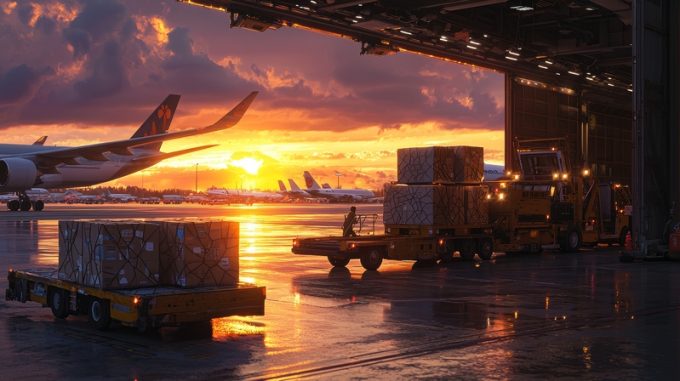
A surge in aluminium coils being flown into the US is emerging, suggesting global airfreight is being driven by industrial and infrastructure demand, rather than a traditional consumer-led recovery.
According to data from Aevean, US air imports of aluminium alloy sheets and strips spiked sharply in October and November, rising from negligible levels in late summer to volumes equivalent to some 70 widebody freighter flights.
Switzerland and China accounted for the bulk of the exports, the former alone representing roughly two-thirds of the volumes.
The main US gateways were Chicago, which handled 44% of the imports, and New York, at 25%, although secondary airports are also seeing increased charter activity linked to the trade.
Marco Bloemen, MD of Aevean, revealed there were “enormous volumes of aluminium coils flying into the US”, and that the phenomenon was “still happening”.
“Remember a couple of years ago, we were flying tyres also because of what was going on in the US,” the analyst said. “These are one of those incidents that happen. It’s a little bit erratic, but we’ve linked it to production issues in the US – initially automotive.”

While Switzerland is not a mass producer of commodity aluminium, it has a niche, specialised, rolled aluminium sector, widely used in automotive, aerospace, electronics, and high-end industrial applications, where substitution is difficult and qualification processes are lengthy.
Aluminium is also a key part of servers, data centres, and advanced manufacturing, where it is used in racks, enclosures, cooling systems, and structural components. Servers and other hi-tech products are also giving healthy volumes to airfreight.
The surge comes as a new US-Taiwan trade deal accelerates investment in US semiconductor and data centre capacity. Taiwanese tech companies have pledged hundreds of billions of dollars in US build-outs, supported by preferential tariff treatment and temporary Section 232 exemptions during construction.
Meanwhile, the aluminium flows are feeding into a broader firming of airfreight rates.
The Freightos Air Index (FAX) has rebounded, rising back to $2.46 per kg after a brief dip around 5 January, returning to roughly the level seen on 19 December.
The recovery highlights how quickly capacity has returned after short-lived seasonal softness. After the lows seen in the first week of January, freighter capacity globally is now up 15% week on week, with double-digit growth on the transatlantic, while Asia-North American capacity is up 9% and Asia-Europe up 14%, according to Rotate’s live capacity database.
The latest TAC Index shows week-on-week rate increases from Vietnam, Bangkok, and Seoul to the US, while outbound Europe-US pricing surged again. Frankfurt’s outbound index jumped more than 10% week on week, while London Heathrow rose even more sharply, leaving rates flat year on year after a prolonged decline. Rates on the busiest lanes out of China were slightly up to the US and slightly down to Europe.
By contrast, rates from Asia to Europe remain weaker, reinforcing the view that current strength is being driven by targeted, project-driven demand, rather than a broad-based trade rebound.
In other airfreight news, MSC Air Cargo has taken delivery of its second 777-200 freighter, I-MSCB Bellatrix, strengthening its long-haul capabilities on Asia-Europe corridors amid ongoing demand-capacity imbalances.
Meanwhile, Liège has become a cargo-only airport, albeit with limited passenger flights possible during winter 2026 if required, underlining its long-term focus on freighter and industrial traffic.

For uninterrupted access, sign in or sign up to The Daily News, Premium or The Loadstar Enterprise Plan.
Comment on this article
Hugh Cutler
January 16, 2026 at 3:00 pmbusiness being driven by aluminium producer in upstate NY who supplied OEM’s had a fire and plant shut down. once plant back up and running aluminium coils by air gone