Battle for freighter capacity intensifies as airlines reshape networks
A cluster of shocks is forcing freighter operators to finely balance their global capacity – ...

WTC: NO LUCKCHRW: 'NUCLEAR VERDICT'DSV: DEEP CUTKNIN: UPGRADEDKNIN: AI BENEFITSKNIN: NOT WORTH ITPLD: DEAL TIMEKNIN: CONF CALL CLOSING KNIN: PRICING POWER KNIN: MARKET SHARE GAINS IN ROAD KNIN: AI-RELATED COST INFLATION OUTLOOKKNIN: APEX LOGISTICS IPO UPDATEKNIN: QUESTION TIMEKNIN: 'COST REDUCTION PROGRAMME IS ON TRACK'KNIN: CFO REMARKSKNIN: MONETARY IMPACT FROM AI KNIN: AI UPSIDEKNIN: STRONG ROAD UNIT DELIVERY KNIN: AIR LOGISTICS SHINES
WTC: NO LUCKCHRW: 'NUCLEAR VERDICT'DSV: DEEP CUTKNIN: UPGRADEDKNIN: AI BENEFITSKNIN: NOT WORTH ITPLD: DEAL TIMEKNIN: CONF CALL CLOSING KNIN: PRICING POWER KNIN: MARKET SHARE GAINS IN ROAD KNIN: AI-RELATED COST INFLATION OUTLOOKKNIN: APEX LOGISTICS IPO UPDATEKNIN: QUESTION TIMEKNIN: 'COST REDUCTION PROGRAMME IS ON TRACK'KNIN: CFO REMARKSKNIN: MONETARY IMPACT FROM AI KNIN: AI UPSIDEKNIN: STRONG ROAD UNIT DELIVERY KNIN: AIR LOGISTICS SHINES
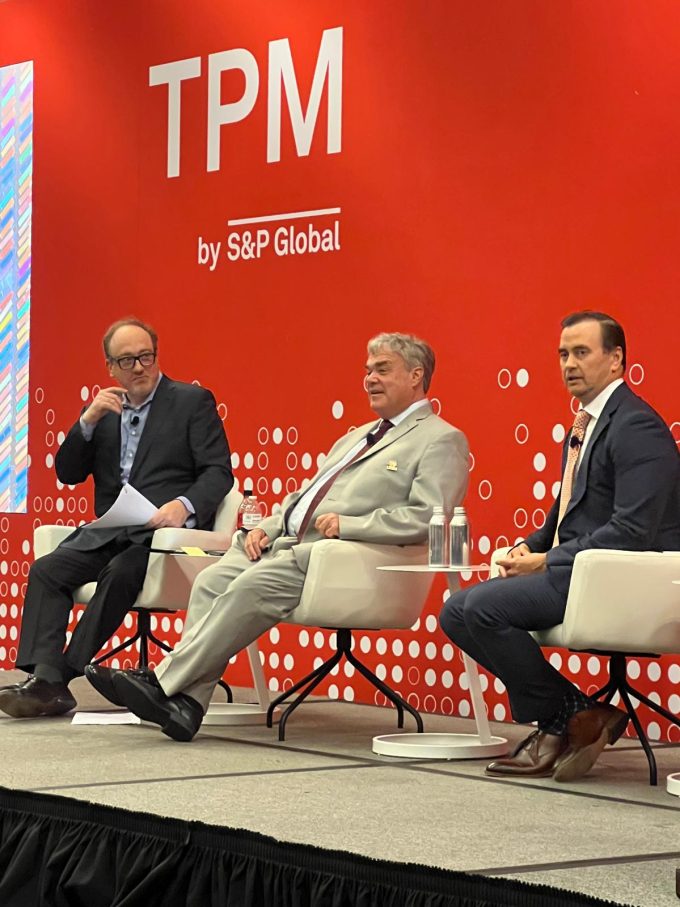
The proposed merger between Union Pacific and Norfolk Southern has triggered a fierce debate across the US freight industry.
Rail executives are promising a faster, seamless coast-to-coast network, while rivals, exporters, and port operators warn the deal could reduce competition and, ultimately, raise shipping costs.
Speaking at TPM in Long Beach this week, Union Pacific EVP of sales and marketing Kenny Rocker argued the merger would finally create a true transcontinental rail network, eliminating costly hand-offs between railroads and improving reliability for international container traffic.
“The country does not have a true transcontinental railroad today,” he said.
Union Pacific believes combining the two networks could remove tens of thousands of long-haul drayage moves and cut interchange delays that often occur when containers transfer between western and eastern railroads, particularly in Chicago.
The gains would be particularly significant for international intermodal cargo, Mr Rocker said, noting that roughly half of Union Pacific’s business is tied to global container flows, and that more than half of that traffic already moves on domestic rail services.
“We want to stop product that goes to Chicago and then straight over,” he said. “Customers want reliability, speed and fewer touchpoints.”
A central argument for the merger is the ability to bypass interchange hubs, such as Chicago, where containers moving between western and eastern railroads can lose 10 to 15 hours in transfer time.
A unified network stretching from the west coast into the US Midwest and Ohio Valley could allow containers arriving in Southern Californian ports to move directly to inland markets, such as Columbus, Cincinnati, Detroit, and Louisville.
Union Pacific also argues the shift would improve rail’s competitiveness against trucking, while streamlining supply chains.
“Our job is to remove the waste in the network,” Mr Rocker said, adding that longer single-line routes significantly improve rail’s ability to win freight from trucks.
Competitors, however, say the merger could weaken the competitive pressure that currently drives service improvements.
John Gabriel, group VP of consumer products for BNSF, warned that combining two of the country’s largest railroads would dramatically reduce routing options for shippers.
“Today every customer effectively has four transcontinental options,” he said. “Overnight that gets cut to two.”
Mr Gabriel argued that many of the improvements highlighted by Union Pacific could already be achieved through collaboration between railroads without the need for consolidation.
“There’s nothing magical about the merger that creates that,” he said.
Agricultural exporters are also weighing potential risks.
Mike Steenhoek, executive director of the Soy Transportation Coalition, said farmers valued having multiple rail options, particularly during supply chain disruptions.
Freight “does not like to be treated like a baton in a relay race”, he said, adding that reducing the number of competing routes could increase supply chain risk.
“In a volatile global market, redundancy and resilience are critical,” Mr Steenhoek said.
If the merger proceeds, some shippers worry railroads could prioritise the most profitable corridors, potentially leaving rural markets with fewer services.
Port and terminal operators have also raised concerns about the potential impact on infrastructure investment.
Carl Bentzel, president of the National Association of Waterfront Employers, said ports had invested heavily in rail connections to expand their inland reach and compete for cargo. But if rail competition declined, the combined railroad could prioritise certain gateways or corridors over others.
“More competitors is better to develop these markets,” he said.
Mr Bentzel added that reduced competition could also limit future expansion of inland rail services linked to ports.
The merger now faces a detailed review by the Surface Transportation Board, which must determine whether the deal enhances competition – the key test under modern US rail merger rules.
While some observers initially believed political support might smooth the path to approval, industry participants say the outcome remains uncertain.
“There’s a long race ahead on this merger,” Mr Bentzel said.
For now, the proposal has exposed a fundamental divide within the US logistics sector: whether consolidation will unlock rail’s long-promised intermodal growth; or concentrate market power in fewer hands.
Listen to this clip from The Loadstar Podcast of Sinan Ozcan, senior executive officer and director at DP World Trade Finance, explain the impact of volatility on trade finance
For uninterrupted access, sign in or sign up to The Daily News, Premium or The Loadstar Enterprise Plan.
Comment on this article