Latest court defeat threatens legal basis of Trump tariff strategy
Donald Trump’s administration has suffered a major legal setback after a US federal trade court ...
AMZN: 'AI EDGE'HD: HERE IS HOW IT LOOKSAMZN: REG RISKMAERSK: MOST HARMED KNIN: GO GREENDSV: CHANGING OF THE GUARD CHRW: OVERVALUEDGM: NEW BIZFDX: GROWING CAUTIOUSDHL: DOUBLE UPGRADEDSV: STOCK MARKET REACTION XOM: OIL INVENTORY WARNINGWTC: EBL DEAL DETAILS
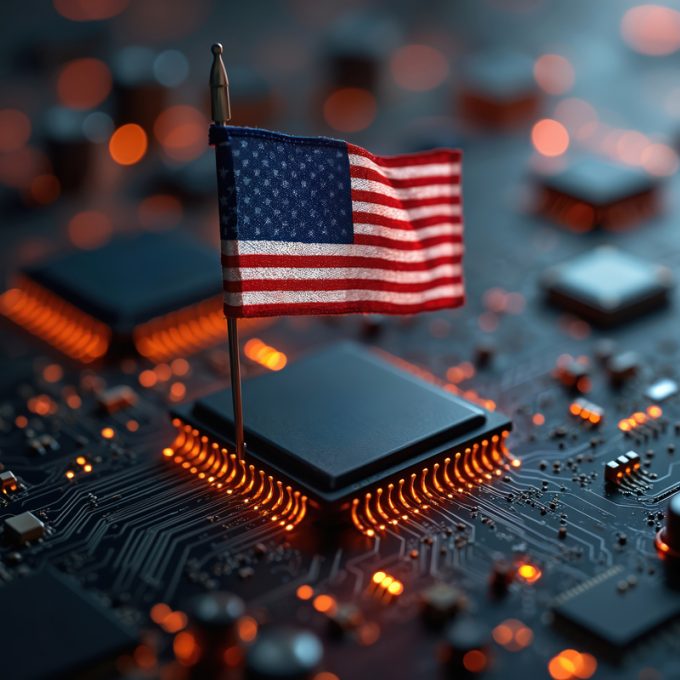
The Trump administration’s new tariffs on semiconductors are more limited than the initial headlines might suggest, but they still represent a significant shift in how the US is using trade policy to influence global supply chains.
Under a presidential proclamation signed on 14 January, the US will impose a 25% tariff on a narrow group of advanced computing chips and related products, using national security powers under Section 232 of the Trade Expansion Act. The measures take effect today.
Despite the sweeping language around semiconductors and national security, most chip imports will not automatically face the tariff. Whether companies have to pay depends largely on how the chips are used in the US.
In practice, the tariff applies only to certain high-end, AI-related chips and some products that contain them. Even then, it only applies when those chips are imported for what the administration considers ‘non-strategic’ uses. Chips brought into the US simply to be sold on, traded, or used without adding value domestically are most exposed.
The proclamation includes broad exemptions. Chips imported for US data centres, research and development, repairs or replacements, consumer electronics, civil industrial uses, public-sector projects, or start-up activity are all excluded. Imports that ‘help build or strengthen the US technology supply chain’ are also exempt.
The result is a policy that targets imports which are simply consumed, while shielding those that contribute to domestic production, research or infrastructure.
For many consumer electronics makers, cloud operators and industrial users, the immediate impact may therefore be limited. Importers of advanced AI hardware, distributors, and traders face far greater exposure, particularly if they cannot clearly document end use.
However, the compliance burden increases for everyone. Importers will need to show where and how covered chips will be used, and US Customs & Border Protection will scrutinise declarations closely. The proclamation also removes duty drawback and limits the advantages of foreign trade zones, raising costs for companies that rely on re-exports or complex logistics models.
One of the most important aspects of the move is legal rather than commercial. The tariffs were imposed through a presidential proclamation rather than an executive order.
Executive orders are primarily instructions to federal agencies. Proclamations are the mechanism Congress sets out for changing tariff treatment under US trade law. Section 232 requires the president to make a national security finding and then formally adjust imports, including by modifying the tariff schedule. That process is designed to be carried out through a proclamation.
This is particularly relevant as the Supreme Court considers limiting the use of emergency economic powers to impose tariffs under the International Emergency Economic Powers Act, with concerns over the lack of clear congressional authority for tariffs. Section 232 does not suffer from the same weakness. Congress explicitly granted the president tariff powers under it, and courts have repeatedly upheld its use, including for steel and aluminium.
That does not mean the new chip tariffs are immune from legal challenge, but it does place them on much firmer footing and makes them harder to overturn on the same grounds as the IEEPA tariffs.
For now, the impact is targeted rather than sweeping. But the message to importers is clear: the US is increasingly using trade law not just to control imports, but to steer where investment, production and technology development take place – and it has chosen a legal route that is designed to last.
For uninterrupted access, sign in or sign up to The Daily News, Premium or The Loadstar Enterprise Plan.
Comment on this article