US tariff switch leaves importers puzzled in a complex new trade landscape
The US today replaced its temporary Section 122 import surcharge with a new Section 301 ...

TFII: EARNINGS BEATCHRW: PUMMELED DSV: LACK OF TRUST WEIGHSDHL: NEW HIGH DHL: E-COMM DEAL SIGNEDF: NEW PROFIT STREAMCHRW: HEALTHY CORRECTIONDSV: TIME TO BUY INWTC: NO LUCKCHRW: 'NUCLEAR VERDICT'DSV: DEEP CUTKNIN: UPGRADEDKNIN: AI BENEFITSKNIN: NOT WORTH IT
TFII: EARNINGS BEATCHRW: PUMMELED DSV: LACK OF TRUST WEIGHSDHL: NEW HIGH DHL: E-COMM DEAL SIGNEDF: NEW PROFIT STREAMCHRW: HEALTHY CORRECTIONDSV: TIME TO BUY INWTC: NO LUCKCHRW: 'NUCLEAR VERDICT'DSV: DEEP CUTKNIN: UPGRADEDKNIN: AI BENEFITSKNIN: NOT WORTH IT
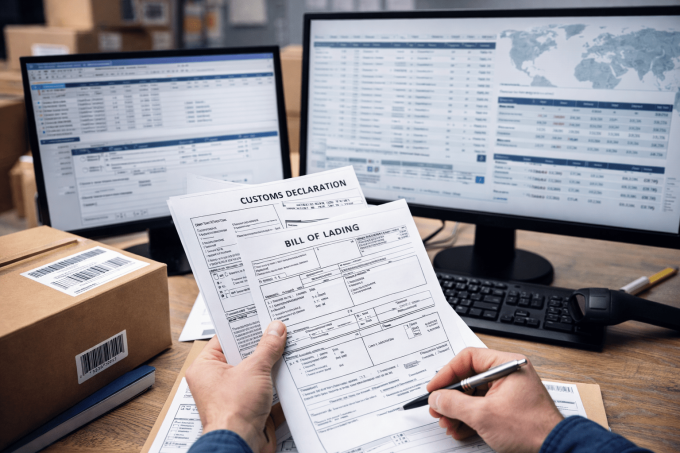
US Customs and Border Protection (CBP) is still weeks – or possibly months – away from being able to process refunds of IEEPA tariffs, according to a court filing submitted on 19 March, despite a ruling earlier this month ordering repayments.
In a declaration to the US Court of International Trade (CIT), the agency revealed that key parts of the system needed to handle refunds at scale remain incomplete, with its central “mass processing” capability only about 45% developed.
The filing provides the clearest indication yet that implementation of the court’s 4 March order will take significantly longer than many importers had hoped.
CBP said its new refund mechanism – the Consolidated Administration and Processing of Entries (CAPE) – is still under construction across multiple components. While the importer-facing claim portal is around 73% complete, and the review and reliquidation function about 80%, the system’s ability to process large volumes of entries remains the main bottleneck.
The agency also confirmed that the initial phase of the programme will exclude certain categories of entries, including those subject to antidumping and countervailing duty orders where liquidation has been suspended, pointing to a phased rollout that could delay refunds for a substantial share of claims.
The update, filed in response to a 12 March court order requiring progress reports, underscores the technical complexity of unwinding tariffs imposed under the International Emergency Economic Powers Act (IEEPA).
CBP said it is continuing to test the system and build additional functionality, including validation checks and audit tracking tools, as well as a refund process that will consolidate payments by importer and liquidation date.
However, the agency stopped short of giving any timeline for deployment, noting only that further development and testing would continue in the coming weeks – a signal that refunds are not imminent.
The CIT has been closely supervising the process, requiring regular updates as CBP works to operationalise the ruling.
The case, Atmus Filtration v United States, has become the central vehicle for implementation of the refund order, with further filings expected as development progresses.

For uninterrupted access, sign in or sign up to The Daily News, Premium or The Loadstar Enterprise Plan.
Comment on this article