Trump’s 50% Canada tariff spares key supply chains, but risks legal challenge
President Donald Trump has escalated his trade dispute with Canada with additional 50% tariffs on ...

WTC: NO LUCKCHRW: 'NUCLEAR VERDICT'DSV: DEEP CUTKNIN: UPGRADEDKNIN: AI BENEFITSKNIN: NOT WORTH ITPLD: DEAL TIMEKNIN: CONF CALL CLOSING KNIN: PRICING POWER KNIN: MARKET SHARE GAINS IN ROAD KNIN: AI-RELATED COST INFLATION OUTLOOKKNIN: APEX LOGISTICS IPO UPDATEKNIN: QUESTION TIMEKNIN: 'COST REDUCTION PROGRAMME IS ON TRACK'KNIN: CFO REMARKSKNIN: MONETARY IMPACT FROM AI KNIN: AI UPSIDEKNIN: STRONG ROAD UNIT DELIVERY KNIN: AIR LOGISTICS SHINES
WTC: NO LUCKCHRW: 'NUCLEAR VERDICT'DSV: DEEP CUTKNIN: UPGRADEDKNIN: AI BENEFITSKNIN: NOT WORTH ITPLD: DEAL TIMEKNIN: CONF CALL CLOSING KNIN: PRICING POWER KNIN: MARKET SHARE GAINS IN ROAD KNIN: AI-RELATED COST INFLATION OUTLOOKKNIN: APEX LOGISTICS IPO UPDATEKNIN: QUESTION TIMEKNIN: 'COST REDUCTION PROGRAMME IS ON TRACK'KNIN: CFO REMARKSKNIN: MONETARY IMPACT FROM AI KNIN: AI UPSIDEKNIN: STRONG ROAD UNIT DELIVERY KNIN: AIR LOGISTICS SHINES
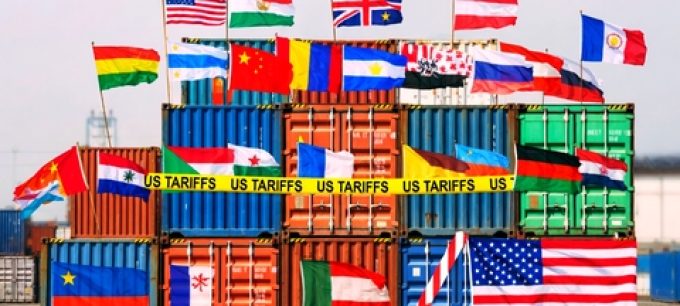
The US today replaced its temporary Section 122 import surcharge with a new Section 301 tariff regime, targeting imports from 60 economies.
However, customs specialists say the biggest challenge will not be the headline duty rates – it will be understanding how the new measures interact with an already crowded web of existing tariffs.
The new ‘forced labour’ Section 301 duties took effect at 12.01am Eastern Time, generally imposing tariffs of either 10% or 12.5%, depending on the exporting country, replacing the Section 122 tariffs, which expired overnight.
While the new tariffs cover the vast majority of US imports, they are far from straightforward.
Trade consultant Pete Mento said importers needed to look beyond the headline rates.
“The thing people need to understand is not necessarily the rates but the interactions,” he wrote on social media.
Rather than introducing a single new layer of duties, the measures must be considered alongside existing China Section 301 tariffs; Section 232 tariffs on steel, aluminium, and automotive products; anti-dumping and countervailing duties; Section 338 actions; and country-specific most-favoured nation (MFN) rates.
Perhaps most significantly, products already subject to Section 232 tariffs appear to have been carved-out of the new Section 301 measures, avoiding cumulative duties for those sectors.
The new regime also introduces different treatment depending on product origin.
Unlike most countries, exports from EU states and Taiwan are subject to a combined tariff of 10%, inclusive of any MFN duty already payable. Japan, South Korea, and Switzerland are treated similarly, with combined duties capped at 12.5%.
In practice, products already liable for MFN duties at or above those thresholds incur no additional Section 301 tariff.
The arrangement reflects last year’s Turnberry Agreement between Washington and Brussels, under which the US agreed to cap tariffs on most EU goods at 15%. However, this has already prompted political criticism.
“We had a deal with America and we have kept to that deal, that side of the deal. That’s why it is a negative surprise that this agreement is not kept,” EU foreign policy chief Kaja Kallas told Reuters during a meeting of ASEAN foreign ministers in the Philippines.
The US administration has also published a lengthy list of exemptions, covering products including semiconductors, pharmaceuticals, civil aircraft, certain critical raw materials, humanitarian donations, informational materials, and goods already covered by Section 232 tariffs.
Forwarders said the uncertainty was already generating questions from customers.
Brazilian forwarder AGL Cargo’s Jackson Campos said it was unclear whether Brazil’s new 12.5% tariff would stack with an existing 25% duty on certain products, potentially creating a combined 37.5% surcharge.
“Everybody is trying to understand how these measures will actually apply,” he said.
That uncertainty is expected to again increase demand for customs expertise, as importers need to review tariff classifications, country of origin, sourcing strategies, and routes before shipping cargo.
However, despite the disruption, Christos Spyrou, founder and CEO of Neutral Air Partner, speaking on The Loadstar’s News in Brief Podcast, believes the market will eventually adjust.
“I think the market will adapt, as it always does,” he said. “We’ve seen it over the years, particularly on one of the biggest markets in the world.”
But, he added: “The impact is more on the integrator, express, and B2C ecommerce sectors, where tariff regulations directly affect high-volume shipments – but also the consumer’s decision,” he said.
He noted that B2B, however, had remained comparatively steady.
“Businesses can adapt to tariffs, or anything else,” he added. “But what the industry needs is stability. We need stability to be able to plan ahead, and we don’t have that now.”
For uninterrupted access, sign in or sign up to The Daily News, Premium or The Loadstar Enterprise Plan.
Comment on this article