Ocean spots and demand hold steady, but waves may be building
Container freight spot rates on the transpacific and Asia-Europe trades showed moderate gains this week, ...


VW: THE LAST CUT IS THE DEEPESTJBHT: GEARING UP VW: BUYING TIMER: BIG VOTE OF CONFIDENCEAAPL: BEARISH HEDGEYE AAPL: THE BEAR CASEFDX: LIFE SCIENCES ORG UNVEILEDWTC: UPS AND DOWNSWTC: ASX ANNOUNCEMENT REGARDING DSV PARTNERSHIP VW: D-DAYPLD: KEEP PUSHINGDHL: NEW AIR SERVICEDHL: GUIDANCE UPGRADE REACTION
VW: THE LAST CUT IS THE DEEPESTJBHT: GEARING UP VW: BUYING TIMER: BIG VOTE OF CONFIDENCEAAPL: BEARISH HEDGEYE AAPL: THE BEAR CASEFDX: LIFE SCIENCES ORG UNVEILEDWTC: UPS AND DOWNSWTC: ASX ANNOUNCEMENT REGARDING DSV PARTNERSHIP VW: D-DAYPLD: KEEP PUSHINGDHL: NEW AIR SERVICEDHL: GUIDANCE UPGRADE REACTION
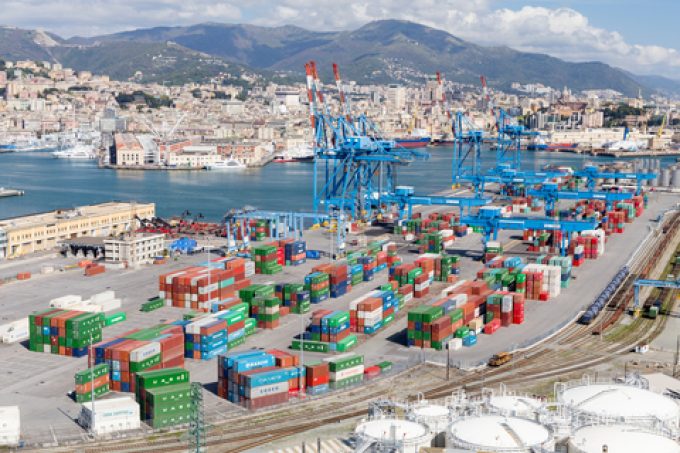
The price differential between Asia-North Europe and Asia-Mediterranean spot rates has hit a level not seen since Russia’s invasion of Ukraine in 2022.
While spot rates from Asia to the Mediterranean have traditionally been more expensive than to North Europe, largely as result of more capacity serving North European ports, the 4 June World Container Index (WCI) from Drewry showed the Mediterranean premium had surpassed $1,500 per 40ft, with the Shanghai-Genoa leg costing $5,089 per 40ft, and Shanghai-Rotterdam at $3,579.
“Prior to the pandemic, the premium mainly stayed between zero and $500 per 40ft, albeit with some temporary deviations,” explained Sea-Intelligence Consulting.

Source: Sea-Intelligence Consulting
“During the pandemic there was a major disconnect in 2020-2022, leading to large-scale fluctuations. It should be noted that the apex was seen in spring 2022 after the Russian invasion of Ukraine, and hence not directly related to the pandemic.
“Volatility remained high, but in recent weeks, the premium has grown to exceed $1,500 per 40ft – a level only seen for some three months during spring 2022,” it added.
The 11 June WCI saw the Mediterranean premium decline to $1,371 per 40ft, but last week it climbed again, to $1,414.
The WCI’s Asia-North Europe and Asia-Mediterranean spot rates were on a par for much of 2025 – at some points North European destinations were marginally more expensive – but began to diverge in the final weeks of the year during the pre-Chinese New Year mini-peak.

Source: Drewry
The obvious change is the Iran conflict and the closure of Hormuz, which has left the Mediterranean as one of the few safe routes shipping could use to access the Gulf markets.
“This shows a clear indirect impact of the Strait of Hormuz crisis, whereby some cargo bound for the Persian Gulf is redirected onto routes through the Mediterranean and then crossing the Suez Canal from the north into Red Sea ports, for subsequent overland transport.
“This leads to a spill-over effect impacting the supply/demand balance in the Mediterranean, causing a spike in the premium versus North Europe,” Sea-Intelligence said.
The rising Mediterranean premium would also explain the recent decision of Gemini partners Maersk and Hapag-Lloyd to shift capacity from North Europe to the Mediterranean and capture the higher-paying freight.
Despite the potential impact of forcing rates into North Europe up, European forwarders have been pleased to see slot capacity increase in southern Europe.
“I cover both the Med and North Europe, and the shift of some capacity to the Med is welcome – any effect on the North Europe routes I think will be short-lived as things start to calm down,” one told The Loadstar last week.
However, the high Mediterranean premium will leave central European importers – that often have a choice whether to route cargo through northern or southern European ports – with some difficult decisions in the weeks ahead, Sea Intelligence said.
“Not only do they need to manage the risk of volatility in the rate levels themselves, but also the increasing volatility related to the arbitrage spread,” it added.
For uninterrupted access, sign in or sign up to The Daily News, Premium or The Loadstar Enterprise Plan.
Comment on this article
June 22, 2026 at 2:34 pmHallo