Verladung_02_print_15x10cm
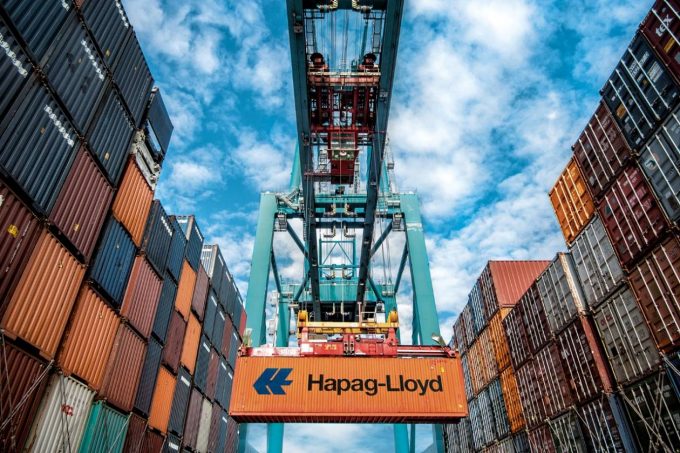
Photo: Hapag-Lloyd.

Hapag-Lloyd’s shopping spree for feeder tonnage to “reduce exposure to a very tight charter market” could prompt other operators to increase their orderbooks or charter lengths.

Maritime consultancy Braemar noted that, despite the final quarter traditionally seeing a quieter period in the market,  this year chartering activity had remained solid. 

“Overall, the market shows few signs of easing, with operators maintaining a healthy level of interest,” it explained. 

One of the main drivers of the firm charter market is the limited number of vessels available, pushing operators into taking forward positions, which, in turn, “reduces forward supply even further”. 

And, Braemar noted: “There is no real sign of this changing any time soon.”

And the consultancy noted that German carrier Hapag-Lloyd’s recent commitment to ten-year charters for 1,800 teu newbuildings would likely push other operators to consider five- to ten-year charters on feeders.  

“As a result, we anticipate high demand for feeder slots to continue, especially those with 2028 delivery,” it said. 

CEO of Hapag-Lloyd Rolf Habben Jensen last week explained that the carrier had decided to invest in up to 22 additional new ships, “especially in the smaller vessel classes”, largely to replace its aging fleet.  

“That will be split, probably a mixture of longer time-charters and ships we own,” he said, and added that Hapag was looking at vessel sizes in the 1,800, 3,500, and 4,500 teu categories.  

“Why do we do it? Replacement; and we also want to reduce our exposure to a very tight charter market to also work on operational costs, because those new ships are a lot more efficient than the ones we have today,” said Mr Habben Jensen.

Further, Braemar reported that one operator was rumoured to be fixing time-charters on “a swathe” of the available 3,000–3,100 teu newbuildings, “effectively removing a large portion of speculatively ordered feeders from the market”.

And Maersk and CMA CGM have reportedly been linked to 2,500 teu vessels in Asia, the latter also having fixed a 1,368 teu vessel for 12 months at $20,000 a day in the Atlantic.  

In the sub-2,000 teu segment, the “slower activity” last week, compared with previous weeks, is not expected to be a lasting trend, as underlying demand remained healthy, and Braemar predicted available units in this size range would soon be “absorbed”.  

And this is reflected in the costs, it said, adding that Panasia’s further 12-month charter on a 1,049 teu vessel in Asia for $16,500 [a day] was up 4.7% on the $15,750 paid for a sister vessel last year.  

Thus, with more operators like Hapag-Lloyd looking to reduce exposure to the charter market, Braemar observed, the feeder newbuilding and second-hand market continued to be active and enquiry levels “remaining steady”. 

One 700 teu feeder vessel, KR Celebes, was sold at a price reported to be close to $7m, and Contships sold two 1,400 teu vessels, Contship Sea and Contship Run, to MSC for $34m. 

Listen to the recent episode of The Loadstar Podcast News in Brief to get up to speed with all things supply chain!

Comment on this article


You must be logged in to post a comment.