A 'super' El Niño a major threat to LatAm's perishable exports
Meteorologists have been warning of the likely impact of the weather on perishables exports from ...


VW: THE IMPACT VW: MASSIVE JOB CUTS CONFIRMEDEXPD: BULLISHCHRW: POSITIONING AHEAD OF EARNINGSAMZN: IN THE NUMBERSAMZN: PEOPLE MATTER UNTILVW: THE LAST CUT IS THE DEEPESTJBHT: GEARING UP VW: BUYING TIMER: BIG VOTE OF CONFIDENCEAAPL: BEARISH HEDGEYE AAPL: THE BEAR CASEFDX: LIFE SCIENCES ORG UNVEILEDWTC: UPS AND DOWNSWTC: ASX ANNOUNCEMENT REGARDING DSV PARTNERSHIP VW: D-DAY
VW: THE IMPACT VW: MASSIVE JOB CUTS CONFIRMEDEXPD: BULLISHCHRW: POSITIONING AHEAD OF EARNINGSAMZN: IN THE NUMBERSAMZN: PEOPLE MATTER UNTILVW: THE LAST CUT IS THE DEEPESTJBHT: GEARING UP VW: BUYING TIMER: BIG VOTE OF CONFIDENCEAAPL: BEARISH HEDGEYE AAPL: THE BEAR CASEFDX: LIFE SCIENCES ORG UNVEILEDWTC: UPS AND DOWNSWTC: ASX ANNOUNCEMENT REGARDING DSV PARTNERSHIP VW: D-DAY
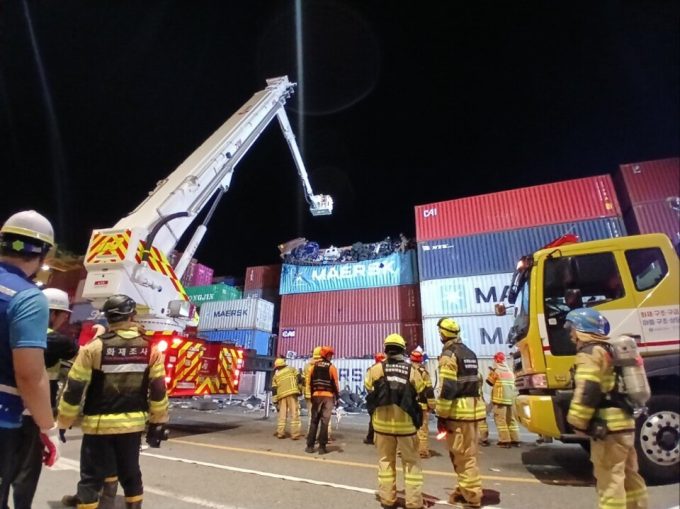
A Maersk container that exploded in South Korea’s Incheon port in August has been found to have contained undeclared liquefied petroleum gas (LPG) cylinders and other flammable items.
Nobody was hurt in the blast in Incheon Hanjin Container Terminal’s yard, where containers were awaiting export.
However, the explosion damaged 13 other containers and the steel fencing around the yard, as well as disrupting unloading operations while cranes were used to clear the debris.
Last week, investigations revealed that three LPG kitchen cylinders, a dozen butane gas cans, one vehicle LPG cylinder, and an LPG-powered small utility vehicle were inside the container – documents submitted to Incheon’s customs officials stated it contained used cars for China and Ghana.
Last week, Heo Jong-sik, a member of the ruling Democratic Party of Korea, said the incident was a “man-made disaster resulting from negligent cargo reporting and lax supervision”.
He said: “If the container had exploded while on a ship, it would have led to a major disaster.
“As Incheon is a hub for exporting used cars, the relevant organisations, such as the Ministry of Oceans and Fisheries, Korea Customs and Incheon Port Authority should examine the management of used car exports and control systems for hazardous goods to prevent such incidents.”
Maersk declined to comment except to say that the Danish line had not been involved in the investigations.
However, Maersk had previously agreed that misdeclared cargo was a serious issue in the container shipping industry, and last month issued an advisory that customers would have to pay a fee for not declaring dangerous goods.
Mike Yarwood, MD for loss prevention at TT Club, told The Loadstar the misdeclaration of dangerous goods arose from an intent to evade costs. He said: “The motivation often relates to avoiding expenses tied to administration, training, compliant packaging, segregation, and other safety measures. This risk most often originates with the shipper.”
But he added that sometimes there was “no deliberate intent to deceive, but rather a lack of understanding of the risks, processes, and regulations involved”.
“Errors may manifest through poor communication/interpretation, incorrect documentation, packaging, or segregation. These failures can occur anywhere along the supply chain, from the shipper to consolidators or logistics providers.
He added: “It’s important to note that the complexity of applicable regulations can sometimes obscure genuine non-compliance, enabling those wishing to avoid scrutiny to operate behind a regulatory ‘smoke-screen’.”
Mr Yarwood concluded: “The global supply chain operates under constant pressure; time, cost, and capacity constraints all drive decision-making. Stakeholders are under competing pressures to optimise finite transport space, which can sometimes lead to shortcuts that increase exposure. Recognising and addressing these realities, through education, due diligence, collaboration, and technology, is key to improving the safety and integrity of dangerous goods transport worldwide.”
For uninterrupted access, sign in or sign up to The Daily News, Premium or The Loadstar Enterprise Plan.

Comment on this article