Maersk returns West Africa service to the Red Sea as Suez comeback gathers pace
Maersk has announced that it is returning a third service to the Red Sea routing, ...


WMT: VERTICAL INTEGRATION IN LOGISTICSJBHT: HERE WE GOPG: STEADYEXPD: NEW RECORD BA: DELIVERIESMAERSK: BEAR CAMP MUSINGSCHRW: HIGHER HIGHS ON THE RADARWTC: 'ONE RECORD'HLAG: EARNINGS GUIDANCE UPGRADE AAPL: GLOBAL SMARTPHONE SHIPMENTS VW: THE IMPACT VW: MASSIVE JOB CUTS CONFIRMEDEXPD: BULLISH
WMT: VERTICAL INTEGRATION IN LOGISTICSJBHT: HERE WE GOPG: STEADYEXPD: NEW RECORD BA: DELIVERIESMAERSK: BEAR CAMP MUSINGSCHRW: HIGHER HIGHS ON THE RADARWTC: 'ONE RECORD'HLAG: EARNINGS GUIDANCE UPGRADE AAPL: GLOBAL SMARTPHONE SHIPMENTS VW: THE IMPACT VW: MASSIVE JOB CUTS CONFIRMEDEXPD: BULLISH
The trickle of vessels transiting Hormuz strengthened into a flow almost overnight after the International Maritime Organization (IMO) published its Strait of Hormuz evacuation plan this week, following consultation with Iranian and Omani authorities.
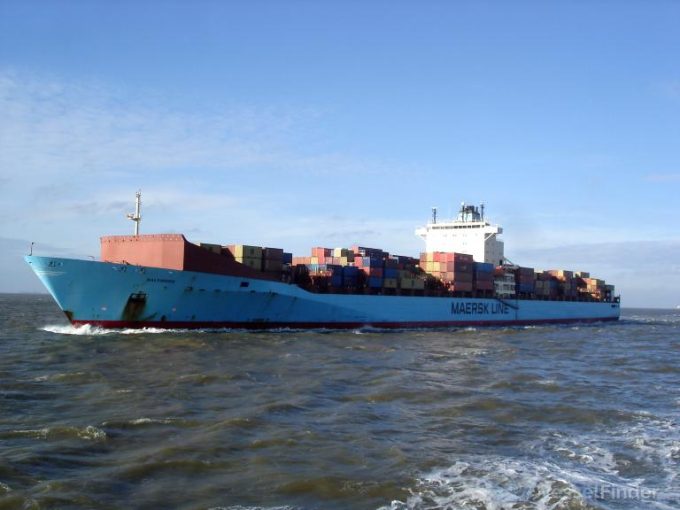
One carrier to take early advantage was Maersk, which last night sent its 4,200 teu Maersk Baltimore and an unnamed time-chartered vessel outbound from the strait.
It reported: “The transits were completed in close coordination with our security partners and followed thorough security assessments. We are pleased to confirm that both journeys were successful, with no issues.”
The carrier added: “The decision to initiate transit the Strait of Hormuz was taken following thorough security assessments and based on recommendations from security partners in the region.”
Maersk now has “three remaining vessels in the Gulf and, at a later stage, we will pursue one additional transit through the Strait of Hormuz”.
The other two vessels, Maersk said, would continue to be deployed on intra-Gulf services, although it added that the majority of its Gulf-bound shipments affected by the strait’s closure had been completed.
The carrier said: “At the onset of the conflict, 47,000 containers bound for the Gulf region were aboard Maersk vessels. Of these, 44,000 have been delivered, while a further 3,000 are pending the final leg.”
Other vessels understood to have exited the Persian Gulf in the past 24 hours include Hapag-Lloyd’s 10,000 teu Haiphong Express and Yang Ming’s 3,000 teu YM Credibility.
Under the IMO plan, two navigation routes have been developed – a northern route administered by Iran, and a southern route administered by Oman – and vessels currently stuck in the Persian Gulf will be notified by either the UKMTO or MICA centre to proceed to a waiting area at the edge of the strait.
“A vessel can begin coordinating its desired route with the relevant coastal state (Islamic Republic of Iran or Sultanate of Oman) at any time after notification,” the IMO said.
“Vessels may proceed on their desired route as soon as confirmation is received from the relevant coastal state.”
According to maritime intelligence firm Windward, 31 vessels of all kinds transited the strait yesterday, 11 inbound and 20 northbound, but warned that full operational normality had yet to resume.
“The strait is not yet fully open. Iran permit requirements for the northern corridor and the uncleared Traffic Separation Scheme remain,” Windward said.
“However, the convergence of accelerating transit volumes, formal safe-passage routing, and the return of commercially neutral tonnage marks a decisive shift in trajectory,” it added.
Adding to the confusion was a statement by Iran last night which claimed it had not agreed to the southern corridor, which it claimed was “unacceptable and poses serious safety risks” – potentially paving the way for the country to launch new projectile attacks on shipping.
Meanwhile, the fragile détente between the US and Iran also appears to have encouraged carriers to begin a tentative return to Red Sea routings on Asia-Europe services, according to Xeneta.
The intelligence platform reported that the Ocean Alliance’s NEU5 Asia-Europe service, staffed exclusively by CMA CGM vessels, “now reroutes its full eastbound leg via Suez, while westbound stays on the Cape [diversion], cutting the round trip by a week to 98 days”.
Xeneta added that Maersk MECL1 North America-Middle East service, on which CMA CGM and APL charter slots, is also experimenting with transiting Suez and the Red Sea on its eastbound leg.
For uninterrupted access, sign in or sign up to The Daily News, Premium or The Loadstar Enterprise Plan.

Comment on this article