EXCLUSIVE: DSV Air & Sea shakes up France and SW Europe cluster
The DSV way – nada más

GM: TRADING UPDATE OUTUPS: REMEMBER THE TAILWINDS PLD: NEW RELEASEPLD: OUCHVW: NEW PARTNERS SOUGHTEXPD: AIRCRAFT ON GROUND SERVICESTSLA: JUST AS VW STRUGGLESBA: NEW BIG ORDERBA: THE ORDERBOOK GROWSPLD: PUSHING FOR A DEAL PLD: TIME TO DEALEXPD: ANOTHER ALL-TIME HIGH CHRW: NEW RECORD DSV: AHEAD OF EARNINGS RELEASE JBHT: NEW HIGHS EVERYWHERE
GM: TRADING UPDATE OUTUPS: REMEMBER THE TAILWINDS PLD: NEW RELEASEPLD: OUCHVW: NEW PARTNERS SOUGHTEXPD: AIRCRAFT ON GROUND SERVICESTSLA: JUST AS VW STRUGGLESBA: NEW BIG ORDERBA: THE ORDERBOOK GROWSPLD: PUSHING FOR A DEAL PLD: TIME TO DEALEXPD: ANOTHER ALL-TIME HIGH CHRW: NEW RECORD DSV: AHEAD OF EARNINGS RELEASE JBHT: NEW HIGHS EVERYWHERE
Introduction
This business is all about people.
It’s about relationships, the daily toil achieved together. The experiences you share, the problems overcome. It can be thrilling, exhausting, fun, dreary.
And who you work for is a major part of that. Not just your manager or CEO, but the company itself. Its culture, its benefits, its ethos. And companies – as a single entity – can often forget that how they behave, and what they do, affects the hive.
They say moving house is one of the most stressful things you can do. M&A is the corporate equivalent. The impact on staff is huge, and often neglected in the noise over money, and shareholders, and integrated processes.
So we are running a short series of articles on takeovers and the impact on staff, with a historical look at DSV’s strategy, and what it has meant for all those caught up in the Danish company’s merger mania.
Some names have been withheld. Our ex-Panalpina manager is Mr Swiss, a former DB Schenker manager is Ms Essen, and ex-DSV account manager is Ms Copenhagen.
Part 1 – Culture
Cultural fit is normally one of the key attributes that acquisitive companies claim is an important ingredient for a merger.
But in the case of DSV, whose M&A activity is based entirely on the financial benefits and consequent clout, company culture has not been a consideration. In fact, the companies that it has acquired have for the large part had unique cultures in the forwarding world that have well and truly been stamped out by the Danish acquirer.
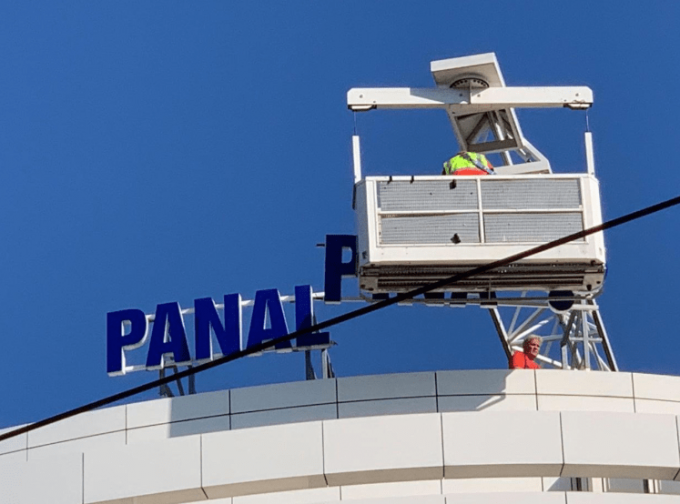
Take Panalpina. Which DSV did. Six years later there is still a considerable amount of resentment and consternation.
Those emotions are a direct consequence of the staff’s loyalty to the Swiss forwarder. The ‘spirit of Panalpina’ wasn’t simply a livery on an aircraft, or even just a marketing team slogan. It meant something.
In fact, according to the CHRO at the time, Karsten Breum, it was a “living document”.
“A story about what it means to work in this company … that captures the roots in our past but also helps us define where we will be in the future”. The spirit was hard-working, energetic, passionate, innovative, entrepreneurial. There was a pride in working at Panalpina.
One definition of the spirit was “not weighed down by assets” – although in air in particular, one of Panalpina’s great claims to fame was its unique (at the time) own controlled air network with leased aircraft. Expensive but effective for customers, it set the company apart from its peers, indicating that the network reach it offered customers was more important than the bottom line. A sharp contrast with DSV – and yet Panalpina remained, in general, profitable.

But while some may argue that the ‘spirit of Panalpina” was a mere slogan, there were other significant cultural differences with its acquirer.
Fully owned by Ernst Göhner Foundation, Panalpina went public in 2005, but the foundation retained 46% ownership – and the culture of a private company lived on, say insiders.
“DSV is a very different ship to Panalpina. 100%,” said one senior former Panalpina manager, let’s call him Mr Swiss. “Culturally speaking, it’s in the processes. But you also need to look at the history of the company, where the company only went public in 2005.
“The game changes if you are privately held versus publicly. And also you had quite a lot going on in air freight then as well.”
Part of Panalpina’s entreprenuerial spirit was evident in its pioneering multi-year rollout of SAP TM, starting in 2012, which standardised processes and introduced quality data, but required significant change management, as well as new processes and behaviours.
It did not go well.
“If you invest a lot of time in SAP TM, which ultimately was not very successful, you probably take the focus away from growing your business, and staying relevant,” said Mr Swiss.
“A time comes when you are too internally focused. The SAP TM took a lot out of the company, which lost the pulse of the customer.”
DSV meanwhile has never knowingly taken its eye off the ball while conducting its many integrations, which everyone agrees tend to go well – for shareholders anyway.
The DSV way was certainly a baptism of fire for its next acquisition after Panalpina – Agility GIL, which was led by the gentle, unassuming and approachable Essa Al-Saleh, a modest man who would always fly economy (much to the chagrin of other managers): this was not a rockstar CEO, nor a rockstar-supporting company.
Agility had the misfortune, perhaps, to learn about M&A all under the ever-watchful eye of DSV. Because in an attempt not to be bought by DSV, Panalpina’s main shareholder first flirted with the “fantastical” idea of buying Agility – a move which raised DSV’s price for it when it was acquired in 2021.
Agility had rather enjoyed the dance with Panalpina, with Essa Al-Saleh saying the process had “whetted its appetite”. It also had to learn a lot.
Mr Al-Saleh told The Loadstar at the time that the process had taught the Kuwaiti company a few lessons.
“It’s not our intention to be murky and we have made steps to make it simpler. We are engaging with investors.
“We break down information on GIL – but we could do a better job. The Panalpina talks highlighted that we could be crisper in describing our business.”
While ultimately the Agility-Panalpina tie-up was blocked by DSV’s Panalpina offer, Mr Al-Saleh expressed a view still widely held in the industry: “You have to give DSV credit – it is experienced and clearly doing something right.”
And so it swallowed up Agility GIL too.
And then there is DB Schenker. That too had a clear character, in the decade or so it was run by Jochen Thewes – who is shortly expected to announce a new role, outside of DSV. Schenker was a fighter, always eyeing opportunities. One former staffer, let’s call her Ms Essen, explained that in most companies, you can get “toxicity or great leaders, even on the same floor”. “But at Schenker, people were more or less aligned – something really rare these days.”
She said that despite Schenker’s “exceptional financial results”, it wasn’t all about the money. “It’s easy to go in that direction, talking about nice things and throwing buzzwords into media. And although I cannot say that every single leader in the head office was authentic, I would say at least they did a great job to show up for the team, to inspire them, and to actually be walking alongside them.
“Schenker learned how to walk that talk and how to stand behind their words.”
Next: And DSV’s culture? “Tough”
(The full series was published as a single story on Premium earlier this week, and is available to read here, for subscribers)
For uninterrupted access, sign in or sign up to The Daily News, Premium or The Loadstar Enterprise Plan.
Comment on this article
Rupert Parry-Jones
August 11, 2025 at 8:26 ama very enjoyable read, thank you.