Maersk ships early movers as IMO unveils Hormuz evacuation plan
The trickle of vessels transiting Hormuz strengthened into a flow almost overnight after the International ...


VW: THE IMPACT VW: MASSIVE JOB CUTS CONFIRMEDEXPD: BULLISHCHRW: POSITIONING AHEAD OF EARNINGSAMZN: IN THE NUMBERSAMZN: PEOPLE MATTER UNTILVW: THE LAST CUT IS THE DEEPESTJBHT: GEARING UP VW: BUYING TIMER: BIG VOTE OF CONFIDENCEAAPL: BEARISH HEDGEYE AAPL: THE BEAR CASEFDX: LIFE SCIENCES ORG UNVEILEDWTC: UPS AND DOWNSWTC: ASX ANNOUNCEMENT REGARDING DSV PARTNERSHIP VW: D-DAY
VW: THE IMPACT VW: MASSIVE JOB CUTS CONFIRMEDEXPD: BULLISHCHRW: POSITIONING AHEAD OF EARNINGSAMZN: IN THE NUMBERSAMZN: PEOPLE MATTER UNTILVW: THE LAST CUT IS THE DEEPESTJBHT: GEARING UP VW: BUYING TIMER: BIG VOTE OF CONFIDENCEAAPL: BEARISH HEDGEYE AAPL: THE BEAR CASEFDX: LIFE SCIENCES ORG UNVEILEDWTC: UPS AND DOWNSWTC: ASX ANNOUNCEMENT REGARDING DSV PARTNERSHIP VW: D-DAY
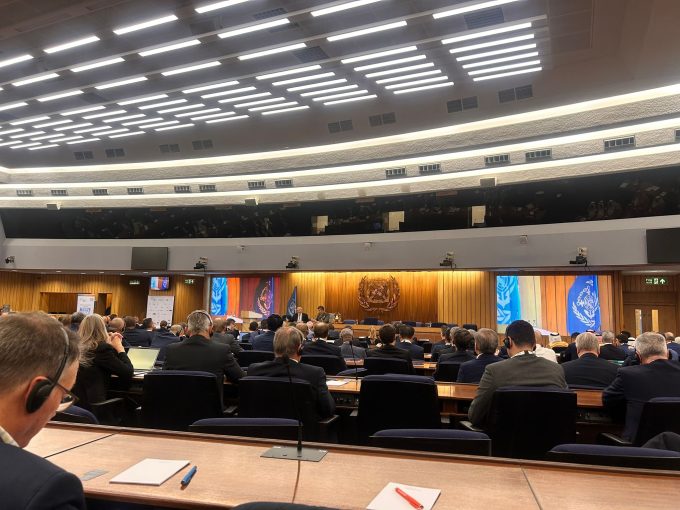
This week The Loadstar will be in attendance at London International Shipping Week bringing you the news that matters.
The International Maritime Organisation (IMO) is “confident” its net-zero framework will be formally adopted next month despite industry concerns, delegates at London International Shipping Week (LISW) heard today.
At the headline conference this morning, IMO secretary general Arsenio Dominguez said: “Next month, we will be meeting here again as we take the next step in achieving our goal of decarbonising the sector by or around 2050. And yes, I remain very confident that this will happen next month.”
One major hurdle, among others, will be US president Donald Trump’s opposition to the IMO’s framework for decarbonisation, and the threatened measures of retaliation against countries that support it.
And at yesterday’s event held by law firm Watson Farley and Williams, partner Toby Royal said that the current US position arguably “undermines the IMO’s authority” and could stall momentum towards achieving decarbonisation.
Mr Royal explained: “As one of the world’s largest economies and maritime trading nations, US non-alignment poses a risk of fragmenting international consensus.
“Without the support of a key player, enforcement and implementation of decarbonisation measures could face significant hurdles… It does weaken global consensus, it risks emboldening other sceptical states, and it raises doubts about the political will to deliver net zero shipping by 2050.”
But Mr Royal added that this opposition doesn’t mark the end of sustainability in the maritime sector, noting that the movement is “more resilient than the position of any single state”.
Mr Dominguez also raised the IMO’s “several concerns”, including the perceived negative impacts on the economy, the alignment of different sectors within the shipping sector, the challenges on infrastructure and availability of fuels.
But he noted: “Once we adopt next month, we have further work to do… that’s the development of all the guidelines for the appropriate implementation.”
Alternative fuel availability, or lack thereof, has also been a prevent theme across this week’s shipping seminars.
Mr Dominguez assured that the IMO has several projects that are “constantly reviewing and monitoring the development and scalability of the different fuels” that will allow for decarbonisation in the sector.
“Nuclear has been mentioned. It’s already on the agenda of the organization. What we will continue to do as well is engage with the experience and implementation of this process, as well as the economic measures that are going to invest into the sector, to support not only the reward mechanisms for the early movers, but in using net-zero and zero emission fuels or technologies,” he said.
The IMOs net zero framework regulations were agreed in April’s MEPC83 [Marine Environment Protection Committee] and will be submitted for adoption as legally binding measures in October.
It must be adopted by a two-thirds majority of the parties to the convention that are present and voting. There are currently 108 such parties, representing over 97% of the world’s merchant shipping fleet by tonnage.
The amendment enters into force six months after acceptance and becomes binding on all parties except those that formally objected. Responsibility for enforcement rests with national governments.
For uninterrupted access, sign in or sign up to The Daily News, Premium or The Loadstar Enterprise Plan.

Comment on this article