Box ship buying spree is over, says Braemar, lines must be more selective
The surge in orders for small and mid-sized containerships has largely addressed the structural capacity shortfall that ...


HLAG: EARNINGS GUIDANCE UPGRADE AAPL: GLOBAL SMARTPHONE SHIPMENTS VW: THE IMPACT VW: MASSIVE JOB CUTS CONFIRMEDEXPD: BULLISHCHRW: POSITIONING AHEAD OF EARNINGSAMZN: IN THE NUMBERSAMZN: PEOPLE MATTER UNTILVW: THE LAST CUT IS THE DEEPESTJBHT: GEARING UP VW: BUYING TIMER: BIG VOTE OF CONFIDENCEAAPL: BEARISH HEDGEYE AAPL: THE BEAR CASEFDX: LIFE SCIENCES ORG UNVEILEDWTC: UPS AND DOWNSWTC: ASX ANNOUNCEMENT REGARDING DSV PARTNERSHIP
HLAG: EARNINGS GUIDANCE UPGRADE AAPL: GLOBAL SMARTPHONE SHIPMENTS VW: THE IMPACT VW: MASSIVE JOB CUTS CONFIRMEDEXPD: BULLISHCHRW: POSITIONING AHEAD OF EARNINGSAMZN: IN THE NUMBERSAMZN: PEOPLE MATTER UNTILVW: THE LAST CUT IS THE DEEPESTJBHT: GEARING UP VW: BUYING TIMER: BIG VOTE OF CONFIDENCEAAPL: BEARISH HEDGEYE AAPL: THE BEAR CASEFDX: LIFE SCIENCES ORG UNVEILEDWTC: UPS AND DOWNSWTC: ASX ANNOUNCEMENT REGARDING DSV PARTNERSHIP
This week The Loadstar will be in attendance at London International Shipping Week bringing you the news that matters.
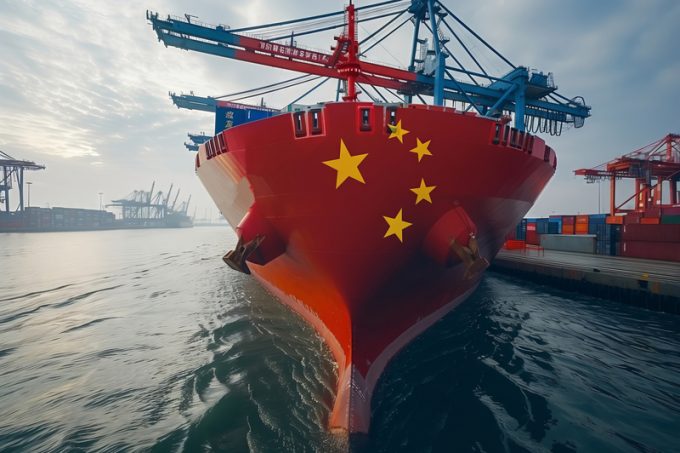
Chinese shipyards could be discounting to offset the possible cons of their vessels in light of looming USTR fees, attendees of a London International Shipping Week (LISW) event heard today.
At a LISW seminar held by law firm Watson Farley & Williams (WFW), partner Toby Royal noted that “China had a bit of a shocker” when looking at the number of orders placed during H1 of 2025 across major shipbuilding countries.
“China’s share of the global order book for the first half of 2025 fell from 72% to 52%,” he said.
“I don’t think that such a general reduction can be attributed solely to the USTR port fees, but rather it’s an aggregation of all the big-picture geopolitical headwinds that the markets face and the dampened investment appetite as a result.
“The question is whether or not the reduction that China has seen is a blip, or if this is something that’s set to continue,” Mr Royal speculated.
According to him, Chinese shipyards have been cutting prices and offering increased flexibility to offset potential headwinds of the USTR fees, set to be implemented next month.
Indeed, Christoforos Bisbikos, partner at WFW, added: “I had a discussion yesterday with a ship owner, he mentioned that for certain vessels there’s a delta between a Chinese-built ship and a Korean-built ship at the rate of 25%.
“But of course, in some tenders, Chinese-built vessels are not preferred. So, what do you do – do you go for the cheap vessel?” he asked, and encouraged stakeholders to find opportunity amid the volatility.
Mr Royal noted that for some of his contacts, Chinese tonnage proved to be the most profitable “on the basis of the discounting and the flexibility that the Chinese market was prepared to show”.
But as well as manufacturing location, vessel owners and operators must also consider second-hand tonnage versus new-builds.
Market intelligence company Braemar reported yesterday that these two markets are currently “full of contradictions”.
It explained: “We seem to be at a juncture where many tramp owners are reluctant to buy at what are perceived to be elevated prices, while at the same time showing little inclination to sell their own vessels given the strength of the charter market.”
According to Braemar, this “fence sitting” has resulted in an illiquid second-hand market.
At the same time, it observed that the newbuilding market has remained active, and the “broadly positive” outlook for the container sector has spurred continued orders despite “historically firm prices”.
“The result is a market full of contradictions; nevertheless, our view is that the second-hand market may soon need a wake-up,” predicted the company.
Listen to The Loadstar Podcast’s most recent episode with data and insight from Container Trades Statistics’ CEO Nigel Pusey!
For uninterrupted access, sign in or sign up to The Daily News, Premium or The Loadstar Enterprise Plan.

Comment on this article