Cautious air cargo shippers delay tenders amid signs rates may have peaked
Air cargo shippers are increasingly delaying tender decisions and extending existing contracts, rather than locking ...


DHL: NEW HIGH TARGET ON THE STREET DSV: EXPECTATIONS RUN HIGH KNIN: DHL GUIDANCE UPGRADE READ-ACROSSKNIN: NEW OPENINGGM: TECH UPSIDEAMZN: BIG DEBT FUNDING ON ITS WAYDHL: 'STELLAR EXPRESS'DHL: UPDATEDHL: STRONG PRELIMINARY UPDATE CHRW: STILL VERY BEARISH PLD: 'MOST PREFERRED'ZIM: DEAL OR NO DEALWTC: MOMENTUMDAC: PAYOUTMAERSK: RETURN TO SUEZ
DHL: NEW HIGH TARGET ON THE STREET DSV: EXPECTATIONS RUN HIGH KNIN: DHL GUIDANCE UPGRADE READ-ACROSSKNIN: NEW OPENINGGM: TECH UPSIDEAMZN: BIG DEBT FUNDING ON ITS WAYDHL: 'STELLAR EXPRESS'DHL: UPDATEDHL: STRONG PRELIMINARY UPDATE CHRW: STILL VERY BEARISH PLD: 'MOST PREFERRED'ZIM: DEAL OR NO DEALWTC: MOMENTUMDAC: PAYOUTMAERSK: RETURN TO SUEZ
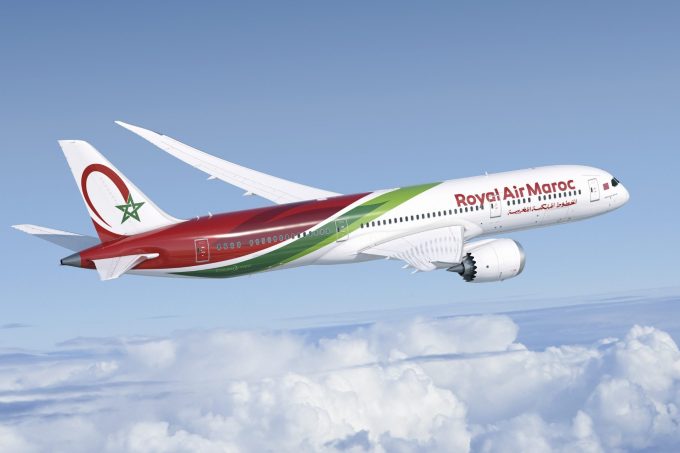
The Morocco–West Africa air cargo corridor is structurally tight, uneven, and still heavily dependent on passenger belly space, and that reality is shaping how carriers and forwarders approach the market in 2026.
While Royal Air Maroc’s Casablanca–Dakar freighter service was announced earlier this year, the more important story now lies in what the wider data and market feedback reveal about capacity, demand, and long-term constraints between North and West Africa.
According to aviation advisory firm IBA, dedicated freighter capacity from Casablanca into West Africa has been inconsistent and, in some cases, shrinking.
On the CMN–Dakar lane, one of the region’s more established sub-Saharan connections, cargo ATK held broadly steady, at around 8m through 2023 and 2024, before dropping sharply in 2025 as scheduled all-cargo lift reduced.
That pattern reflects a broader issue, because outside a handful of core routes, freighter deployment from Casablanca into West Africa remains thin.
Several secondary markets operate at sub-million ATK levels, and some have seen no scheduled all-cargo capacity in certain years. Compared with the much denser European and Middle Eastern corridors from Morocco, the West African profile is fragmented and relatively low-volume.
In other words, this is not a corridor defined by large-scale freighter networks. It is one shaped by patchy lift and structural reliance on passenger aircraft – a patchy supply backdrop that helps explain why Royal Air Maroc’s decision to reinforce the Casablanca–Dakar lane with a dedicated freighter was strategically significant.
Forwarders confirm that air has historically played a secondary role on the lane. Adel Layyadi, head of sales marketing at DHL Global Forwarding & Freight Morocco, told The Loadstar the Casablanca–West Africa corridor relied primarily on ocean freight, with haulage used mainly for shorter distances or landlocked West African countries.
“Airfreight capacity is limited, as passenger flights dominate and leave minimal space for cargo,” he said.
The commodity mix explains why demand for air remains steady, even if lift is limited. Morocco’s exports into West Africa include processed and ag-food products, wheat-based goods such as pasta, seafood, and fish, fresh fruit and vegetables, electrical and electronic equipment, lubricants, fertilisers and phosphates, as well as life sciences and healthcare products.
Perishables and healthcare shipments in particular create time-critical flows that cannot easily shift to slower modes, and when space tightens, prioritisation becomes unavoidable.
Mr Layyadi added: “The limited cargo space that is available tends to be allocated to high-value or time-sensitive commodities, especially electronics, pharmaceutical, and healthcare products.”
This selective allocation only widens the imbalance in the IBA data. Without freighters, belly space becomes the fallback, but it is volatile, driven by passenger demand, not cargo needs.
Interestingly, rates have not shown dramatic swings. DHL described market conditions as stable, with no significant recent fluctuations. That suggests the corridor is not experiencing extreme supply shocks or demand spikes, but instead is operating within a steady but constrained equilibrium.
The sharp drop in Dakar freighter ATK in 2025 shows how quickly the balance can shift when dedicated lift disappears. Even on one of Casablanca’s strongest West African lanes, all‑cargo capacity is never guaranteed.
For Morocco, this is strategically important. Casablanca has built itself as a hub linking North and West Africa with Europe, the Americas, and Asia, backed by 200,000 tonnes of handling capacity and dedicated facilities for perishables and pharmaceuticals. However, hub ambitions depend not only on infrastructure, but also on consistent lift into surrounding regional markets.
The current picture suggests trade between Morocco and West Africa is steady and fairly diverse, but scheduled freighter capacity has not grown in any consistent way. The corridor is still defined by modest volumes, selective use of air freight, and a heavy dependence on the sea.
That does not imply weak demand, because Senegal and other West African economies continue to import Moroccan food products, industrial goods, and healthcare supplies. Rather, it highlights a structural gap between underlying trade flows and the scale of dedicated air cargo capacity available to support them.
So, the Morocco–West Africa corridor is not a fast cargo growth lane, but one of careful juggling, of ocean freight taking most of the volume, passenger aircraft handling the urgent shipments, and freighters used only when needed rather than at scale.
Check out today’s News in Brief podcast!
This article is © The Loadstar. Reproduction, rewriting, or derivative use requires a license. Contact [email protected] for licensing enquiries.

For uninterrupted access, sign in or sign up to The Daily News, Premium or The Loadstar Enterprise Plan.
Comment on this article