CMA CGM the fastest-growing top-ten container carrier this year
CMA CGM has been the fastest-growing top-ten container carrier this year, overtaking long-time leader MSC, ...


VW: THE IMPACT VW: MASSIVE JOB CUTS CONFIRMEDEXPD: BULLISHCHRW: POSITIONING AHEAD OF EARNINGSAMZN: IN THE NUMBERSAMZN: PEOPLE MATTER UNTILVW: THE LAST CUT IS THE DEEPESTJBHT: GEARING UP VW: BUYING TIMER: BIG VOTE OF CONFIDENCEAAPL: BEARISH HEDGEYE AAPL: THE BEAR CASEFDX: LIFE SCIENCES ORG UNVEILEDWTC: UPS AND DOWNSWTC: ASX ANNOUNCEMENT REGARDING DSV PARTNERSHIP VW: D-DAY
VW: THE IMPACT VW: MASSIVE JOB CUTS CONFIRMEDEXPD: BULLISHCHRW: POSITIONING AHEAD OF EARNINGSAMZN: IN THE NUMBERSAMZN: PEOPLE MATTER UNTILVW: THE LAST CUT IS THE DEEPESTJBHT: GEARING UP VW: BUYING TIMER: BIG VOTE OF CONFIDENCEAAPL: BEARISH HEDGEYE AAPL: THE BEAR CASEFDX: LIFE SCIENCES ORG UNVEILEDWTC: UPS AND DOWNSWTC: ASX ANNOUNCEMENT REGARDING DSV PARTNERSHIP VW: D-DAY
(Editor’s note: this is Andrea Gozzi’s debut column for Premium. More about Andrea can be found at the bottom of this column)
It began in 2000, when I was an engineering student in Genoa and my young girlfriend – who later became my beloved wife – proudly walked through the doors of the Italian headquarters of AP Møller-Maersk (APMM) for the first time.
She would talk enthusiastically about the messages that came loud and clear from Mærsk McKinney Møller – “the Old Man,” as they called him with respect, devotion and affection. Those messages could be summed up in five principles: ‘constant attention’; ‘humility’; and then how ‘our employees’ really mattered; and ‘honesty’; as well as… ‘Our Name’. Five core values that also resonated with me, an outside observer.
I have since associated the white-star brand with a demanding moral code.
Of course
For this very reason, when controversy erupted in 2008 over the construction of the APM terminal in Vado Ligure, I did not take a contrary position.
Vado was the beach of my childhood. A stretch of coastline already recognised as fragile, exposed to erosion and environmental risk and as a result it was at the centre of heated protests by associations and citizens all concerned about land consumption, environmental impact and increased port emissions.
But in my mind, Mærsk always meant rigorous planning; attention to the environment; and responsibility towards the community.
“If Mærsk does it, it will be done well.” I also believed in the promise of more than 600 new jobs, a godsend for a depressed industrial area.
Today, I know that trust was naive
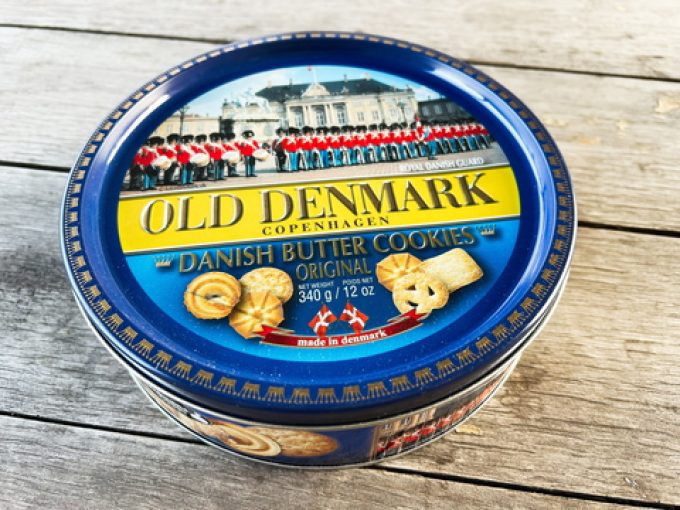
On 16 April 2012, Møller passed away. And perhaps around that time, Mærsk decided to stop giving its employees Danish butter cookies for Christmas, losing the thread that held together the company’s promise: “Our word is our bond.”
The Vado terminal, inaugurated with great fanfare in December 2019 – representatives of major brands such as Ferrero and Lavazza attended – had been touted as a sustainable driver for food along the Mediterranean Silk Road. Looking at the data, I now know that APMM has not created even a third of the jobs announced: five years after opening, according to the most recent chamber of commerce records, the number of employees at the new site does not exceed 220, compared with the 600 promised.
Some of the figures released even included workers not directly linked to the platform, such as those from the previously acquired Reefer Terminal or suppliers such as ZPMC. These figures, for an infrastructure built with over $350m of public funds, raise serious questions about compliance with concessions and the transparency of commitments.
The vast concrete yard built on one of the most beautiful coastlines is largely underutilised: according to public accounts, traffic does not even reach 20% of the declared capacity. Beyond the proclamations, we are faced with a wounded territory, trampled public commitments, and ambiguous press releases that leave a bitter taste. I wonder if those prestigious Italian partners would still agree to act as testimonials for the Danish group’s initiatives.
(By way of background, there’s developments from a trade perspective from Vado and Genova: in a customer advisory earlier this month, APMM said that: “We are pleased to announce the reinstatement of AE11 operations at PSA Genoa, beginning with a phased return starting September 9; In the first stage, the Ane Maersk will perform discharge operations at PSA Genoa while the load operations will remain from Vado Ligure. In the second stage both import and export operations will resume starting from the Alette Maersk and the Maersk Hidalgo from PSA Genoa.”)
Another day in the office? No! You are out!
Then, on 17 January 2025, my wife and three colleagues, all with over 20 years of service, were summoned to a business meeting about KPIs.
From which, they shockingly came out carrying a letter of dismissal and a firm request to return their laptops before leaving the building. The reason? Everything had been transferred to Manila, where labour costs are obviously lower and artificial intelligence can be deployed without European constraints.
The unions have publicly denounced this, calling it a “summary execution”.
In a country that enshrines the dignity of work in its constitution, individual dismissal for “organisational reasons” requires by law at least an attempt at redeployment. And, according to our family’s lawyer, Mærsk has given no evidence of having opened a redeployment process, as required by law.
“If the Old Man were still here, this would not have happened,” my wife whispers. And that stance weighs more than a thousand analyses. Because it shows the shortcoming between Mærsk’s words and its actions.
There is one detail that makes that ‘gap’ between slogan and reality even wider: according to press reports confirmed by those present at the meeting, when the Genoa Councillor for Employment summoned Mærsk’s top management to discuss the case, nobody showed up – neither CEO Vincent Clerc* nor European manager Simon Bergulf nor local manager Rachele Izzo.
(*For the record, ironically or not: APMM CEO Clerc in the 2023 Code of Conduct… when thousand of people were let go [more below], was interviewed. When asked why the code mattered, “Wouldn’t it be enough to just refer to the law?”, He replied: “Not at all. I take it for granted that those who work for Maersk adhere to the law, this goes without saying. But besides the law, our Code of Conduct contains guiding principles based on our Purpose and Values, the commitments to our employees and customers, the UN Global Compact, and the economic, social and environmental challenges our business faces.”)
After the local manager shifted the responsibility to Copenhagen but refused to provide the councillor with the names of her superiors, the executives contacted directly chose not to pursue the matter, referring everything back to the local manager. This behaviour has been described by unions and local institutions as a buck-passing exercise, in a region that has given APM Terminals its sea and hundreds of millions of euros in public funds.
Meanwhile
The picture on the international market is clear: after the Covid peak, in 2023 Mærsk announced 10,000 global layoffs, while continuing to post extraordinary profits — over $6bn in net profit last year, the third-best result in its history — distributing capital via billion-dollar buybacks and increasing dividends to shareholders, as stated in official reports to investors. That was a pandemic-fueled season where “counting the billions” was the the favourite hobby in town.
The logic is clear, I reckon: with the downturn, save on wages in Europe but move operations to low-cost countries, even at a time of unprecedented wealth.
Now I think back to the cookie ritual. Those blue tins brightened up employees’ kitchens for years, carrying with them a message of care and continuity. Today, they no longer arrive. The workforce-friendly act of giving time, attention to various needs and recognition – they do not seem to be part of the KPIs. Yet, Møller’s values remind us that “The Name is a promise.”
The Mærsk Code of Conduct proclaims: “We create the right environment for our employees, in a safe workplace, free from discrimination and harassment.”
But faced with four professionals – I certainly understand it is a tiny number in the bigger scheme, but that’s exactly how all were treaded: as numbers** – with over twenty years of experience, the company decided that the only algorithm that mattered was the one that cuts the average hourly cost, showing them the door in the middle of a working day, as if they were the ones at fault. A practice that, in Italian workplaces (where ‘Big Logistics’ has been under scrutiny in recent times), not only appears unusual but also humiliating on a personal level.
(**Talking of which: conveniently for APMM, with a total of just four layoffs, formal discussions with the unions are not required by law but the unions already undertook strikes earlier this year)
The wound is aggravated by the Italian landscape and its laws: dismissals remain strictly regulated; transparency, motivation, and respect are needed when that option is embraced by big corporations. If this course of action is already legally questionable, ethically it is highly unfortunate for the management team, affecting brand value of a group that has always prided itself on “constantly caring” for its people.
So, what remains of Mærsk’s pillars?
The name, perhaps?
Not even that, anecdotally, in places. For example, take the official documents filed in court – papers that I consulted directly – and there is a glaring error in there: “Mærks”! It may be a small typo, but may be symptomatic of the way APMM cares about some of its actions, and, in turn, its own DNA nowadays.
What remains instead for the old-school Mærsk-folk is the memory of a butter cookie – crumbly, but authentic. And the hope that, after swinging the pendulum of efficiency too far, someone will look up again and remember that “our word is our bond”. I humbly believe Mærsk should revive the long-standing tradition of giving its employees those Danish butter cookies every Christmas. Maybe the new chief of staff, Anne-Sophie Zerlang Karlsen, will understand that better than other managers did in recent times.
(APMM lawyers now are expected to show up before Magistrate Judge Maria Ida Scotto on 9 October for two separate back-to-back hearings, included that concerning my wife.
Editor’s note: Andrea Gozzi, PhD in Computer Automation Engineering, is a director, author, and lecturer passionate about business ecosystems, leadership, and guiding digital transformation in complex organisations. Born and raised in Liguria, he is closely connected to his homeland and driven by a vision of innovation that respects society and builds a more sustainable future. He can be contacted here)
For uninterrupted access, sign in or sign up to The Daily News, Premium or The Loadstar Enterprise Plan.

Comment on this article
Chris Edwards
September 15, 2025 at 8:07 pmWhat a well written piece. We were recently discussing the so called “pillars” of this company when compared to our experience as a customer. We landed on one term: capricious.
Alessandro Pasetti
September 15, 2025 at 8:34 pmMany thanks for the fantastic feedback, Chris!
Andrea Gozzi
September 15, 2025 at 9:39 pmChris, thank you for reading the article and for your kind words.
The choice of the term ‘capricious’ is significant to me, and I am concerned to hear that values are wavering not only within the company, but also in front of customers.
In my opinion, the Genoa-Vado affair has already highlighted a rift in the relationship with employees and local communities. If customers also perceive inconsistency, I wonder about the health of the shipping giant, despite the appearance of robust data.
I would be interested to hear more about your experience as a customer. This could help me determine whether the current situation is an isolated incident or part of a broader identity crisis.