A new era for shippers, with blanked sailings now a fact of life
Container shipping has entered a new era of structurally constrained capacity, as carriers routinely withdraw ...

PLD: PROPOSAL DETAILSPLD: FINAL OFFERDSV: ROAD CEO MATTERSDSV: VOLUME PROGRESSION IN SEA FREIGHT DSV: TIME TO INCREASE THE VOLUMES IN SEA FREIGHTDSV: HEADCOUNT DISCREPANCIESDSV: TRASHEDDSV: IT IS A MATTER OF TRUSTDSV: FREE CASH FLOW QUESTIONEDDSV: QUESTION TIMEDSV: CEO ON SCHENKER INTEGRATIONDSV: CFO PREPARED REMARKSDSV: CEO PREPARED REMARKSDSV: CONF CALL FWRD: SHOOTING UPKNX: TRADING UPDATE ON THE WAY GM: TRADING UPDATE OUTUPS: REMEMBER THE TAILWINDS
PLD: PROPOSAL DETAILSPLD: FINAL OFFERDSV: ROAD CEO MATTERSDSV: VOLUME PROGRESSION IN SEA FREIGHT DSV: TIME TO INCREASE THE VOLUMES IN SEA FREIGHTDSV: HEADCOUNT DISCREPANCIESDSV: TRASHEDDSV: IT IS A MATTER OF TRUSTDSV: FREE CASH FLOW QUESTIONEDDSV: QUESTION TIMEDSV: CEO ON SCHENKER INTEGRATIONDSV: CFO PREPARED REMARKSDSV: CEO PREPARED REMARKSDSV: CONF CALL FWRD: SHOOTING UPKNX: TRADING UPDATE ON THE WAY GM: TRADING UPDATE OUTUPS: REMEMBER THE TAILWINDS
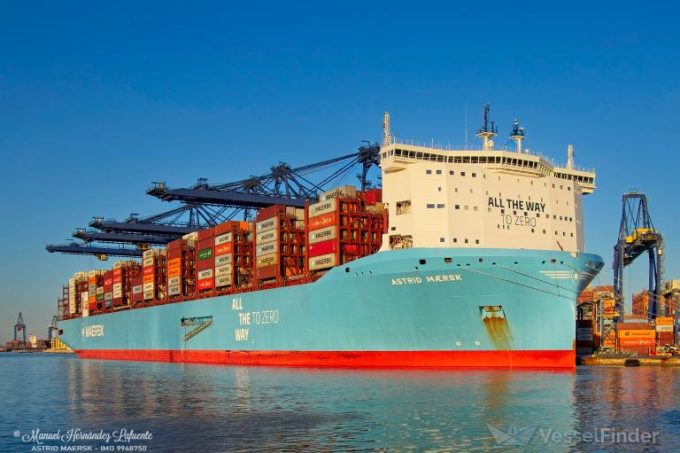
Shippers have accused ocean carriers of exploiting the market disruption through “opaque surcharges” and reduced contract allocations, following Maersk’s upgraded financial guidance for 2026.
The Danish carrier yesterday raised its full-year EBITDA guidance to $8bn-$10bn, up from the $4.5bn-$7bn range it gave as recently as 7 May, and swung its EBIT forecast from -$1.5bn to +$1bn to +$2bn-$4bn.
Maersk also increased its forecast for global container market growth to 4%, from its previous guidance of 2%-4%. The group is due to report its second-quarter results on 13 August.
The scale of the guidance upgrade suggests a far stronger freight rate environment than anticipated only weeks ago.
“It would therefore imply that rates are now coming in some $300-$350 per 40ft higher than expected less than two months ago for the full year average,” said industry consultant Lars Jensen.
“Given that in the Q1 guidance they already knew the rates in Q1, this increase would have to take place solely in Q2-Q4. In order to reach this increase, the implication therefore is an underlying expectation of $400-$467 per 40ft rate increase for Q2-Q4 on average.”
Alphaliner also noted the significance of the revised forecast, saying: “Contrary to expectations at the start of the year, the top end of the latest guidance could even beat last year’s $3.5bn result.”
For many customers, however, the improved outlook came as little surprise.
One shipper with Maersk contracts told The Loadstar: “The entire market has been reacting to the Straits of Hormuz situation, so Maersk is not alone in its improved financial results, as the spot pricing increases and PSSs etc are applied to long-term contracts.
“It’s not the shippers’ first rodeo, they’ve seen this situation almost annually since 2019 as ocean pricing increases in line with market situations. If it was only Maersk that was profiting then clearly that would be a bigger story, but to be honest, they’re reacting the same as their competition.”
Indeed, the director of the Global Shipper’s Forum, James Hookham, suggested Maersk was under greater scrutiny because, as a listed company, it must publish financial guidance, while privately owned rivals faced many of the same market dynamics.
However, one shipper added that some customers were reporting reduced allocations on long-term contracts with the Danish carrier.
“One thing I have noticed is other shippers saying their allocation has been cut. We have been approached by a few companies in the last few weeks saying the same, so it’s not an isolated incident.”
Another shipper, requesting anonymity, “due to the risk of Maersk penalising anyone who doesn’t sing their praises”, was more critical.
“Many shippers I talk to are disappointed with how mercenary Maersk has been, taking full advantage of the current market conditions. We understood the need for emergency bunker surcharges (and paid them), but they intend to continue charging emergency surcharges even when the indexed bunker surcharges have caught up with the market reality. Seems like a total cash grab.
“Even worse, we have our allocations cut ‘due to high demand’, but if we pay more – miraculously, space becomes available.
“Shippers are feeling squeezed and payback will come when this current peak is over,” added the source.
Mr Hookham added that carriers’ improved earnings were a predictable consequence of the ongoing disruption, but argued that the lack of transparency around surcharges was undermining customer trust.
“It’s beginning to sound a lot like Covid. Shippers will not be surprised that carrier revenues have increased off the back of service disruption, delays, and diversions – we’ve been here before!” he told The Loadstar.
“What does stick in the throat is the lack of transparency on the surcharges (which are only supposed to recover additional costs, not inflate the profit forecast), and the acknowledged ability to ‘manage’ the undoubted excess capacity to create an apparently tight market.”
Nevertheless, he warned that repeated surcharges risked damaging the long-term customer relationships Maersk has said were central to its integrated logistics strategy.
“Maersk’s joyous announcement of higher profits as the customers suffer poorer service seems to trade a short-term gain for its stated future ambitions,” he said.
Mr Hookham summarised: “There are four dynamics going on in the market at the moment: recovery of genuine additional costs on disrupted routes; recovery of higher fuel costs generally; the ‘throw jelly at the wall’ approach to general rate increases; and the overt management of excess capacity that limits the number of bookable slots available to shippers, despite there being an acknowledged oversupply.”
The GSF advised shippers to keep a separate account of “non-discretionary surcharges” they pay over each accounting period, and using those, calculate the proportion of the total shipping cost accounted for by surcharges added retrospectively by the carrier, the percentage reduction in profit margin incurred on the selling value of goods in each surcharged container, and the total amount of surcharges paid to each carrier in a period – “a measure of the extent the carrier departed from the price you originally agreed with them”.
“Shippers that have done this have surprised themselves at the size of the numbers, especially over time. At the very least they will be able to explain to their FD why they are overbudget … again,” Mr Hookham concluded.
For uninterrupted access, sign in or sign up to The Daily News, Premium or The Loadstar Enterprise Plan.
Comment on this article