Monsoon storms bring added disruption to India's west coast ports
Monsoon storms along India’s west coast have exacerbated supply chain disruption for containerised freight moving ...


VW: D-DAYPLD: KEEP PUSHINGDHL: NEW AIR SERVICEDHL: GUIDANCE UPGRADE REACTIONDHL: NEW HIGH TARGET ON THE STREET DSV: EXPECTATIONS RUN HIGH KNIN: DHL GUIDANCE UPGRADE READ-ACROSSKNIN: NEW OPENINGGM: TECH UPSIDEAMZN: BIG DEBT FUNDING ON ITS WAYDHL: 'STELLAR EXPRESS'DHL: UPDATEDHL: STRONG PRELIMINARY UPDATE CHRW: STILL VERY BEARISH
VW: D-DAYPLD: KEEP PUSHINGDHL: NEW AIR SERVICEDHL: GUIDANCE UPGRADE REACTIONDHL: NEW HIGH TARGET ON THE STREET DSV: EXPECTATIONS RUN HIGH KNIN: DHL GUIDANCE UPGRADE READ-ACROSSKNIN: NEW OPENINGGM: TECH UPSIDEAMZN: BIG DEBT FUNDING ON ITS WAYDHL: 'STELLAR EXPRESS'DHL: UPDATEDHL: STRONG PRELIMINARY UPDATE CHRW: STILL VERY BEARISH
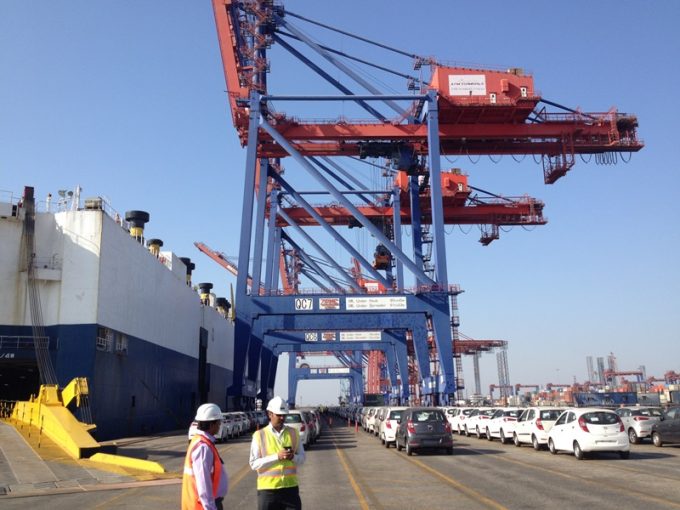
The Indian government has revoked a 2018 cabotage law reform widely portrayed as “a game-changer for evolving supply chain dynamics in a growing market”.
Under the deregulated framework, major foreign-flagged containership operators had the freedom to transport laden export/import containers for transhipment and empty boxes for repositioning along the Indian coast without seeking specific approvals for every call.
This unfettered coastal trade access was intended to encourage intra-country hub operations, instead of transhipment over foreign ports, which adds to shippers’ logistics costs.
However, the government said there had been little evidence that the reform had yielded those policy objectives.
The Ministry of Ports and Shipping said: “Despite the intent of the said orders, representations have been received from stakeholders highlighting that the objectives have not been achieved, with issues such as increased freight costs, shortage of containers, predatory practices by foreign carriers, and stagnation in the Indian-flagged container fleet persisting.”
The government also claimed Indian fleet development had been crimped by a lack of investment from industry participants due to greater competition.
“The ministry recognises the need to promote Indian shipping tonnage and ensure seamless transport of cargo along the Indian coast and internationally to achieve India’s $1 trillion goods export target by 2030,” the notification added.
The return of cabotage restrictions comes as major container lines have stepped up regional cargo relay activity at some ports, particularly Mundra, and one Indian container shipping industry observer told The Loadstar: “Some major carriers might now revert to transhipment at neighbouring foreign ports.
“The cabotage relaxation has led to vibrancy in transhipment volumes at many Indian ports over the past eight years,” the source claimed.
Sri Lanka’s Colombo Port, Singapore and Jebel Ali have historically handled the majority of Indian containers moving via transhipment.
But the recent opening of Adani Ports’ Vizhinjam facilityhas raised India’s “hub aspirations” in the region. The deepwater terminal reached its designed annual capacity of 1 million teu in less than a year, and work on a plan to triple capacity at the new greenfield port has just broken ground to handle anticipated transhipment demand.
One government strategy behind the cabotage rule rethink could be to push more carriers to register ships under the Indian flag, sources believe, following recent positive signals from CMA CGM, Maersk and MSC.
Maritime investment efforts are afoot in India to rein-in the foreign-flagged carriers that now wield formidable capacity and pricing powers. For example, a new domestic container line venture, Bharat Container Shipping Line (BCSL), is taking shape with ambitious operational plans, with three domestic public enterprises, Shipping Corp of India (SCI), Container Corp of India (Concor) and Sagarmala Finance Corp, expected to jointly inject some $6.9bn in the initial stage.
The Indian government is also reportedly considering investment participation in BCSL from some of the state-owned seaports, including JNPA (Nhava Sheva).

For uninterrupted access, sign in or sign up to The Daily News, Premium or The Loadstar Enterprise Plan.
Comment on this article