FedEx-CMA CGM deal hints at new battle for air cargo capacity
When CMA CGM announced its $1.4bn acquisition of FedEx Supply Chain, most attention focused on the contract logistics business ...


PLD: TRADING UPDATE ON THE WAY KNIN: UPSIDEJBHT: STRONG TRADING UPDATE DSV: EVERY LITTLE HELPSJBHT: CEO REMARKS WMT: VERTICAL INTEGRATION IN LOGISTICSJBHT: HERE WE GOPG: STEADYEXPD: NEW RECORD BA: DELIVERIESMAERSK: BEAR CAMP MUSINGSCHRW: HIGHER HIGHS ON THE RADAR
PLD: TRADING UPDATE ON THE WAY KNIN: UPSIDEJBHT: STRONG TRADING UPDATE DSV: EVERY LITTLE HELPSJBHT: CEO REMARKS WMT: VERTICAL INTEGRATION IN LOGISTICSJBHT: HERE WE GOPG: STEADYEXPD: NEW RECORD BA: DELIVERIESMAERSK: BEAR CAMP MUSINGSCHRW: HIGHER HIGHS ON THE RADAR
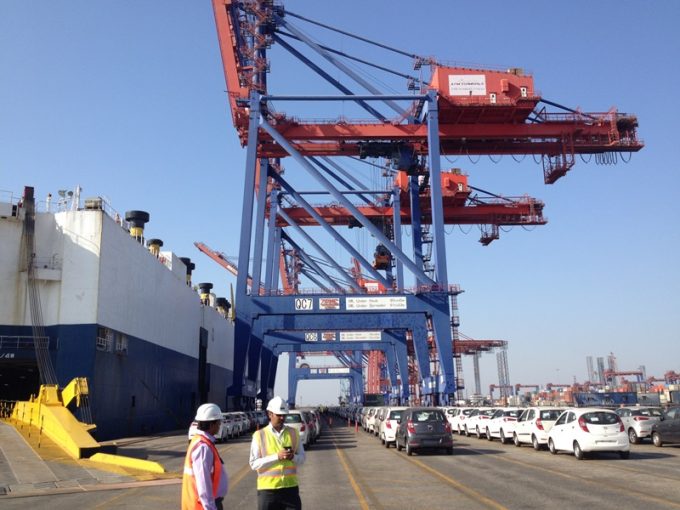
India’s policymakers are revisiting key fundamentals surrounding cabotage relaxations for foreign-flag vessels in coastal runs, a policy reversal that sparked pushback from container industry stakeholders.
Officials at the Directorate General of Shipping (DG Shipping) and those handling taxation systems have been asked to submit a report before approving fresh legal/structural frameworks, according to industry sources.
The broader government intent is to permit foreign-flag ships to carry both domestic and export/import containers alongside ro-ro cargo on the coastal leg.
Sources within the government believe foreign carrier participation will boost coastal container service frequency, reduce freight costs by up to 30%, as a result of greater competition, and drive the development of hub-and-spoke networks. There is also a view that increased vessel capacity will enable lower slot costs for industry stakeholders.
Officials have six months to make recommendations for a revised policy, sources added.
In January, the government revoked a 2018 cabotage law reform allowing the participation of foreign-flag ships in Indian coastal waters, but later agreed to extend that unregulated window for six months, through October, in response to industry appeals and the Middle East disruption that necessitated handling massive third-country transhipment volumes at Indian ports.
“Representation has been received from stakeholders, including container liner operators’ associations, highlighting operational concerns arising out of the prevailing geopolitical situation, particularly in the Persian Gulf region, affecting global shipping dynamics such as route planning, insurance costs, and vessel deployment,” India’s Ministry of Shipping said, allowing the reprieve.
“After a detailed review and feedback from stakeholders, [the ministry] has considered a limited and time-bound extension of the implementation timeline in view of the exceptional and evolving global circumstances, to ensure operational continuity and stability in container shipping operations,” it added.
In a protectionist approach, cargo transportation between Indian ports, theoretically coastal shipping, had been confined to Indian-flag vessels.
In addition to encouraging more direct mainline calls and hub ambitions, questions regarding Indian tonnage availability had prompted Indian policymakers to open the coastal gates to foreign capacity participants.
Opinion is divided as to whether the policy change had a positive impact on the supply chain for Indian containerised trade and shippers.
Foreign lines claimed the cabotage waiver boosted transhipment activity across major Indian ports, thus reducing the need for local exporters/importers to use other Asian hubs for mainline connections.
On the other hand, Indian shipowners had dismissed claims by their foreign counterparts regarding cost gains for cargo owners. While seeking to reimpose cabotage restrictions, the government also said the liberalised programme had failed to realise the outlined objectives.
Amid shifting regulations and increasing compliance burdens, the mega foreign container lines have begun investing in new areas in India, such as vessel registration and shipbuilding. CMA CGM is at the vanguard of this, having declared six flag changes to the Indian registry.
“CMA CGM has been a strong growth partner of India across maritime, logistics, and infrastructure sectors, strengthening port partnerships, expanding inland logistics capabilities, and enhancing its service network to support the country’s growing trade ambitions,” the Marseille-based carrier said.
For uninterrupted access, sign in or sign up to The Daily News, Premium or The Loadstar Enterprise Plan.

Comment on this article