Adani pushes to complete Mundra's fifth terminal as competition looms
Adani Ports (APSEZ) is pushing hard to open of its under-construction fifth container terminal (CT5) ...


JBHT: NEW HIGHS EVERYWHEREPLD: STRONG DELIVERYJBHT: FAIR-VALUE CONSENSUS ESTIMATE AT ALL-TIME HIGH KNIN: AI TECH ADVANTAGEPLD: TRADING UPDATE ON THE WAY KNIN: UPSIDEJBHT: STRONG TRADING UPDATE DSV: EVERY LITTLE HELPSJBHT: CEO REMARKS WMT: VERTICAL INTEGRATION IN LOGISTICS
JBHT: NEW HIGHS EVERYWHEREPLD: STRONG DELIVERYJBHT: FAIR-VALUE CONSENSUS ESTIMATE AT ALL-TIME HIGH KNIN: AI TECH ADVANTAGEPLD: TRADING UPDATE ON THE WAY KNIN: UPSIDEJBHT: STRONG TRADING UPDATE DSV: EVERY LITTLE HELPSJBHT: CEO REMARKS WMT: VERTICAL INTEGRATION IN LOGISTICS
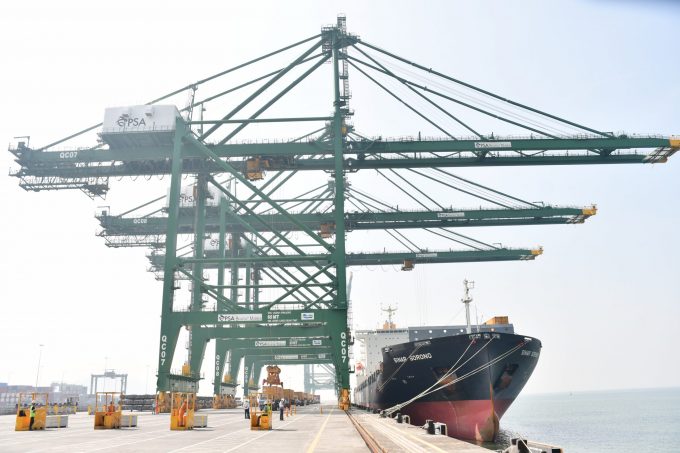
The pressure of terminal congestion at India’s Nhava Sheva Port (JNPA) is seeing carriers declare ad-hoc or temporary berthing window adjustments.
Maersk told customers its two upcoming MECL voyages on the India-US east coast trade would temporarily dock at PSA Mumbai (BMCT), the port’s largest facility by capacity, instead of its regular call at DP World Nhava Sheva (NSICT).
Maersk Kensington and Clementine Maersk are scheduled to arrive at JNPA on 22 and 29 May, respectively.
Last-minute terminal reshuffling typically leaves shippers facing some cargo planning challenges. Additionally, terminal handling charges (THCs) vary from terminal to terminal, so any changes in rates applied by the carrier could trickle down to the shipper contract.
The MECL is a major westbound service for Indian exporters sending goods to North America. According to terminal sources in JNPA, Maersk had a yard space issue at NSICT.
“BMCT has a larger yard area,” one source told The Loadstar. “Maersk needs to move backlogged containers out of NSICT, mostly empty boxes, before bringing fresh volumes into the terminal.”
JNPA has been plagued by significant cargo gate-in/out disruption over the past few weeks, leading to “finger-pointing” between port stakeholders over who would be responsible for remedying the situation.
Meanwhile, as trucking delays persist, PSA Mumbai is trying to shift more freight from trucks to the rail side.
Last week, the operator signed a memorandum of understanding with rail company Container Corp of India (Concor) to expand the share of volumes moved by train. This will “pave the way for collaboration between Concor and PSA on development of multimodal products to strengthen connectivity and support efficient cargo movements between ports and hinterland locations across India”, reported the rail logistics giant.
The collaboration comes as authorities are in the final stages of launching regular train operations between northern Indian inland container depots and JNPA along the dedicated freight corridor (DFC) network.
JNPA also continues its co-ordinated efforts to improve cargo flows in and out of its terminals. The authority has announced an updated standard operating procedure for quicker clearance of containers.
“JNPA, in collaboration with Customs, terminal operators, container freight stations , and transporting companies, is devising a system to remove the import containers en bloc from terminals to specific freight stations which have high pendency,” the authority said.
Listen now for a data-rich deep dive into the volatility redefining global shipping in 2026
For uninterrupted access, sign in or sign up to The Daily News, Premium or The Loadstar Enterprise Plan.

Comment on this article