Scrapping at 20-year low – owners cling to ageing tonnage
The global container shipping industry all but avoided the recycling market last year, vessel scrapping ...


VW: D-DAYPLD: KEEP PUSHINGDHL: NEW AIR SERVICEDHL: GUIDANCE UPGRADE REACTIONDHL: NEW HIGH TARGET ON THE STREET DSV: EXPECTATIONS RUN HIGH KNIN: DHL GUIDANCE UPGRADE READ-ACROSSKNIN: NEW OPENINGGM: TECH UPSIDEAMZN: BIG DEBT FUNDING ON ITS WAYDHL: 'STELLAR EXPRESS'DHL: UPDATEDHL: STRONG PRELIMINARY UPDATE CHRW: STILL VERY BEARISH
VW: D-DAYPLD: KEEP PUSHINGDHL: NEW AIR SERVICEDHL: GUIDANCE UPGRADE REACTIONDHL: NEW HIGH TARGET ON THE STREET DSV: EXPECTATIONS RUN HIGH KNIN: DHL GUIDANCE UPGRADE READ-ACROSSKNIN: NEW OPENINGGM: TECH UPSIDEAMZN: BIG DEBT FUNDING ON ITS WAYDHL: 'STELLAR EXPRESS'DHL: UPDATEDHL: STRONG PRELIMINARY UPDATE CHRW: STILL VERY BEARISH
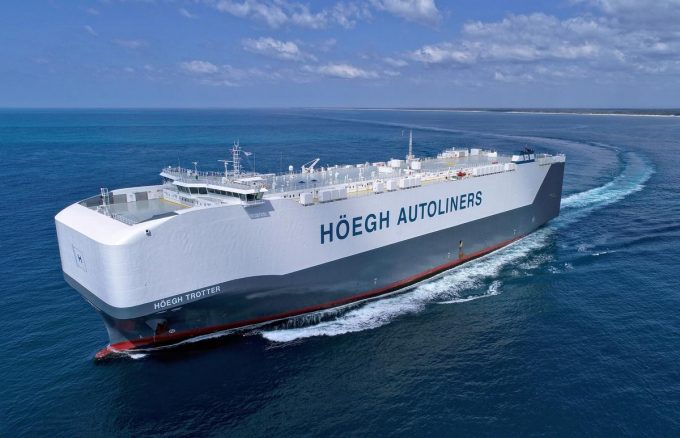
Höegh Autoliners will recycle up to eight of its vessels in Norway, in a green, government-supported move that sidesteps the regulatory minefield of scrapping outside Europe.
The Höegh fleet has four vessels delivered in the 1990s, and four in 2000; meanwhile, it took delivery of its first 9100ceu Aurora-class vessel in Q2 last year, with up to 15 more to be built and delivered in the coming years.
Each is designed to burn green ammonia, a fuel to which CEO Andreas Enger told The Loadstar his company was still fervently committed, despite back-pedalling from its peers.
The new recycling initiative will be helmed by Norwegian start-up Nordic Circles at AF Miljøbase Vats in Rogaland, where the steel will be recycled by cutting and bending. This is a departure from conventional steel recycling, which involve electric arc furnaces (EAF) which, although significantly greener than the coal and coke-fed basic oxygen furnaces (BOFs), they consume a great deal of electrical power.
In general, the developed economies of Europe produce a great deal of steel scrap, but lack arc furnace capacity. Instead, they export a wealth of steel scrap to countries like Turkey, which have EAF capacity to spare.
In turn, Europe covers its own steel demand by importing from China in the form of coils, sheets, bars and pipes, much of it containerised. Despite efforts to decarbonise steel production in China, just 10% of it is produced using EAFs, according to Global Energy Monitor, significantly below the 28.6% global average.
European shipping lines also buy ships in China, made almost entirely from domestic virgin steel manufactured in coal-fed BOFs.
Taken together, the global steel industry generates around 8% of global CO2 emissions. According to the International Council on Clean Transportation, shipbuilding consumed 33.2m tonnes of steel in 2021 and 2022, yielding 72.2m tonnes of CO2 emissions.
But this minefield of steel economics stands to be sidestepped by Höegh’s intention to recycle its vessels into building materials to be used within Norway.
“We aim to be the greenest in deepsea shipping, and have set a net-zero target by 2040,” said Sebjørn Dahl, COO of Höegh Autoliners. “With this agreement, we ensure sustainability ‘from cradle to grave’ and lay the foundation for a new green industrial adventure in Norway. We are extremely proud of that.”
Mr Enger, who took to the stage at NorShipping’s opening conference yesterday, alongside former US secretary of state John Kerry and CEO of mining giant Fortescue Andrew Forrest, said: “Höegh Autoliners… [has] invested billions of dollars in the world’s largest and most environmentally friendly car-carriers, formalised and accelerated ammonia partnerships, and overhauled our entire fleet through a green renewal programme.”
But Mr Enger might be less than thrilled at his Fortescue stage-mate’s strong opinions on LNG, the fuel Höegh will rely on until it has secured a supply of green ammonia.
“The energy companies of today only give you, the consumer, the energy they want to give you,” Mr Forrest had said in April. “They just don’t want to leave all that oil and gas, which props up the balance sheet.
The Australian mining giant provides much of the iron ore feedstock used in China to make its steel. Mr Forrest said: “I’m talking to you as a hardcore commercial animal,” he said. “We fought like cats to become the lowest-cost iron ore producer in the world… we’re not going to give that up. We burn a billion litres of diesel a year… but we will save $1.5bn a year straight to the bottom line once we stop burning it.”
This article is © The Loadstar. Reproduction, rewriting, or derivative use requires a license. Contact [email protected] for licensing enquiries.

For uninterrupted access, sign in or sign up to The Daily News, Premium or The Loadstar Enterprise Plan.
Comment on this article