'Don't jump on early fixed-rate ocean contract offers', shippers advised
Shippers should resist the temptation to lock themselves into annual ocean freight contracts too early, ...


JBHT: STRONG TRADING UPDATE JBHT: CEO REMARKS WMT: VERTICAL INTEGRATION IN LOGISTICSJBHT: HERE WE GOPG: STEADYEXPD: NEW RECORD BA: DELIVERIESMAERSK: BEAR CAMP MUSINGSCHRW: HIGHER HIGHS ON THE RADARWTC: 'ONE RECORD'HLAG: EARNINGS GUIDANCE UPGRADE
JBHT: STRONG TRADING UPDATE JBHT: CEO REMARKS WMT: VERTICAL INTEGRATION IN LOGISTICSJBHT: HERE WE GOPG: STEADYEXPD: NEW RECORD BA: DELIVERIESMAERSK: BEAR CAMP MUSINGSCHRW: HIGHER HIGHS ON THE RADARWTC: 'ONE RECORD'HLAG: EARNINGS GUIDANCE UPGRADE
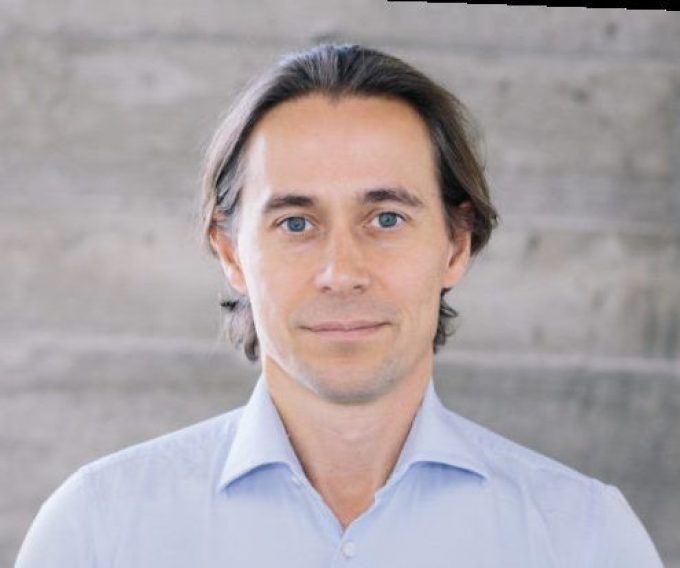
Flexport is one of the most talked-about companies in global logistics. Not because it is the biggest freight forwarder, or the most profitable – it is neither – but because it attempted something few others did more than a decade ago: to rebuild freight forwarding around software, data, and venture-scale ambition.
Founded in 2013, Flexport has raised around $2.2bn in venture funding, including a $1bn round from SoftBank, and at its peak employed more than 3,700 people. Yet despite the scale, profitability has remained elusive, and the company experienced one of the most public leadership reversals the sector has seen.
In a wide-ranging interview, in Eva de Mol’s Deal With It podcast, president Sanne Manders reflects on what Flexport got right – and where it went badly wrong.
Flexport does not describe itself as a traditional freight forwarder. “We are a platform for logistics,” Manders says. Technology, he argues, sits at the centre of the model.
“The secret sauce is a technology platform that gives customers better insight, so they can make better decisions,” he says. “And we use the same data on the back end to optimise headcount and make it cheaper.”
Flexport originally entered the market through customs brokerage before expanding rapidly into end-to-end logistics. The ambition was not simply to move freight, but to give shippers visibility and control across global supply chains. In the early years, however, that ambition ran ahead of the company’s own maturity.
“It looked very good on the front end,” Manders says. “But the back end was terrible. There were literally people moving shipments around on Trello boards. We just went to customers and asked: ‘What do you want?’” he says. “Then we came back with a mock-up and said: ‘Do you want this?’ And they said ‘yes’. Three months later, it was live.”
The approach allowed Flexport to validate demand quickly, even if much of the operational work was still manual.
Despite early traction, raising institutional capital was not straightforward. “Our Series A was actually very problematic,” Manders says. “Nobody really wanted to invest in this antiquated industry.”
At the time, venture capital interest was focused elsewhere. “It was all the ‘Uber of’ something,” he says. “Uber of washing shirts, Uber of walking your dog, and we didn’t fit that picture.”
As cash ran down, Flexport struggled to secure backing. “We had very little left.”
The breakthrough came when Founders Fund decided to invest. “They’re contrarians,” Manders says. “They think differently. They think very big.” Once Founders Fund committed, others followed. “If Founders Fund crosses the bridge, everyone wants to come along,” he says. “That’s when the ball started rolling.”
As capital flowed in, Flexport expanded rapidly. Headcount grew into the thousands, offices opened globally and the company invested heavily in engineering.
At its peak, Flexport employed about 3,700 people. Today, Manders says, it operates with significantly fewer staff. “Now we can do it with 2,800 people,” he says. “There’s much more automation and much more AI.”
Flexport’s most dramatic expansion followed the $1bn investment from SoftBank. “That went well until we raised a billion,” Manders says. “Then our sharp edges came off.”
Early discipline eroded, he says. “At the beginning, money could only be spent on engineering and expansion,” he says. “But when suddenly a billion comes in, you get a bit sloppy.”
And the sloppiness became systemic. “Even if you don’t personally get sloppy, everyone around you does,” he says. “Scarcity is actually good, in a way.”
During Covid, Flexport made large bets, including leasing aircraft while much of the aviation market was grounded. Initially, those bets paid off. But as volumes surged, so did complexity.
“At a certain point the company grew out of proportion,” Manders says. “We couldn’t keep up, and the solution became: just hire someone.”
By 2022, exhaustion had set in. “Ryan [Petersen, founder] and I looked at each other and said: ‘one, we’re very tired; and two, maybe we don’t know everything anymore’,” Manders says.
The decision was made to hire an external CEO: Dave Clark, formerly head of Amazon’s logistics operations. “On paper, it looked like the perfect match,” Manders says. “The board was very enthusiastic.”
But, as we all now know, in practice, the transition failed.
“People from our organisation were pushed out or down-levelled,” Manders says. “People were hired who didn’t understand our business and were arrogant about it.”
The financial impact was immediate, he says. “The company went from a few million in EBITDA per month to enormous losses per month,” he says.
Looking back, Manders recalls advice from Y Combinator co-founder Paul Graham. “He said: ‘You don’t look for another man for your wife,’” Manders says. “We didn’t listen, and that was very stupid.”
Within ten months, Ryan Petersen was back in operational control. “If we didn’t fix it, it was heading towards bankruptcy over time,” Manders says.
The reset involved direct engagement with customers, rapid cost-cutting and deep restructuring.
“At that moment we had about 3,500 people,” he says. “We decided we could do it with about 2,200. The advantage of having your back against the wall is that you make decisions very quickly,” Manders says. “Also very hard ones.”
Within a year, he says, the turnaround was complete.
Despite the turbulence, Manders insists Flexport’s original ambition remains unchanged.
“The vision was to build the operating system for global trade,” he says. “This is a long game.”
Success, for him, is not an exit or a valuation milestone. “I’m satisfied when I’ve made myself redundant,” Manders says. “When the next layer is strong enough that the company can keep building itself without me.”
You can watch the podcast here
For uninterrupted access, sign in or sign up to The Daily News, Premium or The Loadstar Enterprise Plan.

Comment on this article