BAL re-enters liner trades with transpacific loader
Opportunistic Chinese shipowner BAL Container Line is making a selective comeback to the transpacific trade, ...

VW: THE IMPACT VW: MASSIVE JOB CUTS CONFIRMEDEXPD: BULLISHCHRW: POSITIONING AHEAD OF EARNINGSAMZN: IN THE NUMBERSAMZN: PEOPLE MATTER UNTILVW: THE LAST CUT IS THE DEEPESTJBHT: GEARING UP VW: BUYING TIMER: BIG VOTE OF CONFIDENCEAAPL: BEARISH HEDGEYE AAPL: THE BEAR CASEFDX: LIFE SCIENCES ORG UNVEILEDWTC: UPS AND DOWNSWTC: ASX ANNOUNCEMENT REGARDING DSV PARTNERSHIP VW: D-DAY
VW: THE IMPACT VW: MASSIVE JOB CUTS CONFIRMEDEXPD: BULLISHCHRW: POSITIONING AHEAD OF EARNINGSAMZN: IN THE NUMBERSAMZN: PEOPLE MATTER UNTILVW: THE LAST CUT IS THE DEEPESTJBHT: GEARING UP VW: BUYING TIMER: BIG VOTE OF CONFIDENCEAAPL: BEARISH HEDGEYE AAPL: THE BEAR CASEFDX: LIFE SCIENCES ORG UNVEILEDWTC: UPS AND DOWNSWTC: ASX ANNOUNCEMENT REGARDING DSV PARTNERSHIP VW: D-DAY
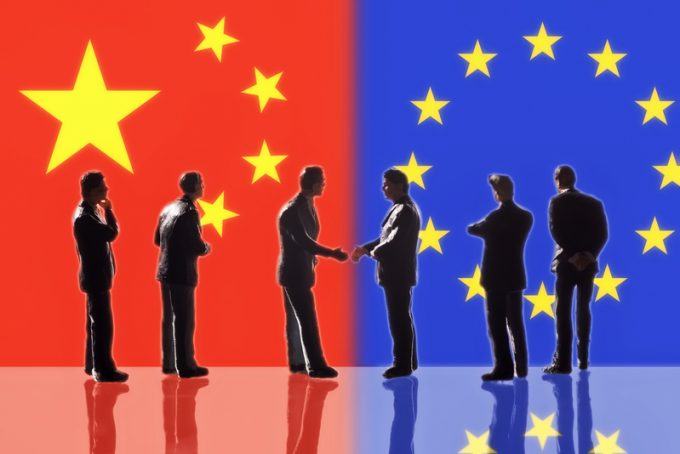
The EU is poised to take more robust action to counter China’s trade dominance and reduce then dependence on the world’s second-biggest economy.
Jens Eskelund, who heads Maersk China, is also president of the EU Chamber of Commerce in China, which recently published a report, Dealing with Supply Chain Dependencies: Challenges and Choices, that argues China is using its status as an export superpower to exert pressure on trade partners. putting further strain on an already tense global trading environment.
However, it is a strategy being met by increasing pushback from other countries and regions, including the EU.
Europe continues to import ever greater volumes from China – the consequence being that, for the first time, China has a larger trade surplus with Europe than with the US. This raises serious questions over the future of European industry.
“Supply chain dependencies are being discussed in much more detail than they were before … Are we even sure Europe can manufacture toothpaste without ingredients sourced in China?” Mr Eskelund told media ahead of the report’s publication.
“The higher [Chinese] production goes up, the higher the risk that countries will begin to react.”
He says China is facing a record high of almost 200 World Trade Organisation investigations, well over half of which from developing countries.
The degree to which businesses in Europe and elsewhere in the world are reliant on China for goods hit home painfully during Covid, when lockdowns to control its spread disrupted production and caused global supply chain havoc.
However, Mr Eskelund believes the stakes are far higher now for businesses, as politics have come into the picture.
“Your primary concern was whether you had a supply chain that could physically deliver the product, but this has shifted to whether your supply chain is dependent on a certain government position. That’s actually a big shift,” he said.
The report recommends the chamber’s members “eliminate single-source dependencies”, the US and China, and calls on EU decision-makers to “accelerate plans to identify and eliminate critical dependencies”.
The EU has been criticised for being slow – unlike the US – to react to the numerous concerns about how China has been able to use its manufacturing prowess to dominate global trade. However, its move this year to impose export controls on rare earth elements may be a turning point, with Brussels now seriously considering how to reduce reliance on China for critical materials.
Mr Eskelund notes that the EU now placing more emphasis on securing its own industrial future should come as no surprise to China, particularly as the underlying reasons are not materially different from those that have been expressed for many years in China’s Five-Year Plans and policy statements that have a strong focus on self-reliance.
“Precisely how the EU will respond is not yet clear, but it could conceivably choose to develop and implement more targeted policies that – like many of China’s – address specific industrial resilience and economic security concerns, albeit much more limited in nature.”
Earlier this month, French President Emmanuel Macron claimed that China was “striking at the heart of the European industrial and innovation model.”
He warned that if China did not take measures to reduce its trade surplus with the EU, Brussels would be forced to take decisive action and follow the example of the US, such as imposing tariffs on Chinese products.
For uninterrupted access, sign in or sign up to The Daily News, Premium or The Loadstar Enterprise Plan.

Comment on this article