Handler AGI claims union's 'misleading' campaign cost it $20m in airline contracts
US handler Alliance Ground International (AGI) has accused the Service Employees International Union (SEIU) of ...

TFII: EARNINGS BEATCHRW: PUMMELED DSV: LACK OF TRUST WEIGHSDHL: NEW HIGH DHL: E-COMM DEAL SIGNEDF: NEW PROFIT STREAMCHRW: HEALTHY CORRECTIONDSV: TIME TO BUY INWTC: NO LUCKCHRW: 'NUCLEAR VERDICT'DSV: DEEP CUTKNIN: UPGRADEDKNIN: AI BENEFITSKNIN: NOT WORTH IT
TFII: EARNINGS BEATCHRW: PUMMELED DSV: LACK OF TRUST WEIGHSDHL: NEW HIGH DHL: E-COMM DEAL SIGNEDF: NEW PROFIT STREAMCHRW: HEALTHY CORRECTIONDSV: TIME TO BUY INWTC: NO LUCKCHRW: 'NUCLEAR VERDICT'DSV: DEEP CUTKNIN: UPGRADEDKNIN: AI BENEFITSKNIN: NOT WORTH IT
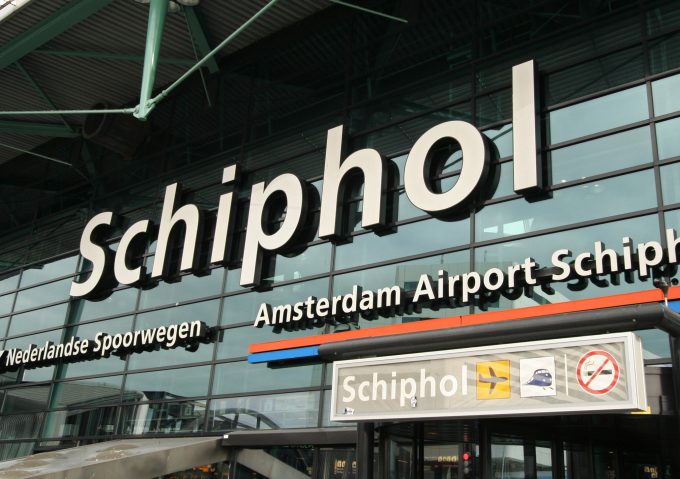
The Dutch cargo community will be relieved by the latest chapter in the now long-running saga over Schiphol’s slots.
The Netherlands’ highest administrative court has struck down the Dutch government’s attempt to cap annual flights at Amsterdam Schiphol, in a ruling backed by airlines and cargo stakeholders who had warned the measure would damage connectivity and freight capacity.
In a judgment issued on 11 March, the Administrative Jurisdiction Division of the Council of State annulled the government’s 2025 amendment to the Schiphol Airport Traffic Decree that limited movements to 478,000 flights a year, including 27,000 night flights.
The case was brought by a broad group of aviation stakeholders, including the Air Transport Association of America, IATA, Delta Air Lines, KLM, easyJet and Air Cargo Netherlands.
The court found the government had failed to properly justify the measure, ruling that the decision had not been carefully prepared and lacked sufficient reasoning.
“The decision of 6 May 2025 was not carefully prepared… and is not based on sound reasoning,” the judges said.
At the centre of the dispute was the government’s argument that limiting the number of flights would reduce noise exposure for residents around Schiphol. The court rejected that logic, saying a cap on aircraft movements could not automatically be treated as a limit on noise pollution.
“The Minister could not reasonably have taken the position that the determination of the maximum number of aircraft movements per operating year includes a limit value for noise pollution,” the judgment states.
The court noted that different aircraft types generate different noise levels, meaning flight numbers alone cannot define total noise exposure.
“Not every aircraft produces the same amount of noise, so the sum of flights alone does not sufficiently reflect the total amount of noise permitted in a year.”
The government had partly based its assessment on the so-called New Standards and Enforcement System (NNHS), an operational framework assuming up to 500,000 flights annually, but the judges said that system is not legally established and cannot be used as a regulatory benchmark.
As a result, the Council of State annulled the entire decision.
The ruling means the previous Schiphol Airport Traffic Decree from 2008 remains in force. That framework regulates noise through enforcement points but does not set a fixed annual flight limit.
The decision is particularly relevant for the cargo sector, which has been leaking to other airports, including Liege. Schiphol handled 1.43m tonnes of cargo in 2025, according to airport figures, including 15,348 full freighter flights. Some 56% of cargo moved on dedicated freighters, while 44% was transported in the bellyholds of passenger aircraft.
Schiphol recorded 477,552 aircraft movements in 2025, meaning the proposed cap of 478,000 flights would have left almost no room for additional services.
However, the court imposed a temporary measure maintaining the reduction in night flights. It ruled that no more than 27,000 commercial aircraft movements per year may take place between 23:00 and 07:00 until a new airport traffic decree is adopted. Freighters are likely to be most impacted by restrictions on night flights.
The Dutch government is currently preparing a broader revision of the Schiphol regulatory framework, which is expected to introduce new rules governing flight movements and noise limits.
Until then, the ruling removes the legal basis for the 478,000-flight ceiling and temporarily restores greater operational flexibility at one of Europe’s key cargo and passenger hubs.

For uninterrupted access, sign in or sign up to The Daily News, Premium or The Loadstar Enterprise Plan.
Comment on this article