Land bridge 'the best option' as confusion reigns over Hormuz transits
Just days after the IMO dodged questions over who has the final authority on ship ...


MAERSK: ANOTHER UPGRADE HITS THE WIRES MAERSK: FLATTISH MAERSK: REACTION TO GUIDANCE UPGRADEMAERSK: SHIPPING GURU INSIGHTGXO: ROLLOVER WINMAERSK: EVERY LITTLE HELPSHLAG: EUROGATE DEALAAPL: SUPPLY CHAIN HURDLESVW: DECISION TIME VW: UPDATE XOM: EARNING GROWTHWTC: REBOUND ON WEAKNESSCHRW: BENCHMARKINGDHL: UPGRADEDEXPD: QUOTE OF THE WEEKVW: MASSIVE JOB CUTS
MAERSK: ANOTHER UPGRADE HITS THE WIRES MAERSK: FLATTISH MAERSK: REACTION TO GUIDANCE UPGRADEMAERSK: SHIPPING GURU INSIGHTGXO: ROLLOVER WINMAERSK: EVERY LITTLE HELPSHLAG: EUROGATE DEALAAPL: SUPPLY CHAIN HURDLESVW: DECISION TIME VW: UPDATE XOM: EARNING GROWTHWTC: REBOUND ON WEAKNESSCHRW: BENCHMARKINGDHL: UPGRADEDEXPD: QUOTE OF THE WEEKVW: MASSIVE JOB CUTS
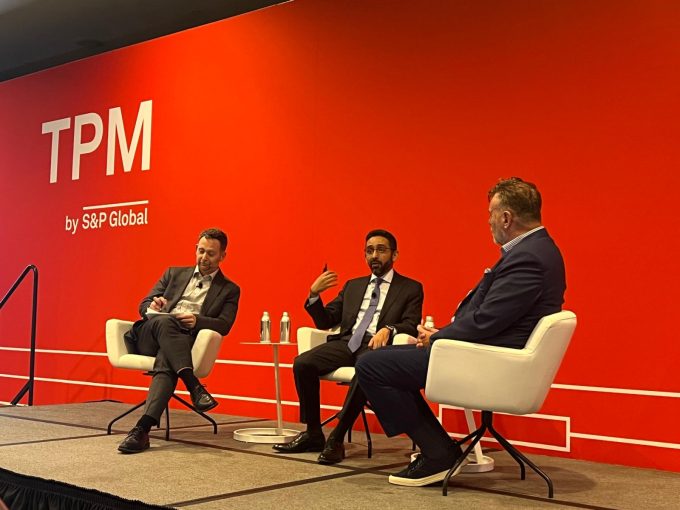
Container lines have little commercial incentive to resume Red Sea transits, even if security conditions stabilise, delegates at TPM in Long Beach were told this week.
Robbert van Trooijen, former Maersk executive and director of Inception Partners, said the combination of ample vessel capacity and ongoing safety concerns meant a return to Suez was far from imminent.
“Nothing a shipping line will ever do will remotely jeopardise or risk the chance of something happening to crew or cargo,” he said.
While longer voyages around the Cape of Good Hope add transit time and inventory costs for shippers, carriers are not under operational pressure to revert to the Suez route.
“The capacity availability, such as it is, actually allows the carriers to avoid Suez for a prolonged period of time,” Mr van Trooijen explained. “So there is no economic incentive to make any rush for a return through Suez. In fact, the return through Suez is probably negative to the bottom line.”
He noted that some lines had tentatively tested a return in recent months, but renewed volatility quickly underlined the risks.
“The carriers have tried… I think a couple of ships went through. But this shows… this is so volatile that I wouldn’t risk it,” he said.
Security dynamics are further complicated by claims that some operators have paid levies to secure safe passage through Houthi-controlled waters. Hisham Al-Omeisy, senior Yemen advisor and head of the PfR steering group, said the militia had derived both political leverage and revenue from targeting shipping.
“A lot of shipping companies have been paying levies to be allowed passage. So they’ve been making a lot of money from there,” he told delegates, adding that beyond ideology, “there’s also a financial incentive”.
With capacity plentiful, naval operations costly and the security picture increasingly volatile, the commercial case for returning to Suez remains weak.
For shippers hoping for a swift normalisation of Asia–Europe transit times, the message from Long Beach is clear: absent a dramatic and sustained improvement in security, a large-scale return looks unlikely in the near term.
For uninterrupted access, sign in or sign up to The Daily News, Premium or The Loadstar Enterprise Plan.

Comment on this article