Capacity injection for east-west trades as more ULCVs are delivered
East-west tradelanes saw some capacity injected over the past two weeks as several large containerships ...

WTC: NO LUCKCHRW: 'NUCLEAR VERDICT'DSV: DEEP CUTKNIN: UPGRADEDKNIN: AI BENEFITSKNIN: NOT WORTH ITPLD: DEAL TIMEKNIN: CONF CALL CLOSING KNIN: PRICING POWER KNIN: MARKET SHARE GAINS IN ROAD KNIN: AI-RELATED COST INFLATION OUTLOOKKNIN: APEX LOGISTICS IPO UPDATEKNIN: QUESTION TIMEKNIN: 'COST REDUCTION PROGRAMME IS ON TRACK'KNIN: CFO REMARKSKNIN: MONETARY IMPACT FROM AI KNIN: AI UPSIDEKNIN: STRONG ROAD UNIT DELIVERY KNIN: AIR LOGISTICS SHINES
WTC: NO LUCKCHRW: 'NUCLEAR VERDICT'DSV: DEEP CUTKNIN: UPGRADEDKNIN: AI BENEFITSKNIN: NOT WORTH ITPLD: DEAL TIMEKNIN: CONF CALL CLOSING KNIN: PRICING POWER KNIN: MARKET SHARE GAINS IN ROAD KNIN: AI-RELATED COST INFLATION OUTLOOKKNIN: APEX LOGISTICS IPO UPDATEKNIN: QUESTION TIMEKNIN: 'COST REDUCTION PROGRAMME IS ON TRACK'KNIN: CFO REMARKSKNIN: MONETARY IMPACT FROM AI KNIN: AI UPSIDEKNIN: STRONG ROAD UNIT DELIVERY KNIN: AIR LOGISTICS SHINES
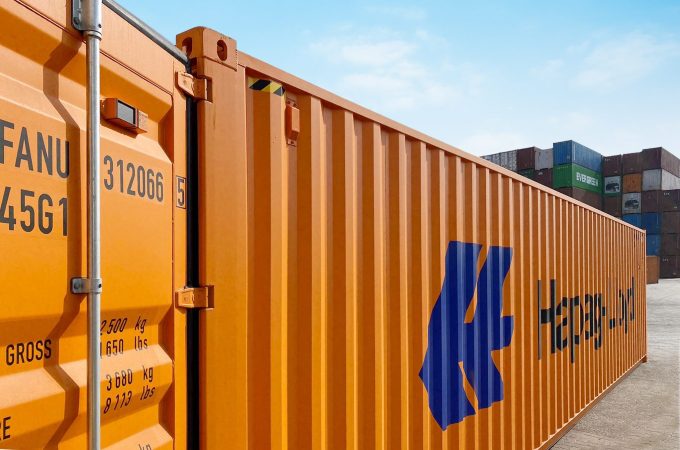
Hapag-Lloyd today posted H1 numbers that included reduced profits, but the carrier remained bullish its growth could continue to outpace the market.
Being one of the last major carriers to post its financial results, having to come up with a new way to iterate “external factors are a mess, please bear that in mind when you look at our numbers”, must be a challenge.
The German liner went with: “Solid half-year results in a volatile market.”
Group EBITDA for H1 25 was $1.9bn, down $45m on H1 24, while EBIT fell to $677m from $879m.
The carrier said: “The frequent changes in trade policies, of the US in particular, led to volatile demand and freight rates. In addition, congested seaports and the tense security situation in the Red Sea impacted operations.”
Hapag’s liner revenue increased, to $10.4bn, across the first six months, which it attributed largely to an 11% increase in volume, to 6.7m teu, with “growth in the east-west trades” a particular highlight.
EBITDA in the sector decreased year on year, to $1.8bn, and EBIT to $600m – “in part due to start-up costs for the Gemini network, but also related to congestion, general inflation, operational issues in ports, and ongoing vessel diversions around the Cape of Good Hope”, noted the carrier.
Indeed, despite group revenue growing around 10% on H1 24, to some $11.3bn, profit was stagnant, at $775m, down from H1 24’s $791m. Its average freight rate over the period also remained similar to the previous year, at $1,400 per teu.
Container trade statistics (CTS) placed global transported volumes for H1 4.5% higher than last year, which meant Hapag-Lloyd’s market growth was more than double the trade average.
In the earnings call, analysed by Loadstar Premium’s DeskOne, CEO Rolf Habben-Jensen told investors he expected Hapag-Lloyd to continue to outpace market growth in the second half, but not necessarily at the rate seen in H1.
And based on what he called a “solid earnings performance” in the first half, Hapag-Lloyd has joined Gemini partner Maersk in adopting a bullish outlook for the rest of the year.
Mr Habben-Jensen expected Q3 rates to improve on those in Q2, with the pre-Covid lows of 2019 now “a distant memory”, with the “base cost” for liners a lot higher than then, he noted.
Projected group EBITDA for the full year is now said to be €2.5bn to 3.4bn, a slight increase on its previous estimate of €2.4bn to €3.9bn, with EBIT now predicted at between €200m and €1.1bn, from break-even to €1.5bn – forecasts “subject to a high degree of uncertainty”, said the carrier, “in light of major geopolitical challenges and volatile freight rates”.
And while Hapag underscored that the Gemini Cooperation had “achieved an industry-leading schedule reliability of 90% in the first months since its launch”, it acknowledged that “further efforts are required in the second half to optimise the network”.
For uninterrupted access, sign in or sign up to The Daily News, Premium or The Loadstar Enterprise Plan.
Comment on this article