Panama Canal braces for El Niño, announcing first transit restrictions
The Panama Canal Authority (ACP) is to reintroduce transit restrictions as it prepares for the ...

WTC: NO LUCKCHRW: 'NUCLEAR VERDICT'DSV: DEEP CUTKNIN: UPGRADEDKNIN: AI BENEFITSKNIN: NOT WORTH ITPLD: DEAL TIMEKNIN: CONF CALL CLOSING KNIN: PRICING POWER KNIN: MARKET SHARE GAINS IN ROAD KNIN: AI-RELATED COST INFLATION OUTLOOKKNIN: APEX LOGISTICS IPO UPDATEKNIN: QUESTION TIMEKNIN: 'COST REDUCTION PROGRAMME IS ON TRACK'KNIN: CFO REMARKSKNIN: MONETARY IMPACT FROM AI KNIN: AI UPSIDEKNIN: STRONG ROAD UNIT DELIVERY KNIN: AIR LOGISTICS SHINES
WTC: NO LUCKCHRW: 'NUCLEAR VERDICT'DSV: DEEP CUTKNIN: UPGRADEDKNIN: AI BENEFITSKNIN: NOT WORTH ITPLD: DEAL TIMEKNIN: CONF CALL CLOSING KNIN: PRICING POWER KNIN: MARKET SHARE GAINS IN ROAD KNIN: AI-RELATED COST INFLATION OUTLOOKKNIN: APEX LOGISTICS IPO UPDATEKNIN: QUESTION TIMEKNIN: 'COST REDUCTION PROGRAMME IS ON TRACK'KNIN: CFO REMARKSKNIN: MONETARY IMPACT FROM AI KNIN: AI UPSIDEKNIN: STRONG ROAD UNIT DELIVERY KNIN: AIR LOGISTICS SHINES
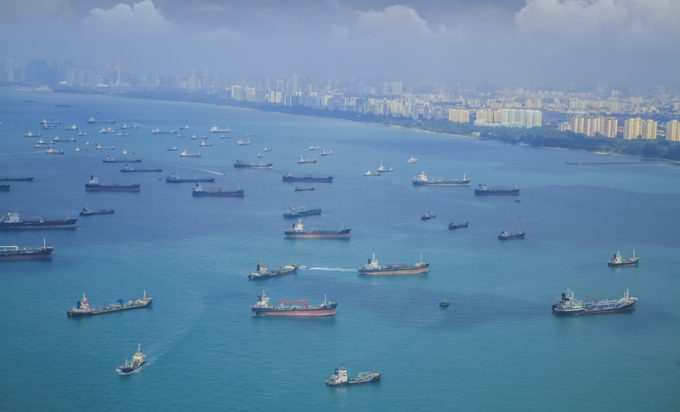
Congestion in Singapore, the world’s second-busiest container port, has reached a critical level, compounding the shortage of ships and containers.
Data from Linerlytica indicates that containerships have to wait up to seven days to berth in Singapore, recently seeing up to 450,000 teu of vessels in the queue.
And port congestion globally is worsening and has tied up 2m teu of ships, nearly 7% of the fleet, which is lending support to carrier rate hikes.
The bottlenecks at Singapore are mainly due to the diversions caused by the Red Sea crisis and shipping lines skipping the less busy Port Klang in Malaysia. In normal circumstances, ships can berth upon arrival in Singapore, or wait half a day at most.
Linerlytica’s report today says: “The severe congestion has forced some carriers to omit their planned Singapore port calls, which will exacerbate the problem at downstream ports that will have to handle additional volumes. The delays have also resulted in vessel bunching, which is causing spillover congestion and schedule disruptions at downstream ports.”
The consultancy says port congestion is expected to worsen in June, compelling liner operators to secure new containers and commit to chartering ships beyond September.
And ahead of box lines planned rate hikes for 1 June and 15 June, the port congestion is putting significant upward pressure on rates.
Asian ports are the most congested, with ports in South-east Asia accounting for 26% of global bottlenecks, while north-eastern Asian ports make up 23%.
As congestion in Singapore has a considerable impact on the reliability of Asia-Europe services, trading of China’s container futures closed at a higher price of $4,209/teu for the EC2406 contract, which expires on 24 June. The price is 6% higher than on 20 May and a 25% premium on the Shanghai Containerised Freight Index.
Check out this clip of Hapag-Lloyd’s Matthias Dietrich on whether shippers will pay more for better reliability and fewer direct port calls
For uninterrupted access, sign in or sign up to The Daily News, Premium or The Loadstar Enterprise Plan.
Comment on this article