Carriers keep the price pressure on – a 'shock and awe' PSS the standout
Container spot freight rates on the transpacific and Asia-Europe trades rose for the sixth consecutive ...


DSV: STOCK MARKET REACTION XOM: OIL INVENTORY WARNINGWTC: EBL DEAL DETAILSWTC: EBL DEALEXPD: 'READ MY LIPS' HON: DEALS ON THE MENUEXPD: NEW RECORD XPO: THE REBOUNDCAT: PAYOUT UPDHL: LIGHTHOUSEMAERSK: ANOTHER UPGRADEFWRD: HEALTHY CORRECTION R: RYDER CEO SAYS
DSV: STOCK MARKET REACTION XOM: OIL INVENTORY WARNINGWTC: EBL DEAL DETAILSWTC: EBL DEALEXPD: 'READ MY LIPS' HON: DEALS ON THE MENUEXPD: NEW RECORD XPO: THE REBOUNDCAT: PAYOUT UPDHL: LIGHTHOUSEMAERSK: ANOTHER UPGRADEFWRD: HEALTHY CORRECTION R: RYDER CEO SAYS
If – and in this context, “if” is the biggest word in the English language – the fragile peace outlined between Iran and the US holds this week, and an actual deal is signed on Friday, as promised, fuel prices should plummet.
Crude oil prices fell sharply on news of the détente, today’s Brent spot price at its lowest since early March, at around $83 per barrel, the agreement reportedly including reopening the Hormuz strait and Iran and US lifting their respective blockades.
Naturally, a full resumption of Middle East fossil fuel and related products exports will take time – mines need to be cleared and shipowner confidence restored, but oil traders see yesterday’s news as evidence that the stalemate is nearing an end, hopefully removing the need for further inventory drawdowns.
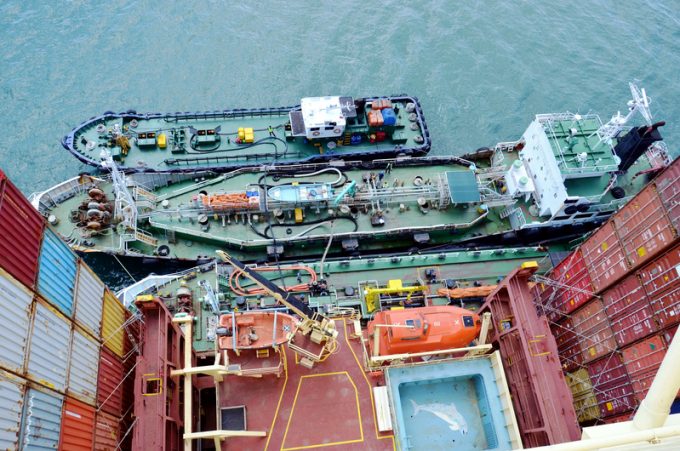
So, baby steps, but we can expect a gradual resumption of traffic through Hormuz, with tankers prioritised and crude spot rates consequently declining – but this will coincide with the period in which shippers are likely to be hit with some of the biggest bunker adjustment factor (BAF) increases in recent memory.
1 July will be a watershed date, when most carriers are expected to set their BAFs for the third quarter, wich will give many of them the opportunity to recoup the extra fuel costs accrued in Q2, due to Hormuz’s closure – estimated to be around $50m a week by Hapag-Lloyd CEO Rolf Habben Jansen.
Forwarders and shippers on the main east-west trades fear the new BAF levels will be eye-watering, and will come on top of the elevated spot freight rates from an early peak season, which was largely the result of shippers front-loading to beat the same 1 July deadline… that’s irony for you.
It’s going to be a tough period for customer-carrier relations; with liners trying to recover the Q2 fuel expenses just as fuel costs are falling through the floor – and there is another factor looming on the horizon: a return to Red Sea routings.
The precipitous rise in recent Asia-Europe spot rates resulted from a tight demand-supply situation, caused by the extra distance of Cape of Good Hope routings. Reopening Hormuz is clearly a precursor to resuming Red Sea and Suez transits, which, if enacted en masse, would effectively add 15% to 20% capacity to the trade, and most likely send spot rates into freefall.
This is a vision of a near future forwarders and shippers would love to see – indeed, anyone with a passing interest in world trade would too – but we should remember the old British idiom: “turkeys don’t vote for Christmas”.
For uninterrupted access, sign in or sign up to The Daily News, Premium or The Loadstar Enterprise Plan.
Comment on this article