Forwarders face margin squeeze as growth cools and disruption persists
The global freight forwarding market is still growing, but the industry’s easy gains appear to ...


AMZN: 'AI EDGE'HD: HERE IS HOW IT LOOKSAMZN: REG RISKMAERSK: MOST HARMED KNIN: GO GREENDSV: CHANGING OF THE GUARD CHRW: OVERVALUEDGM: NEW BIZFDX: GROWING CAUTIOUSDHL: DOUBLE UPGRADEDSV: STOCK MARKET REACTION XOM: OIL INVENTORY WARNINGWTC: EBL DEAL DETAILS
AMZN: 'AI EDGE'HD: HERE IS HOW IT LOOKSAMZN: REG RISKMAERSK: MOST HARMED KNIN: GO GREENDSV: CHANGING OF THE GUARD CHRW: OVERVALUEDGM: NEW BIZFDX: GROWING CAUTIOUSDHL: DOUBLE UPGRADEDSV: STOCK MARKET REACTION XOM: OIL INVENTORY WARNINGWTC: EBL DEAL DETAILS
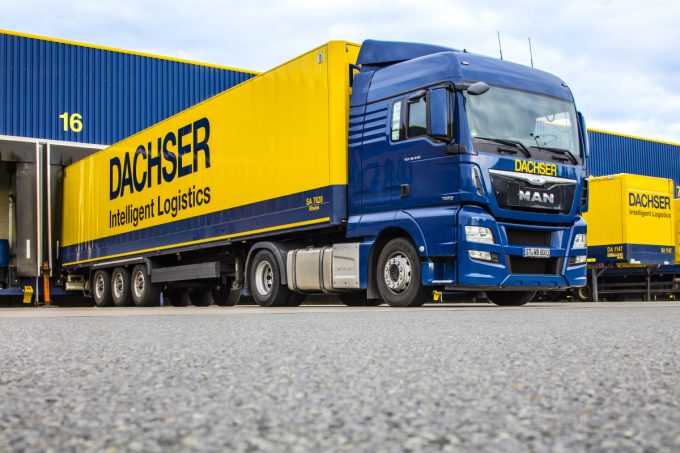
Dachser has warned of fresh volatility in global freight markets, as geopolitical disruption pushes up air and ocean rates on key Asia-Europe trades, even after a year marked by falling prices and weak demand.
The German forwarder said ocean freight rates between China and Germany had risen by more than 20% since the outbreak of hostilities in the Middle East, while air freight rates were up over 35%, reflecting longer transit times, capacity constraints, and higher fuel costs.
The rebound follows a sharp downturn in 2025, when Dachser’s air and sea freight division saw revenues fall 12.6%, to €1.4bn ($1.65bn), driven primarily by declining rates, particularly on Asia-Europe, and stagnating volumes.
“One of the main reasons was the steep decrease in sea freight rates over the course of 2025,” a spokesperson told The Loadstar, adding that air freight prices also “fell slightly”, while “teu stagnated” amid sluggish European demand.
The shift highlights the renewed instability facing shippers, with rates now rising again, due to supply-side disruption rather than demand strength.
Longer routings, such as diversions around the Cape of Good Hope, had reduced effective capacity in ocean freight, while constraints in air cargo were also emerging. Dachser said these factors, combined with rising fuel costs, were feeding directly into higher prices across modes.
But it warned rate increases were unlikely to signal a broader recovery in demand.
“It’s too early to fully assess the impact, but we expect customers to remain cautious, which is unlikely to help boost the economy as 2026 progresses,” it said.
The comments suggest the market is entering another period of divergence, with pricing trends increasingly disconnected from underlying volumes.
Despite the volatility in global forwarding, Dachser’s core European road business continues to provide stability. The division delivered organic growth of 3.5% in 2025, outperforming a “stagnating” European economy that grew by around 1.5%.
Meanwhile, its food logistics division continued to expand, with revenue rising 10.1% to more than €1.8bn, largely driven by acquisitions.
Volumes were also strong, with shipments up 13.4% and tonnage increasing 11.8%, although organic growth was more modest at just over 3%. Dachser said it expected food logistics to continue growing at a similar pace in 2026, underlining its role as a relatively resilient segment within the group.
The figures underline Dachser’s reliance on acquisitions to sustain growth in a flat market, with recent deals, particularly in food logistics, playing a central role in expanding its European network and capabilities.
Overall group revenue rose 3.1%, to €8.3bn, although growth was largely driven by acquisitions. Excluding these, organic growth was just 0.3%, underlining the weak demand environment.
Meanwhile, the company continues to invest heavily in its network and capabilities, with more than €350m planned this year. This includes new facilities in Morocco and Germany, as well as spending on digitalisation and decarbonisation initiatives, such as battery electric vehicles and charging infrastructure.
But with volumes flat and customers remaining cautious, Dachser’s latest outlook points to a market defined less by recovery than by continued uncertainty, where geopolitical shocks, rather than demand, are once again driving freight rates.
For uninterrupted access, sign in or sign up to The Daily News, Premium or The Loadstar Enterprise Plan.
Comment on this article