'Anchorage a mess': airlines look elsewhere as Canada pitches transpac role
Pressure is building on Anchorage’s role as the hub for transpacific cargo, as operational constraints ...


WTC: ANOTHER DIFFICULT WEEK CHRW: NEW PRODUCT LAUNCHDSV: LEADING THE DROP RXO: CRATERINGDSV: WHAT TO LIKEDSV: BULLISH BAMZN: 'AI EDGE'HD: HERE IS HOW IT LOOKSAMZN: REG RISKMAERSK: MOST HARMED
WTC: ANOTHER DIFFICULT WEEK CHRW: NEW PRODUCT LAUNCHDSV: LEADING THE DROP RXO: CRATERINGDSV: WHAT TO LIKEDSV: BULLISH BAMZN: 'AI EDGE'HD: HERE IS HOW IT LOOKSAMZN: REG RISKMAERSK: MOST HARMED
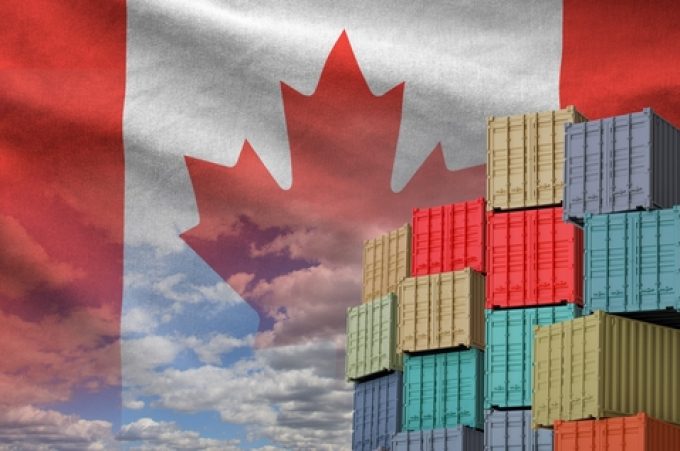
As Canada aims to double its exports to non-US markets, new trade agreements and aviation bilaterals are needed.
Soft US outbound volumes offer a promise of freighter capacity to Asian markets.
In two landmark speeches last week, Canadian prime minister Mark Carney left no doubt that the Canadian government is bent on a strategic reset of the nation’s trade relations to diminish its traditional reliance on the US market.
The new course became evident this month with the prime minister’s visit to China, which yielded removals of some trade barriers, and more expected to follow. New aviation bilaterals with Saudia Arabia and the UAE are ushering in expanded flight activity, with unlimited fifth-freedom rights for cargo, and negotiations about a new trade agreement with the UAE are set to commence in February.
More trade negotiations are on the horizon. Canada aims to double exports to markets other than the US over the coming ten years –decline last year reduced the share of exports headed for the US to 67.3%.
“We need more trade agreements, more customs agreements,” said Julia Kuzeljevich, director of policy and regulatory affairs of the Canadian International Freight Forwarders Association.
While China is the largest market Ottawa seeks to develop, a number of other countries have been identified for expanded trade relations. Those with India, which have been fraught, appear to be in the early stage of mending and expected to yield increased trade. Other markets on Ottawa’s wish list include the Philippines, Thailand, Saudi Arabia, and the Mercosur bloc.
Alex Lowe, director of e-commerce, cargo and aviation real estate at Edmonton International Airport, is upbeat on these developments.
“Diversifying our trade lends itself to air cargo,” he commented. “There’s a lot of export potential from Edmonton.”
“Canadian manufacturers and exporters need airfreight. We need bilaterals and we need government incentives,” added Stan Wraight, president and CEO of SASI World.
“We need more airfreight capacity to China,” he added. The trade deal signed in Beijing allows for 49,000 electric cars to be imported annually from China at a tariff of 6.1% on most-favoured nation terms. A large portion of Chinese airfreight to Hungary is made up of auto parts, he noted.
“It’s not just China. We need better access for all of Asia,” he stressed.
Mr Carney said Canada wanted to be a bridge between the EU and Pacific Rim nations. No doubt this is music to the ears of Air Canada executives, but the airline’s network is not set for rapid expansion.
Cargojet, the nation’s largest freighter operator, has capacity to expand, according to Jamie Porteous, who retired from his role of co-CEO of Cargojet at the end of last year, but remains as a strategic advisor.
“We have enough capacity within our fleet to take on 15%-20% growth in any segment of our business,” he said.
The airline has been flying e-commerce out of China on its 767 freighters, but for hard freight the plane’s payload limitations would be an issue on long transpacific sectors. Mr Wraight sees a need for more freighter operators to enter the market.
Building up a freighter route from scratch is challenging, he noted.
“You need an existing service, or the sticker shock will put people off. It’s too easy for Canadian exporters to put things on a truck and send it to the US,” he said.
On the other hand, weakening US exports to Asia have further decimated westbound loads on transpacific freighters out of the US, which make money in the opposite direction, so quite a few head back empty to Asia. This opens an opportunity for a stop at a Canadian gateway like Edmonton to load up on westbound freight, Mr Wraight noted.
Edmonton used to see regular freighter flights to China, loaded primarily with pork and beef, but this ended as diplomatic relations soured.
The federal government is poised to inject money to beef up logistics capabilities. The National Trade Corridor scheme, which has funded much of the logistics infrastructure investment in recent years, is going to expire in 2027, but it will be replaced with a National Trade Diversification Fund, details of which have yet to be announced, Ms Kuzeljevich noted.
She said Ottawa had signalled a strong focus on gateways, primarily ports, and would likely prioritise and fast-track certain port projects.
Money is also needed for the Canada Border Services Agency, she said, pointing out that some of the customs agency’s legacy IT infrastructure needed to be replaced.
“We have had issues with data flow with foreign forwarders. Some of these can lead to penalties,” she said. “Transparency and compliance will be important for the industry.”
While much effort will go into developing new trade relationships, work on joint projects with SUS and Mexican partners continues, Ms Kuzeljevich stressed, pointing to the close ties that have been in place for a long time.
There have been warnings that accelerated diversification could jeopardise Canada’s standing with the US and affect the looming renegotiation of the USMCA trade pact with Washington and Mexico City. Overall, however, there is broad consensus that Canada needs to diversify its trade relations, and that it is Washington which has signalled disenchantment with USMCA.
President Trump commented on the Canada-China agreement that it made sense for Ottawa and called USMCA “irrelevant”. However, following a speech by Mr Carney which clearly displeased him, he later threatened 100% tariffs on all Canadian goods if Ottawa were to “make a deal” with China.
It is precisely this erratic course of US policy that has many convinced that bowing to Washington in the hope of preserving USMCA is not a viable policy option.
Watch and subscribe to the latest News in Brief Podcast now on Youtube!
For uninterrupted access, sign in or sign up to The Daily News, Premium or The Loadstar Enterprise Plan.

Comment on this article