Is the 'peak season' an outdated concept?
Should the whole concept of a peak season be discarded as global container supply chains ...


DSV: LEADING THE DROP RXO: CRATERINGDSV: WHAT TO LIKEDSV: BULLISH BAMZN: 'AI EDGE'HD: HERE IS HOW IT LOOKSAMZN: REG RISKMAERSK: MOST HARMED KNIN: GO GREENDSV: CHANGING OF THE GUARD CHRW: OVERVALUEDGM: NEW BIZ
DSV: LEADING THE DROP RXO: CRATERINGDSV: WHAT TO LIKEDSV: BULLISH BAMZN: 'AI EDGE'HD: HERE IS HOW IT LOOKSAMZN: REG RISKMAERSK: MOST HARMED KNIN: GO GREENDSV: CHANGING OF THE GUARD CHRW: OVERVALUEDGM: NEW BIZ
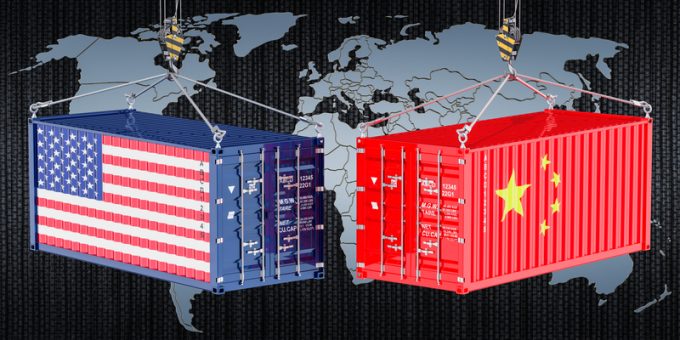
Despite the drag on trade from US tariffs, global container volumes in September continued to show a year-on-year increase, according to new data released by Container Trades Statistics (CTS).
But after four consecutive months in which transported container volumes topped 16m teu, September’s volumes showed a 5.6% month-on-month contraction, to end at 15.86m teu.
However, that was up 5% on a year-on-year basis, and CTS noted that Q3 25 had been another record-breaker – up 4.7% year on year.
“This brings the third quarter to a close with a remarkable 49.23m teu, making it the highest quarterly total ever recorded in the CTS database,” it said.
However, freight rates – both spot and contract – continued to decline, and are nearing the level last seen in late 2023.
“The Global Price Index fell a further five points in September, and now stands at 76 points. At this time last year, the index measured 104 points, while in September 2023 it stood at a similar level of 72 points.
“These fluctuations highlight the degree of volatility present in the market over just a two-year window,” CTS said.
September’s data also revealed continuing divergence between North American volumes and the rest of the world.
Total North America import and export volumes were 5% down on September 2024, driven by a 7.8% decline in eastbound transpacific volumes.
This drop was accompanied by a 9.8% decline in imports from India and the Middle East, a drop from South America of 6.8% and a headhaul transatlantic drop of 4.5%.
“There is really only one very clear conclusion to be drawn from the data – and its a conclusion which has now been evident for several months,” a research note from Sea-Intelligence said. “The trade war has had a substantial and material negative impact on container volumes to and from North America, especially as it relates to import volume.”
This chart from Sea-Intelligence shows the diverging demand trends between North America and the rest of the world.

Source: Sea-Intelligence Consulting
Meanwhile, in terms of percentage growth rates, it was the secondary trades that saw the sharpest upward movement, with the sub-Saharan Africa-South America up 50% year on year – although it should be noted that the numbers are low overall: 2,700 teu shipped in September this year compared with 1,800 teu in September 2024.
“Emerging tradelanes have played a significant role in shifting global patterns, absorbing cargo previously bound for North America and redistributing it across other growing regions,” CTS said.
“This has allowed the Far East to maintain its momentum and continue supporting the wider global uptick,” it added.

Source: Sea-Intelligence Consulting
However, the Far East-Europe trade also showed another month of gravity-defying growth, with September’s volumes of 1.63m teu some 13.7% up on the previous September’s 1.43m teu, although pricing was at its lowest level this year – the CTS Far East-Europe price index fell to 78, well below 2024 levels and indicating the difficult position carriers will find themselves as the contracting season gets underway.
Check out today’s News in Brief podcast for all the latest goings on in freight….
For uninterrupted access, sign in or sign up to The Daily News, Premium or The Loadstar Enterprise Plan.

Comment on this article