Spot rates surge again as carriers push through fresh July hikes
A series of container freight spot rate hikes and general rate increases implemented on 15 ...


WTC: ANOTHER DIFFICULT WEEK CHRW: NEW PRODUCT LAUNCHDSV: LEADING THE DROP RXO: CRATERINGDSV: WHAT TO LIKEDSV: BULLISH BAMZN: 'AI EDGE'HD: HERE IS HOW IT LOOKSAMZN: REG RISKMAERSK: MOST HARMED
WTC: ANOTHER DIFFICULT WEEK CHRW: NEW PRODUCT LAUNCHDSV: LEADING THE DROP RXO: CRATERINGDSV: WHAT TO LIKEDSV: BULLISH BAMZN: 'AI EDGE'HD: HERE IS HOW IT LOOKSAMZN: REG RISKMAERSK: MOST HARMED
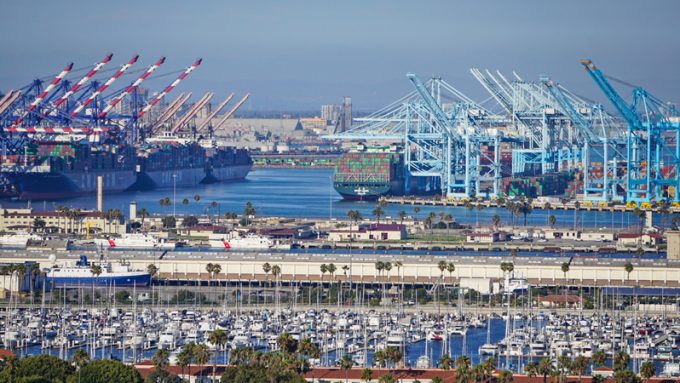
The latest executive order from Donald Trump, issued on Friday, has raised hopes that some US imports may be exempted from tariffs if the origin country has signed a reciprocal trade deal with America.
This includes some 45 categories, which largely comprise goods the executive order says “cannot be grown, mined, or naturally produced in the United States” – such as gold, nickel, graphite, and a range of chemical compounds and certain pharmaceutical products.
According to a Reuters report, the order grants the US Trade Representative, the Department of Commerce and US Customs the ability to waive tariffs on these products without requiring a further executive order from the White House.
Meanwhile, new data from Container Trades Statistics (CTS) for July give a fresh indication of how much the transpacific container trade into the US has been dented by the tariff tumult.
According to CTS, July was the fourth consecutive month in which volumes on its Far East-North America trade declined, with a total headhaul volume of 2.1m teu representing a 3% decline on the same month in 2024.
This follows year-on-year declines of 8.2%, 13.3% and 3% in April, May and June, respectively, and stands in stark contrast with other tradelanes around the world which have continued to show strong growth. Globally, loaded shipments recorded by CTS during July grew 5.1%, maintaining the mid-single digit increases that have characterised shipping this year.
On the China-US tradelane, July volumes were down 15% year on year and, according to this chart from liner consultancy Sea-Intelligence, North America is the only region showing consistent declines in imports since the tariffs began to have demonstrable impact.

Source: Sea-Intelligence Consulting (click to expand)
“The demand data for containerised cargo loaded during this period, is clearly showing that the main impact of this trade war has been to lower both exports and imports in relation to North America, whereas demand growth in the rest of the world appears relatively unaffected,” Sea-Intelligence wrote yesterday.
“With the escalation of the trade war at the expiry of the pause on reciprocal tariffs, we would therefore expect the negative impact to grow stronger in the coming months,” it added.
For example, it was another strong month on Asia-Europe trades, with a somewhat muted peak season apparently in full swing.Total imports into Europe out of Asia in July amounted to just under 1.76m teu, a 10.1% increase on July 2024.
The key indicator of how the Asia-Europe trades perform will be the volume figures for the remainder of the traditional peak season period – August and September – although anecdotal reports from forwarders suggest carriers should prepare for a slowdown taking place earlier than normal, with the relatively strong demand in August beginning to fade.
One prominent Asia-Europe forwarder told The Loadstar today that demand levels were beginning to decline and the most pressing challenge for freight buyers was securing capacity ahead of expected cutbacks.
“Demand has continued to ease, and rates continue to fall as we approach Golden Week, and the main challenge we face now, to get cargo away, is blanked sailings or vessels being downsized,” he said.
For uninterrupted access, sign in or sign up to The Daily News, Premium or The Loadstar Enterprise Plan.

Comment on this article