155 hospitalised as toxic gas leak forces Antwerp box terminals to close
European shippers and forwarders have been warned to expect significant disruption to operations after a ...


JBHT: STRONG TRADING UPDATE JBHT: CEO REMARKS WMT: VERTICAL INTEGRATION IN LOGISTICSJBHT: HERE WE GOPG: STEADYEXPD: NEW RECORD BA: DELIVERIESMAERSK: BEAR CAMP MUSINGSCHRW: HIGHER HIGHS ON THE RADARWTC: 'ONE RECORD'HLAG: EARNINGS GUIDANCE UPGRADE
JBHT: STRONG TRADING UPDATE JBHT: CEO REMARKS WMT: VERTICAL INTEGRATION IN LOGISTICSJBHT: HERE WE GOPG: STEADYEXPD: NEW RECORD BA: DELIVERIESMAERSK: BEAR CAMP MUSINGSCHRW: HIGHER HIGHS ON THE RADARWTC: 'ONE RECORD'HLAG: EARNINGS GUIDANCE UPGRADE
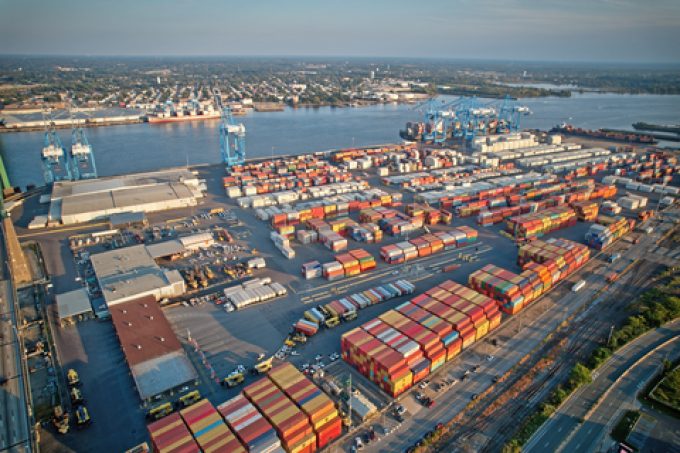
Shipment details provided to two of the world’s three largest economies could be the answer to long-running congestion issues across European and North American ports.
Enhanced customs declarations, providing shipment details not later than 24 hours before being loaded onto a US-bound vessel, have been required by the US since 9/11, but this year sees the EU’s final phase of a graduated introduction of a similar system.
Logistics software service provider Trade Tech’s president, Bryn Heimbeck, believes the data supplied offers the answer to mounting congestion issues across global ports.
“People within the supply chain are all the time are asking us about shipment visibility, but the only people not complaining are US customs, because if you do not provide the data they require, that’s smuggling, that’s illegal,” Mr Heimbeck told The Loadstar.
In the US, failure to provide the shipment details requested, what it is, where it is going, expected time of arrival, prompts a $5,000 fine.
“That’s $5,000 per shipment, not per container,” he added, noting that the fines accrue for failure to provide the information but also for failure to transmit this information on time.
Together with the EU and the US, Canada, Mexico, and South Africa also have similar systems in place, and the UAE is set to roll out its own version in late June.
While supplying this data has proved time consuming, Mr Heimbeck stressed that, at least for Canadian, European, Mexican, and US shipments, there was no alternative, but adds that he considers it offering an opportunity for major efficiency gains.
“85% of the customs entry is the shipment detail, which is exactly what ports are calling out for to handle their congestion problems,” he continued.
“The way I see it, that data exists, but there is something of a wall that is not allowing people to recognise that, if they shared the information they give customs authorities with ports, they could resolve the delays in their supply chains.”
Mr Heimbeck said that, as it stood, terminal operators had a one in five chance of efficiently organising their container stacks.
This, he believes is because the ports are not privy to the contents of each container and so build their stacks randomly and not in alignment with when trucks are due in to collect them.
“But, if you have cargo customs-cleared, and the terminal operator can see this, you could better build stacks,” he added.
Chinese exports, he said, offered an example of such a system in place, with the terminal aware of which container is due where and when. It is, he added, the case that China’s export operations were set up so “they don’t have to touch a box twice”.
Mr Heimbeck said one commonly shared hurdle was the lack of data standards that would allow parties to communicate with one another.
However, he said that adoption of the data standard used to speak to US, South African, Mexican, Canadian, and European customs could resolve this – noting that while not all exact, they were similar enough.
Asked how this would work in practice, with some companies engaging and others choosing not to, he suggested: “You could split the terminal, so those providing the information allowing for the enhanced efficiency were stored in one section, while those choosing not too were located in a separate part of the port.”
Congestion was brought into stark focus over the preceding 12 months, with many describing 2024 as “the worst year” for it. And, the start of 2025 has also provoked concerns that supply chains may be in for a similar spell.
Check out this clip from the latest episode of The Loadstar Podcast!
For uninterrupted access, sign in or sign up to The Daily News, Premium or The Loadstar Enterprise Plan.

Comment on this article