Panama Canal braces for El Niño, announcing first transit restrictions
The Panama Canal Authority (ACP) is to reintroduce transit restrictions as it prepares for the ...

WTC: NO LUCKCHRW: 'NUCLEAR VERDICT'DSV: DEEP CUTKNIN: UPGRADEDKNIN: AI BENEFITSKNIN: NOT WORTH ITPLD: DEAL TIMEKNIN: CONF CALL CLOSING KNIN: PRICING POWER KNIN: MARKET SHARE GAINS IN ROAD KNIN: AI-RELATED COST INFLATION OUTLOOKKNIN: APEX LOGISTICS IPO UPDATEKNIN: QUESTION TIMEKNIN: 'COST REDUCTION PROGRAMME IS ON TRACK'KNIN: CFO REMARKSKNIN: MONETARY IMPACT FROM AI KNIN: AI UPSIDEKNIN: STRONG ROAD UNIT DELIVERY KNIN: AIR LOGISTICS SHINES
WTC: NO LUCKCHRW: 'NUCLEAR VERDICT'DSV: DEEP CUTKNIN: UPGRADEDKNIN: AI BENEFITSKNIN: NOT WORTH ITPLD: DEAL TIMEKNIN: CONF CALL CLOSING KNIN: PRICING POWER KNIN: MARKET SHARE GAINS IN ROAD KNIN: AI-RELATED COST INFLATION OUTLOOKKNIN: APEX LOGISTICS IPO UPDATEKNIN: QUESTION TIMEKNIN: 'COST REDUCTION PROGRAMME IS ON TRACK'KNIN: CFO REMARKSKNIN: MONETARY IMPACT FROM AI KNIN: AI UPSIDEKNIN: STRONG ROAD UNIT DELIVERY KNIN: AIR LOGISTICS SHINES
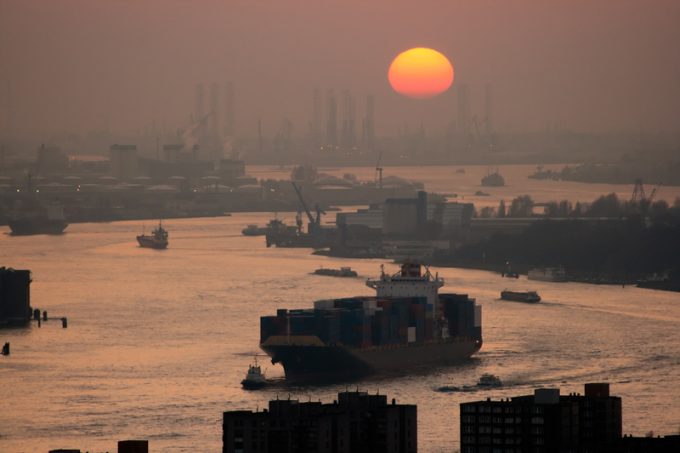
What the industry calls “port congestion” is often just the visible symptom of deeper supply chain misalignment, according to the port of Rotterdam’s director of containers, Hanna Stelzel.
“I doubt that the congestion really is a behavioural issue, it is created by all different kind of effects,” Ms Stelzel told The Loadstar.
“Delays upstream become pressure points downstream – really a sign that in the container chain there are major bottlenecks, and it’s only in the port that they become visible.”
One of several factors that create ripple effects she noted, was unreliable vessel schedules.
“Once the schedule reliability of the deepsea container vessels is very low, it always leads to ripple effects further down the chain,” Ms Stelzel said.
Those effects are often mistaken for capacity shortages within the port itself. While box terminals have experienced periods of high yard density, she emphasised that the core issue is synchronisation between sea and hinterland flows
“Indeed, the yards have been pretty full, and density at some terminals had been very high at certain peak moments, which can be a constraint. However, it’s really about the integration of sea and hinterland logistics,” she said.
The port of Rotterdam aims to expand its container handling capabilities by 8m teu by 2030, but Ms Stelzel cautioned that simply adding capacity “would not solve logistical bottlenecks”.
“I think the congestion today is not a key problem. It’s really a chain coordination issue,” she said, explaining that one of the main coordination issues was how containers moved between the port and inland destinations.
“We see growth in trucking that is not healthy for the system,” Ms Stelzel said, warning that heavy reliance on road transport could lead to traffic congestion and safety risks, while other modes remained underused.
“We see that this leads to traffic jams and unsafe situations, whereas there is capacity available on barges and on rail that is not being utilised to its fullest.”
Another part of the problem is how congestion itself is defined and measured. While congestion reports often focus on easily quantifiable indicators such as vessel waiting times or the number of ships at anchor, Ms Stelzel reckons this doesn’t tell the whole story.
“Some people in those discussions define congestion by the arrival patterns of deepsea vessels, the number of vessels in an anchorage area, and the waiting times… before they actually visit the terminals,” she said.
While this was easily measured and “actually the only part where [stakeholders] have very clear numbers”, congestion within the hinterland transport networks often drive the operational pressures seen in ports – but that is far harder to quantify, she explained.
“Once we hit the land and talk about hinterland connectivity and transportation, it becomes very hard to measure,” Ms Stelzel said.
To address this and gain a clearer understanding of port congestion, she explained that “transparency” was essential to gaining a “clear idea of what modalities are currently being used, and how is that choice being influenced”.
“Then we can define what are the most impactful measures we need to take to increase the integration of sea and hinterland. It’s key that we do that data-based and fact-based.”
She added: “We’re really working with hard data on the situation, having a common definition of how that needs to look in the future, and, together with the market, define measures we have to implement.
“We are talking about whether we need to change the system fundamentally, and what does that require? And then we translate that through to each and every part of the chain.
“We are very busy with modelling to see the situation now; and if we make a turn here, if we change something there, and if we adjust something here, what kind of effect will that have?”
For uninterrupted access, sign in or sign up to The Daily News, Premium or The Loadstar Enterprise Plan.
Comment on this article