Indian exports struggle as transhipment feeder rates to Colombo surge
Container shipments from South India are reeling under the pressure of elevated feeder rates for ...


WTC: 'ONE RECORD'HLAG: EARNINGS GUIDANCE UPGRADE AAPL: GLOBAL SMARTPHONE SHIPMENTS VW: THE IMPACT VW: MASSIVE JOB CUTS CONFIRMEDEXPD: BULLISHCHRW: POSITIONING AHEAD OF EARNINGSAMZN: IN THE NUMBERSAMZN: PEOPLE MATTER UNTILVW: THE LAST CUT IS THE DEEPESTJBHT: GEARING UP VW: BUYING TIMER: BIG VOTE OF CONFIDENCEAAPL: BEARISH HEDGEYE
WTC: 'ONE RECORD'HLAG: EARNINGS GUIDANCE UPGRADE AAPL: GLOBAL SMARTPHONE SHIPMENTS VW: THE IMPACT VW: MASSIVE JOB CUTS CONFIRMEDEXPD: BULLISHCHRW: POSITIONING AHEAD OF EARNINGSAMZN: IN THE NUMBERSAMZN: PEOPLE MATTER UNTILVW: THE LAST CUT IS THE DEEPESTJBHT: GEARING UP VW: BUYING TIMER: BIG VOTE OF CONFIDENCEAAPL: BEARISH HEDGEYE
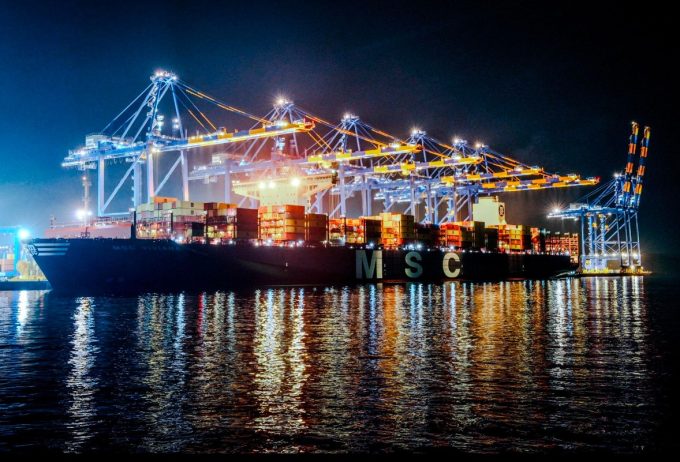
Vizhinjam Port – India’s newest container transhipment hub – ended its first year of operations on a solid note, thanks to growing relay volumes from lone mainline customer MSC.
The deepwater terminal reached full capacity, claimed to be a rare feat in the industry, handling some 1.3m teu from 615 ship calls, including some 41 ultra-large containerships (ULCVs), according to the latest data.
“This performance reflects an exceptional 116% capacity utilisation, a rare accomplishment for a new port within its first year of operation,” the port authority said.
Last 3 December, the port opened with an initial target of handling some 300,000 teu in the first year, but a wave of MSC calls yielded significantly higher volumes.
The Geneva-based liner has sent several of its most modern ULCVs to Vizhinjam, including the 24,346-teu MSC Irina in June. The most recent was MSC Martina Maria, according to data.
Vizhinjam is managed by Adani Ports (APSEZ), which has long-running strategic partnerships with MSC at Mundra and Ennore. Vizhinjam’s Phase 1 development involved a combined public-private investment of about $1bn.
With the port already at a saturation point, work on Phase 2 development broke ground recently, involving further investment of some $1bn. Targeted for completion in 2028, the expansion is expected to boost Vizhinjam’s capacity to 4m teu annually.
Adani has a countrywide network of port terminals in India, with container handling mostly concentrated at Mundra, Hazira, and Kattupalli, in addition to Vizhinjam.
The group has consolidated its international port ambitions over the past few years with a presence in Sri Lanka’s Colombo, Haifa in Israel ,and Dar Es Salaam in Tanzania. Colombo West International Terminal began Phase 1 operations in April, with volumes through September pegged at 350,000 teu.
“Our strong, across-the-board profitable growth momentum truly underscores the success of our unmatched integrated transport utility value proposition,” said APSEZ director and ceo Ashwani Gupta.
While Vizhinjam has logged the fastest growth among Indian terminals, capacity expansions at other locations are also helping terminal operators attract calls from the latest generation of mega-vessels.
PSA Mumbai, also known as Bharat Mumbai Container Terminals, at Nhava Sheva Port (JNPA) recently serviced the 24,346-teu MSC Micol and the 16,652-teu MSC Venice – the latter call saw container exchanges in the range of 9,100 teu, the terminal claimed.
Meanwhile, the battle for market share among Indian terminals is expected to intensify as more capacity gets added to the ecosystem, industry sources believe.
Another upcoming green-field development at Vadhavan, about 120 nautical miles away from JNPA, is a big bet for India’s containerised trade, already driving strong interest from the leading terminal heavyweights, including Adani.
For uninterrupted access, sign in or sign up to The Daily News, Premium or The Loadstar Enterprise Plan.

Comment on this article