Challenge joins India cargo rush as Europe-bound demand stays strong
Challenge Group is expanding its presence in India and China with new freighter services from ...
CHRW: OVERVALUEDGM: NEW BIZFDX: GROWING CAUTIOUSDHL: DOUBLE UPGRADEDSV: STOCK MARKET REACTION XOM: OIL INVENTORY WARNINGWTC: EBL DEAL DETAILSWTC: EBL DEALEXPD: 'READ MY LIPS' HON: DEALS ON THE MENUEXPD: NEW RECORD XPO: THE REBOUNDCAT: PAYOUT UP
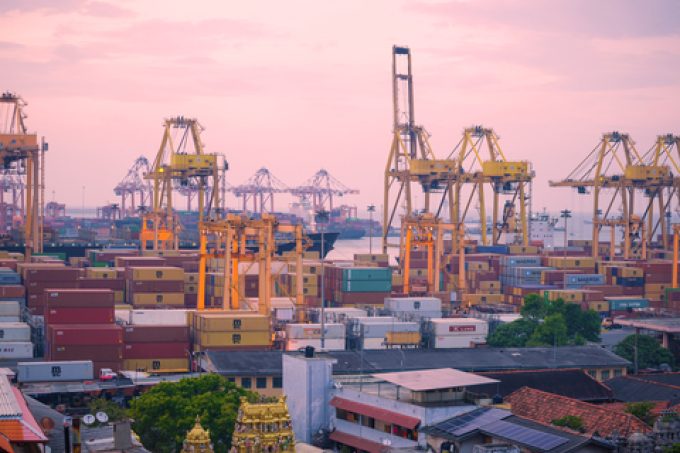
The trade restrictions between India and Pakistan continue to drive incremental transhipment volumes for Sri Lanka’s Colombo Port, new data suggests.
Since the trade ban by both nations in early May, following military tension, Colombo has seen transhipment handling soar by 10% to 15%.
To put the uptick in perspective, Colombo’s monthly transhipment volumes ranged between 575,000 and 610,000 teu from May through July, up from its average 525,000 to 530,000 teu in the previous three months.
Last month, Colombo handled 579,293 teu of transhipment cargo, compared with May’s 609,352 teu and June’s 575,695 teu, according to data.
A terminal source told The Loadstar: “Colombo now has sufficient capacity for the immediate future, so unexpected volume surges do not pose any kind of operational pressures.”
The recent opening of the 1.5m teu Colombo West International Terminal by Adani Group, in partnership with John Keells Holdings, has boosted the port’s operational metrics after months of congestion and berthing delays last year, following an unusual wave of ad-hoc transhipment calls linked to the Red Sea crisis.
The end of that rush saw volumes steadily taper off, until the recent gains.
With India’s ban on Pakistan cargo transiting its ports, mainline container carriers were forced to reroute Karachi exports/imports via other transhipment hubs using feeders, with Colombo winning the most volume. Oman’s Salalah had also been an alternative hub option for many carriers.
Some mainliners have reinstated direct calls to Pakistan, with rotations realigned with the Indian curbs on transit cargo – calling at Karachi or Port Qasim after Nhava Sheva/Mundra. That’s because Islamabad has lifted its ban on India-origin containers passing through Pakistan ports, but country-to-country traffic continues suspended.
For example, CMA CGM recently announced the restoration of Pakistan calls on its Epic (North Europe trade) and Indamex (US east coast) services, even though schedule disruptions persist, according to sources.
That resurgent transhipment demand is also believed to have helped Colombo offset any drop in volumes due to the rapid emergence of Vizhinjam Port in southern India as an intermediate hub for the region.
MSC is already using Vizhinjam Phase I capacity with growing ad-hoc calls and a couple of regular/weekly long-haul services, largely for European trades.
Vizhinjam, also an Adani-led terminal, handled 105,000 teu last month, making it the busiest terminal in southern India, according to data. The new deepwater harbour has already hosted many ultra-large containerships, the 24,346-teu MSC Irina the most recent.
For uninterrupted access, sign in or sign up to The Daily News, Premium or The Loadstar Enterprise Plan.
Comment on this article